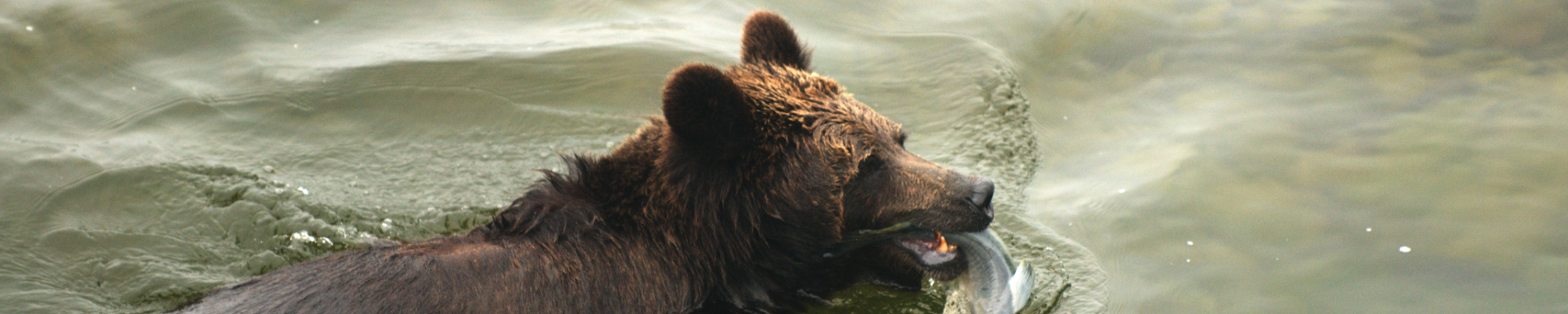
Males produced long series of rutting barks - resembling the barking of dogs - while the females' varied contact calls sounded like the shrill cries of cats.
Speakers paid tribute to two representatives of a brilliant evolutionary lineage - a family that has for over a century been conducting successful research in zoology, ecology, embryology, morphology, and evolutionary theory.
Glacial retreat driven by global climate change creates unique sites for studying primary succession - the process by which biotic communities form from scratch on barren, lifeless surfaces.
The expedition began in Chelyabinsk. Participants explored the region's history by visiting the State Historical Museum of the Southern Urals, where they viewed one of the largest fragments of the Chelyabinsk meteorite.
The scientists introduced the students to the Institute's work and then conducted three scientific sessions featuring interactive and hands-on activities.
The project's success has been proven over time: the released tigers not only survived and hunted successfully but also formed families and produced offspring.
The exhibition tells the stories of women who, defying the odds, not only pursued science—a field considered the domain of men—but also left a significant mark on history.
IEE RAS together with the other organizations is participating in the implementation of the Russian Ministry of Natural Resources' strategy to conserve the Okhotsk Sea population of bowhead whales.
Scientists have identified a critical threshold: if a coral's volume exceeds approximately 0.3–0.7 liters (equivalent to 6–12 months of growth in a nursery), it is already home to adult crabs and is reliably protected.
During the expeditions, all currently known habitats of freshwater microgastropods of the family Hydrobiidae in the Russian part of the Caucasus were visited, providing the most comprehensive picture of their distribution in the region.
The obtained results highlight the importance of molecular methods in modern taxonomy and biogeography, especially when studying morphologically similar organisms.
The existence of a waterway between the Paratethys and the Russian Far East is confirmed by recent studies of two groups of crustaceans conducted by researchers from the Zoological Institute of the RAS and IEE RAS.
The Russian Science Foundation (RSF) and the National Natural Science Foundation of China (NSFC) are now accepting applications for the sixth joint competition for international research projects. Since 2021, 255 Russian-Chinese research teams have received support through this bilateral partnership.
We invite you to participate in an interdisciplinary symposium dedicated to the pressing issue of zoning the Himalayas and the Himalayan region. This event will be held in person and remotely on Thursday and Friday, November 19–20, 2026, in the heart of St. Petersburg, at the Zoological Institute of the Russian Academy of Sciences (1 Universitetskaya Embankment, St. Petersburg).
We invite you to participate in the XV All-Russian Conference "The White Sea: On the Edge of the Arctic" (formerly "Study, Rational Use, and Protection of Natural Resources of the White Sea").
We invite you to participate in the III All-Russian Conference "Intracellular Signaling and Metabolism, Transport, and Cytoskeleton," which will be held April 22–24, 2026, in St. Petersburg. The conference is a continuation and development of the All-Russian Conference "Cell Biology in Culture," which has been regularly held at the Irkutsk Scientific Center of the Russian Academy of Sciences since the 1980s.
We invite you to participate in the International Conference "Diversity of Soils and Biota in Northern and Central Asia," dedicated to the 45th anniversary of the Institute of General and Experimental Biology (IGEB SB RAS), which will be held June 16–19, 2026, in Ulan-Ude, Russia.
The "Modern Problems of Geophysics" seminar resumes its Tuesday meetings at Moscow State University. The first meeting of the year and season will be held on January 27 at 5:00 PM, as a mobile event at the A.N. Severtsov Institute of Ecology and Evolution, Russian Academy of Sciences.