
Заголовок
Laboratory of Ecology, Physiology, and Functional Morphology of Higher Vertebrates
Head of the laboratory
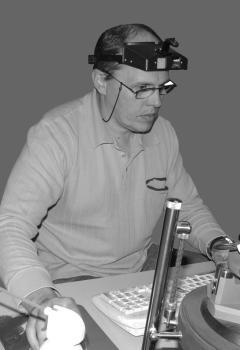
Ivlev Yury Fedorovich
About the laboratory
The Laboratory of Ecology, Physiology, and Functional Morphology of Higher Vertebrates was established in 1998 through the reorganization of the Laboratory of Morphology, Ecology, and Behavior of Higher Vertebrates, headed by Academician V.E. Sokolov. The new laboratory, initially named the «Laboratory of Ecology and Functional Morphology of Higher Vertebrates,» was headed until 2013 by Prof. E.I. Naumova, Doctor of Biological Sciences. In 2007, the group for the biological foundations of conservation and use of terrestrial vertebrates joined the laboratory. Since 2013, the laboratory has been headed by Yu.F. Ivlev, Doctor of Biological Sciences. In 2019, the laboratory was merged with the Laboratory of Morphological Adaptations of Vertebrates, headed by O.F. Chernova, Doctor of Biological Sciences, and received its present name, which reflects the laboratory's plans to deepen functional approaches to the study of living organisms.
The laboratory conducts interdisciplinary research in areas such as the ecology of organisms and communities, functional and evolutionary morphology, ecological physiology, biological diversity, genetics, and biotechnology. Research is carried out using a wide range of biological subjects, spanning levels of biological organization from the molecular to the biocenotic.
The following fundamental and applied topics are being developed: pathways and patterns of evolutionary transformations of morpho-functional systems (integument, musculoskeletal system, digestive system); mechanisms of highly efficient utilization of plant forage and molecular-genetic studies of the gut microbiota of animals; locomotor adaptations; development of scientific foundations for the rational use of biological resources; and design and construction of telemetry systems for scientific research. In recent years, the laboratory has most actively developed fundamental and applied research in the field of vertebrate locomotion biomechanics, as well as «cross-cutting» bioinformatics research, which has given new impetus to the laboratory’s traditional subject areas.