
Заголовок
Room for Methods of Earth Remote Sensing and Thematic Interpretation in Ecology
Head of the Laboratory
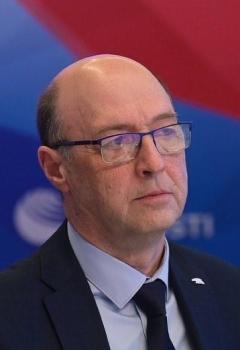
Mordvintsev Ilya Nikolayevich
About the Room
In 1988, given the growing relevance of satellite Earth remote sensing data for ecological research and the study of living nature, the Group for Ecoinformation Systems and Space Monitoring was established at the A.N. Severtsov Institute of Evolutionary Morphology and Ecology of Animals of the USSR Academy of Sciences, on the initiative of Academician Vladimir Evgenyevich Sokolov. The group was headed by Professor, Doctor of Technical Sciences Gennady Ilyich Belchansky.
In 2006, in connection with the reorganization of the A.N. Severtsov Institute of Ecology and Evolution RAS, the group's staff were incorporated into the Laboratory for the Conservation of Biodiversity and Use of Biological Resources, headed by Cand. Sci. (Biol.) V.Yu. Ilyashenko.
In May 2016, the group's staff were separated from V.Yu. Ilyashenko's laboratory into the newly formed Room for Methods of Earth Remote Sensing and Thematic Interpretation in Ecology, established on the initiative of the Institute's director, Academician V.V. Rozhnov.
RATIONALE FOR ESTABLISHING THE ROOM
The programs currently being carried out at the Institute (Amur tiger, snow leopard, Persian and Far Eastern leopards, reindeer, saiga, polar bear, pinnipeds, beluga whale and other cetaceans) require the use of remote sensing data for a detailed understanding of seasonal habitat parameters, determining the range of individual animals and populations as a whole, and comprehensively assessing species ecology.
Among domestic users of remote sensing data (RSD), the predominant applications are protected areas, emergency situations and anthropogenic activity, focused on monitoring soil cover and vegetation. In our case, the subject of study is animals that use a particular habitat. Considering these problems from the standpoint of animals' use of their familiar habitats defines a specific and unique set of tasks, and the results obtained will be in demand among specialists of the Institute and other organizations. This, overall, determined the potential competitiveness of the Institute's new structural unit.