

Crabs help corals survive after transplantation
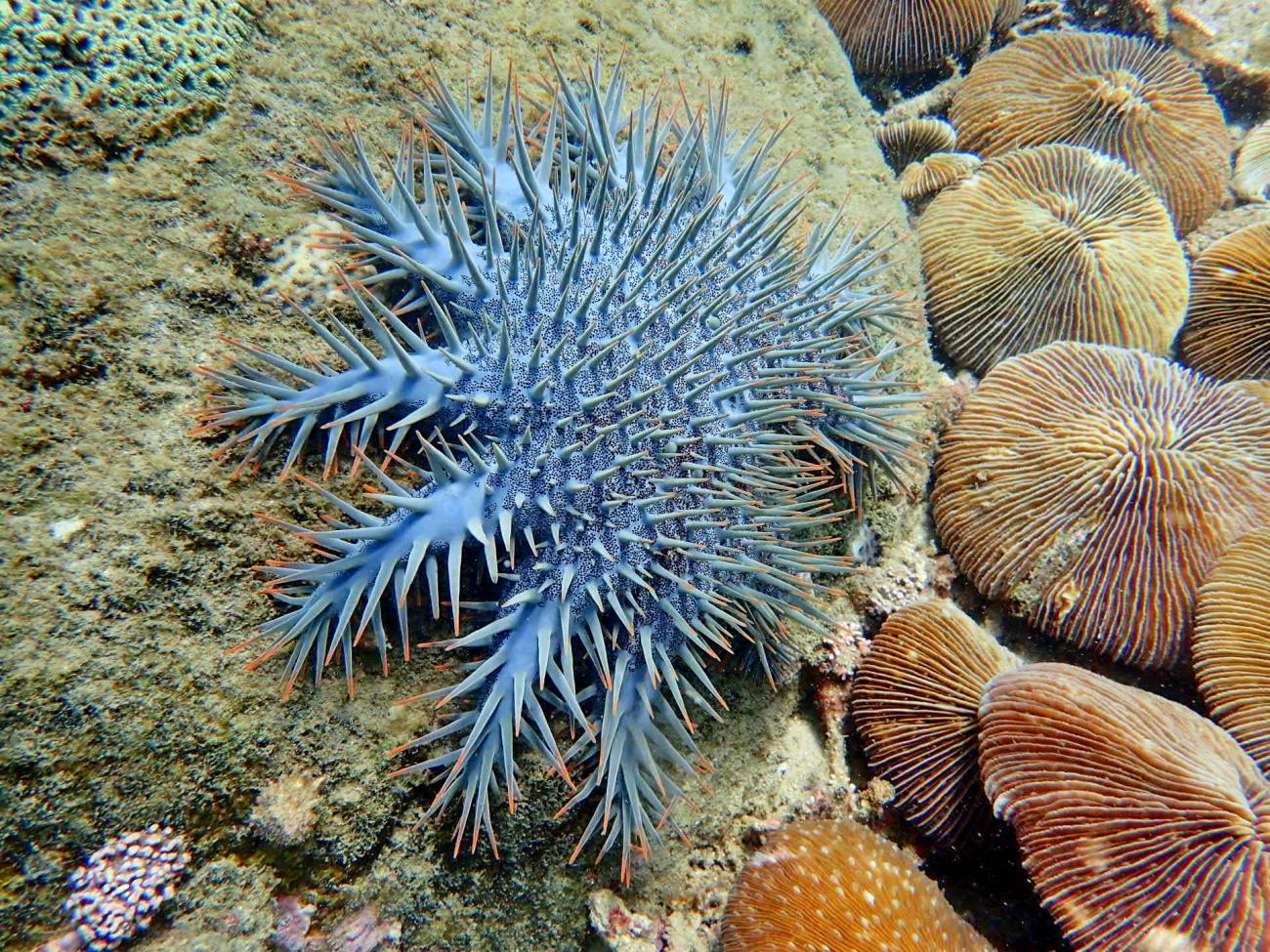
Photo 1. The main coral-eating predators: the crown-of-thorns (Acanthaster solaris). Photo by Fyodor Vitalievich Lishchenko
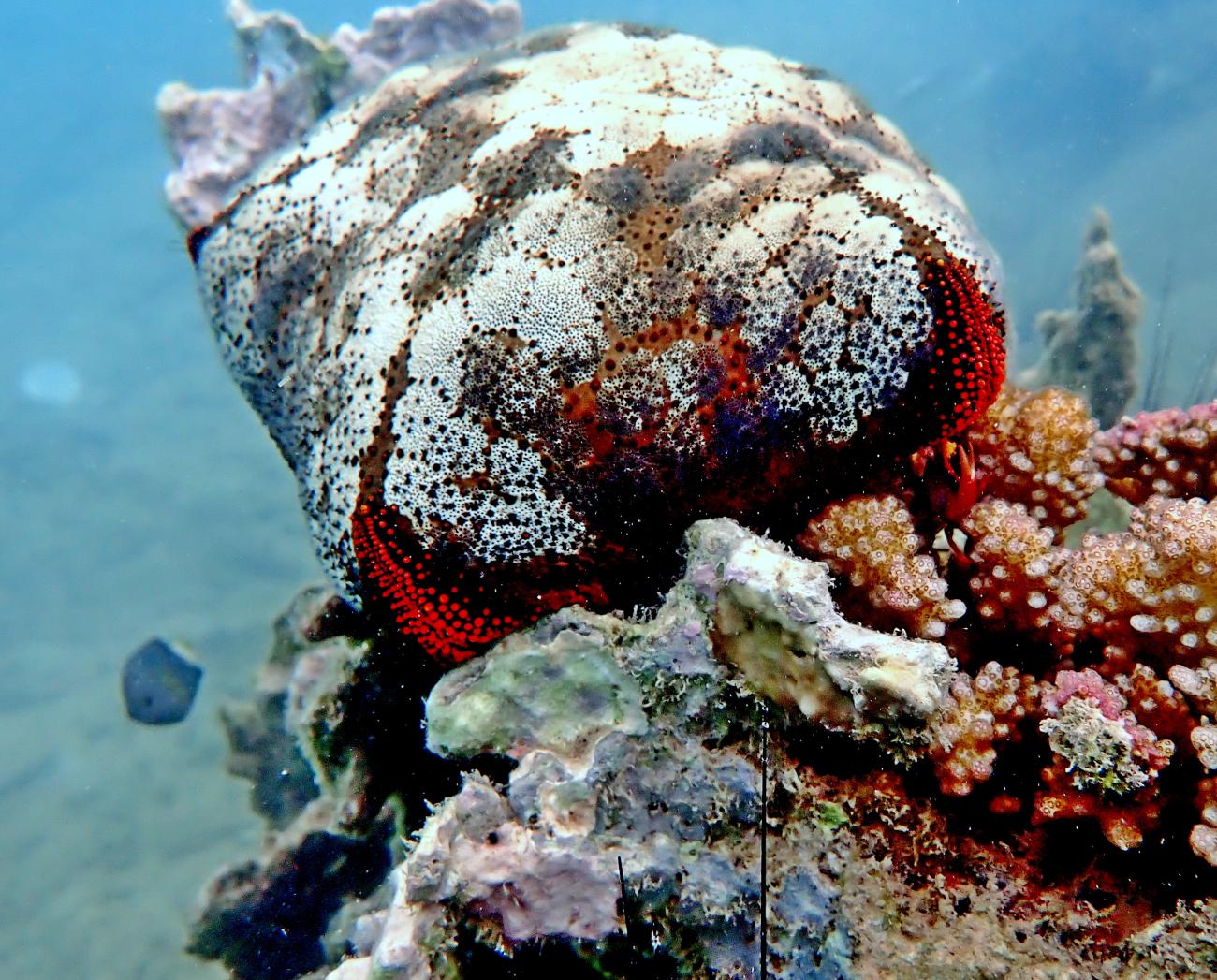
Coral reefs around the world are dying due to ocean warming, pollution, and other problems. Scientists are trying to restore them by growing young corals in special nurseries and then transplanting them to the dying reefs. However, transplanted corals often die, especially in the first few months. One of the main causes is sea stars - crown-of-thorns (Acanthaster solaris) and cushion star (Culcita novaeguineae) - their natural predators.
But corals also have unexpected allies. It turns out that some corals have reliable protectors - tiny crabs and shrimp that live right in the coral's branches. These crabs actively repel the sea stars, pinching their sensitive legs, breaking their spines, and even pushing them off the coral. Importantly, crabs only effectively protect large, mature corals. In small colonies there are either no crabs, or they are too small and weak to deal with the predators.
Scientists from the A.N. Severtsov Institute of Ecology and Evolution of the Russian Academy of Sciences (IEE RAS) conducted an experiment in Vietnam. They took two species of branching corals (Pocillopora verrucosa and Acropora latistella) grown in a nursery and transplanted them to a dead reef. Corals of different ages were used in the experiment: fresh fragments (0 months old) as well as cultured colonies aged 3, 6, and 12 months. During the three-month experiment, the scientists assessed the mortality of the transplanted colonies, the frequency of predation, the presence of symbiotic crabs, their species composition, and body size, and also recorded their behavior when attacked by starfish.
The results were striking: young Pocillopora colonies (0 and 3 months old) almost completely perished - up to 90% of the individuals. However, those that had been growing for 6–12 months showed much better survival rates. This mortality change coincided with the widespread presence of well-developed pairs of Trapezia crabs (male and female) in colonies, whose size increased significantly with host age, and whose defense effectiveness increased directly with crab size.
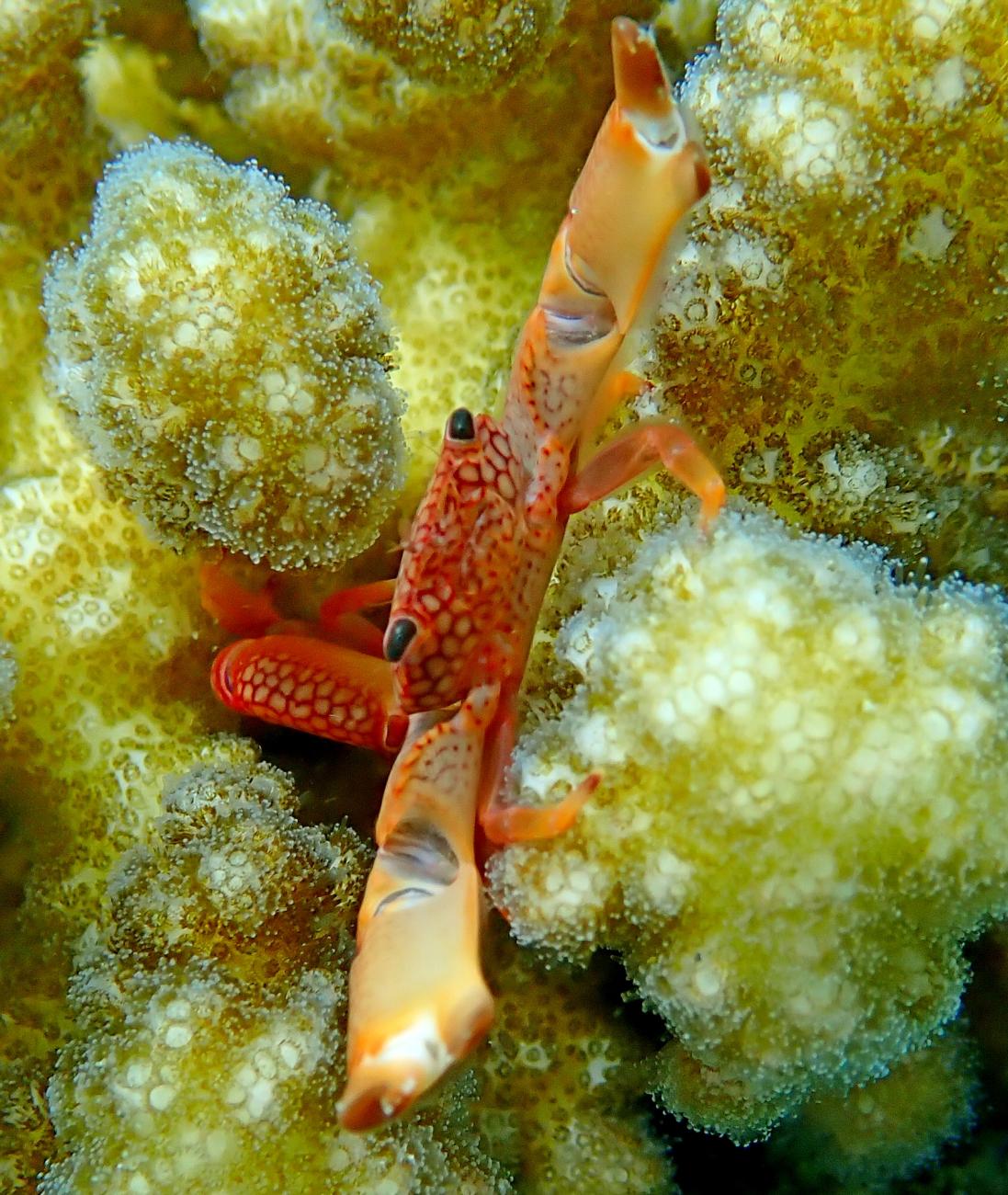
Photo 3. A trapezoid crab (Trapezia septate) guards a coral from attacking starfish. Photo by Fyodor Vitalyevich Lishchenko
In contrast, Acropora showed high mortality across all age groups due to predation, reflecting the relatively weak defensive capacity of Tetralia crabs. However, as predator numbers declined, this species' resilience also increased with age (size).
Scientists have identified a critical threshold: if a coral's volume exceeds approximately 0.3–0.7 liters (equivalent to 6–12 months of growth in a nursery), it is already home to adult crabs and is reliably protected. Transplanting such corals is a much more worthwhile venture. Small fragments, however, are doomed: they lack in either presence or size of their possible symbiotic protectors.
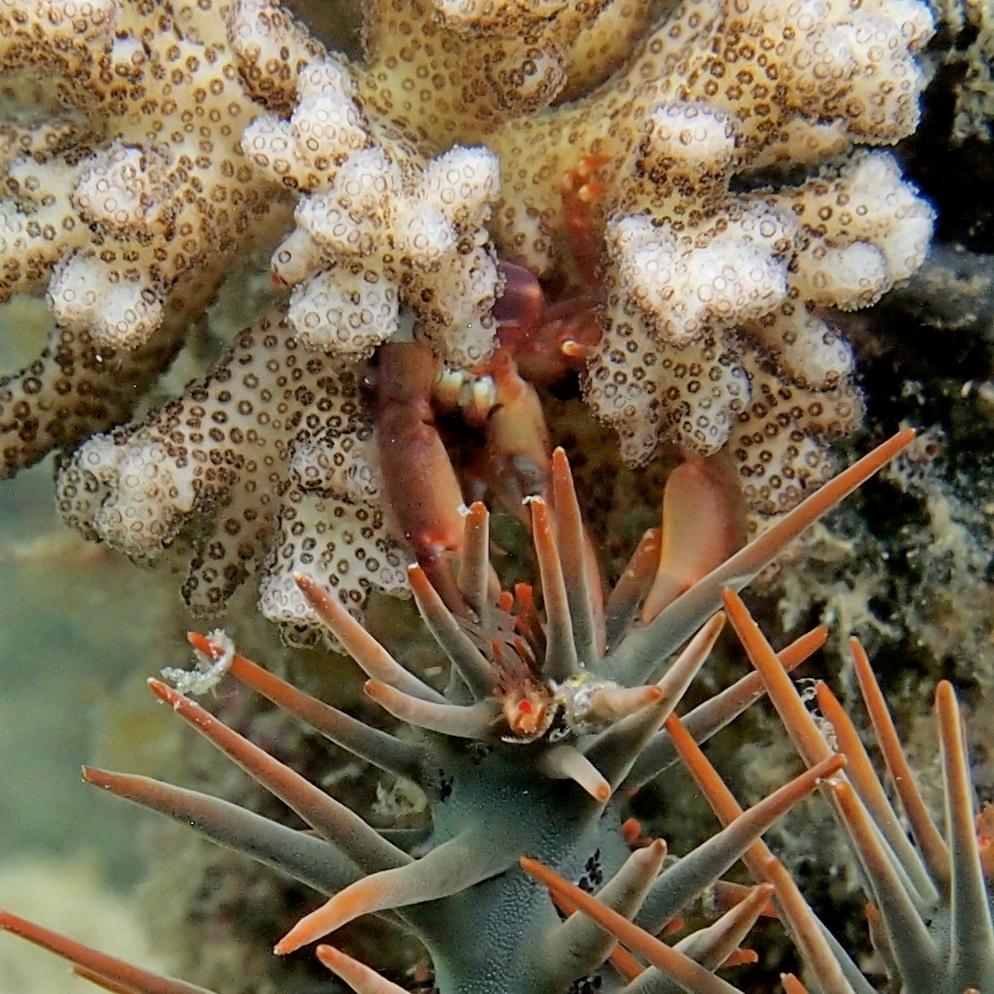
Photo 4. A trapezoid crab breaks the spines of an acanthaster attacking a coral.
Photo by Fyodor Vitalyevich Lishchenko
What does this mean for reef restoration? Currently, many projects transplant corals as early as possible, allowing them to grow to a minimum size. Research shows that it's much more effective to keep corals in a nursery for longer, up to six months or more. During this time, protective crabs have time to colonize them, and survival rates after transplantation increase dramatically.
The article was published in the journal Frontiers in Marine Science.
The study was supported by the Russian Science Foundation and the Russian-Vietnamese Tropical Center.
Related materials:
BezFormata: "Scientists have proven that crabs can save coral reefs"
Regions: "RAS scientists have found a way to save corals using crabs"
Krasnodar.BezFormata: "Scientists have found a way to increase coral survival in Russia using crabs"
Ferra: "Russian scientists have found a way to increase coral survival"
Zen: "Scientists have found a way to increase coral survival in Russia using crabs"
EcoPravda: "In Russia, it has been discovered how to save endangered corals using crabs"
MirTV24: "Russian scientists have found a way to save dying coral reefs"
NIA Eco: "Scientists have proven that crabs can save coral reefs"
TV Krasnodar: "Scientists have found a way to increase coral survival in Russia using crabs"
Rambler: "Russian scientists" "We've found a way to increase coral survival."