

Заголовок
Laboratory for the Study of Ecological Functions of Soils
Head of the laboratory
Gongalsky Konstantin Bronislavovich
About the laboratory
The laboratory was created in 1993 on the initiative of Academician G.V. Dobrovolsky. From 2013 to 2016, the laboratory was headed by V.A. Terekhova, Dr. Sci. (Biol.). Since 2016, the laboratory has been headed by K.B. Gongalsky, Dr. Sci. (Biol.). The laboratory's main task is to study the influence of soil properties on the organization of soil biota and the functioning of detrital food webs.
Work is carried out in three main areas: soil science, the study of soil biota, and biodiagnostics of soil condition. Their integration makes it possible to quantitatively assess the ecological functions of soils.
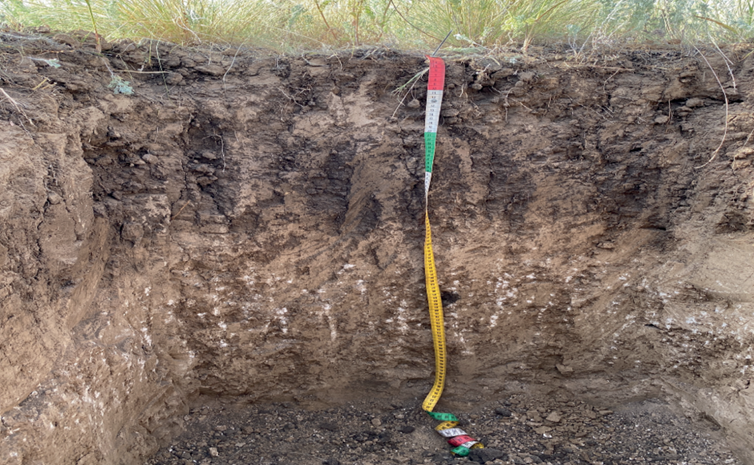
The doctrine of the ecological functions of soils has been developed and continues to develop; the main functions of soils in ecosystems have been characterized; the concept of the leading role of soils in the formation and preservation of biodiversity has been formulated; and the principles for the rational use and protection of land resources from the standpoint of ecological soil science have been substantiated.
An assessment has been made of the magnitude and structure of organic carbon stocks in Russian soils. Studies of paleoindicators in paleosols have been carried out.
The main patterns of microbial succession during plant litter decomposition have been identified. An ecological assessment has been made of microorganisms, soil micro- and mesofauna in the soils of the main biogeocenosis types of European Russia. New methods have been developed for the biotesting of soil ecotoxicity and for modeling processes in soil ecosystems.
Research is developing on the protective functions of humic acids and the role of melanized micromycetes in their formation. Analysis of the ecological functions of soil biota after forest fires and under agricultural land use is also being developed.