
Заголовок
Russian Division of the Joint Russian-Vietnamese Tropical Research and Technological Center
About the Center
Official website of the Center — www.tropcenter.ru
The Joint Russian-Vietnamese Tropical Research and Technological Center (the Tropical Center) is a branch of the A.N. Severtsov Institute of Ecology and Evolution (IEE RAS). It was established and operates on the basis of the Intergovernmental Agreement between the USSR and the SRV of March 7, 1987, and a Protocol to this Agreement, signed by the Government of the Russian Federation, on assuming the obligations of the Soviet side.
IEE RAS has been designated the lead organization of the Russian Federation for fulfilling the Russian side's obligations under the Agreement, and the Ministry of National Defense of the SRV on the Vietnamese side.
The Tropical Center is currently an important element of the strategic partnership between the Russian Federation and the SRV in the field of science, technology, and military-technical cooperation.
Over its 25-year history, the Tropical Center has become an international, multidisciplinary scientific organization with no equivalent in world practice.
The Tropical Center is located in Hanoi and has regional branches in Ho Chi Minh City and Nha Trang. It has a well-developed infrastructure — buildings and facilities, experimental laboratories, and field ecological and climate testing stations. It is Russia's only research organization located in the tropical zone.
The Tropical Center's main areas of activity are:
- conducting research and technological work in three scientific fields: tropical ecology, tropical materials science, and tropical medicine;
- coordinating joint research work between organizations from Russia, Vietnam, and third countries;
- providing scientific and technical services and assisting in the adaptation and transfer of technologies;
- training highly qualified scientific personnel.
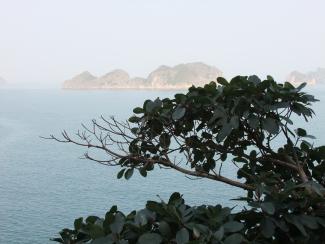
The opening of the Tropical Center gave Russian science unique opportunities for the comprehensive and systematic study of the richest and most complexly organized ecosystems. The Tropical Center hosts integrated studies of freshwater and marine communities, mangrove forests, karst massifs, and lowland, foothill, and montane tropical forests. For some regions of Vietnam, a review of present-day biodiversity has been carried out for the first time. Methodological approaches characteristic of Russian biological science, applied to tropical ecosystems, have made it possible to lay the groundwork and find solutions for such global problems as the functioning patterns of primary and human-transformed tropical forest systems and coastal marine communities. An important practical result of the interdisciplinary study of tropical ecosystems was the concept of the genesis of plague in Vietnam.
New knowledge in the field of tropical nature evolution allows environmental problems in our country to be addressed more successfully than before.
The leading role of forest ecosystems in maintaining and regulating regional climate and the overall hydrological regime has been conceptually confirmed and substantially clarified.
The study of the large-scale use of dioxin-containing herbicides by the United States during the Vietnam War made it possible to identify and characterize the ecotoxicological features of dioxins, establish the main links in the pathogenesis of so-called dioxin pathology, and develop and test new approaches to assessing the risks these poisons pose to humans and nature.
Given the need to counter threats to ecological and chemical safety, knowledge of the general patterns of super-ecotoxicant effects on nature and humans is of great importance for the Russian Federation.
Practical recommendations have been developed on adaptation, health preservation, and extending the professional working life of Russian and Vietnamese specialists engaged in various activities under tropical conditions.
The Tropical Center's work in the "Tropical Materials Science" area is of particular importance for creating new materials and equipment prototypes capable of withstanding the aggressive effects of tropical climate factors. This work is aimed at ensuring the quality and competitiveness of Russian-made products supplied to countries in the tropical region.
Based on the results of field tests in the atmosphere and marine environment, the climatic durability characteristics of a significant number of structural materials have been obtained, and a list of effective protective measures suitable for use in a tropical climate has been determined. An extensive database of scientific and practical value has been compiled.
In the course of providing scientific and technical support for the operation of Russian-made equipment (air force, air defense) in units of the Vietnam People's Army of the SRV, a number of proposals and recommendations have been developed for Russian design bureaus and operating organizations to improve the tropical resistance of equipment.
The results obtained and the experience gained from such studies are extremely relevant in the context of arms and military equipment supplies and the construction of complex technical facilities (nuclear power plants) in Vietnam, and the focus of the Tropical Center's work meets the current requirements of the Russian government to promote the entry of Russian high-tech products into foreign markets.