

Molecular methods have helped to reveal hidden patterns in the distribution of enchytraeids
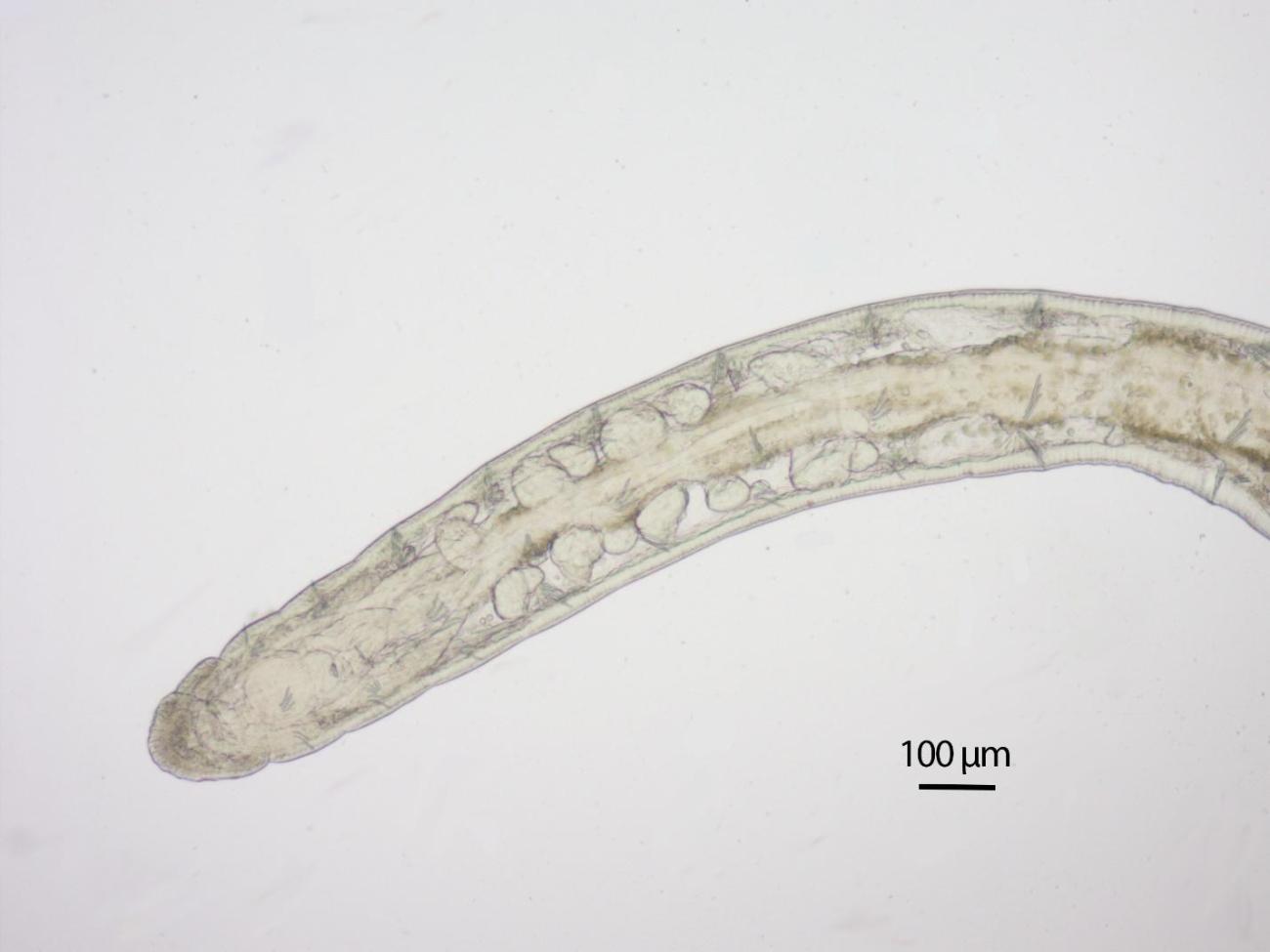
Traditional morphological methods of species identification don't always work well, especially for difficult-to-identify groups. One such group is the enchytraeids (Annelida: Clitellata: Enchytraeidae), small annelid worms abundant in soil. One of the most widespread enchytraeid species in our country, Cognettia sphagnetorum s.l., was divided 10 years ago into four separate species, which are quite difficult to distinguish based on morphology alone. Most individuals of C. sphagnetorum s.l. reproduce by fragmentation and never reach sexual maturity, and therefore lack defining characteristics associated with the reproductive system. Therefore, a researcher may face the impossibility of accurate species identification without the use of modern molecular methods.
A recent study by researchers at the A.N. Severtsov Institute of Ecology and Evolution of the Russian Academy of Sciences (IEE RAS) used molecular genetic methods to establish that some specimens found in European Russia, previously identified by morphology as Cognettia sphagnetorum sensu stricto (s.s.), actually belong to another species of this group, Cognettia chlorophila. This discovery significantly expands the known range of C. chlorophila eastward.
Reliable data on the distribution of C. chlorophila and C. sphagnetorum s.s. obtained through genetic analysis indicates their high degree of habitat overlap. This result raises questions about the biotopic and trophic preferences of morphologically related species of the genus Cognettia and the mechanisms of their coexistence.
The study also revealed a relatively low level of genetic diversity in the aforementioned species in European Russia. The authors suggest that this may be due to the fact that C. sphagnetorum s.l. spread from Scandinavian refugia following the retreat of Pleistocene glaciers. Furthermore, the specific biological characteristics of the species themselves may have played a role.
The obtained results highlight the importance of molecular methods in modern taxonomy and biogeography, especially when studying morphologically similar organisms.
This study was supported by the Russian Science Foundation (grant no. 23-14-00201). The work was conducted at the Instrumental Methods in Ecology Center (IEE RAS) and the Genome Center (IMB RAS). The results have been published in a paper by: Medvedev, D.A.; Zvychaynaya, E.Y.; Guseva, P.A.; Danilova, M.A.; Zaitsev, A.S.; Korobushkin, D.I.; Saifutdinov, R.A.; Gongalsky, K.B.; Degtyarev, M.I. Molecular Identification Reveals Hidden Distribution Patterns in Cognettia (Enchytraeidae). Diversity 2026, 18, 85. https://doi.org/10.3390/d18020085