
From ice to forests: how springtails colonize the surface exposed by the retreat of the Caucasus Alibek Glacier
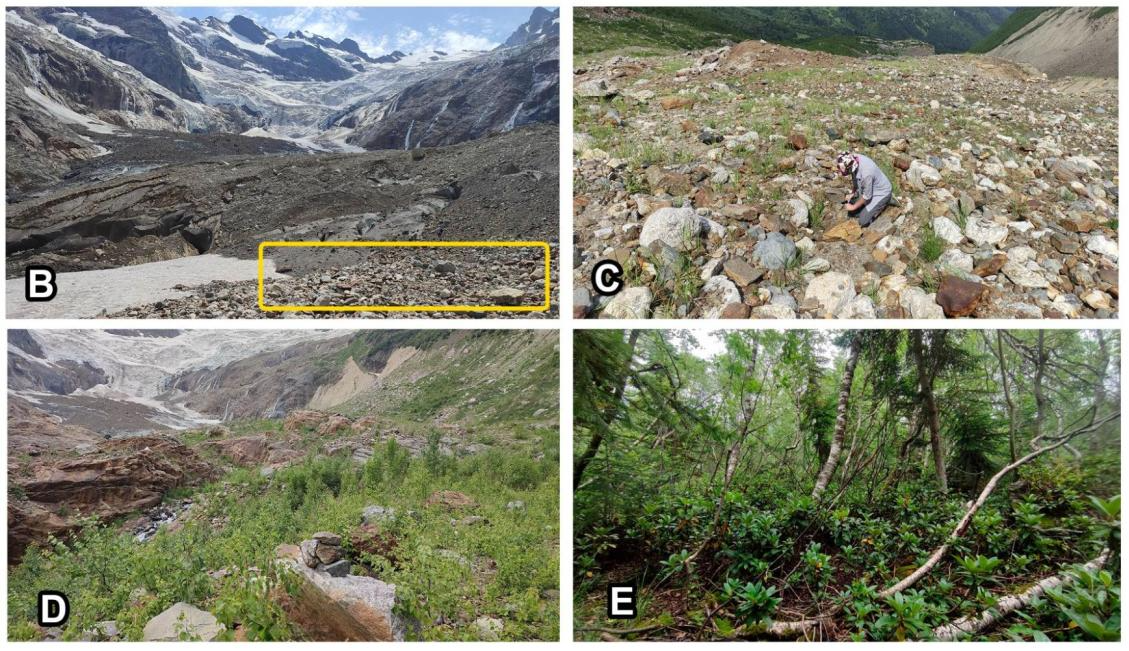
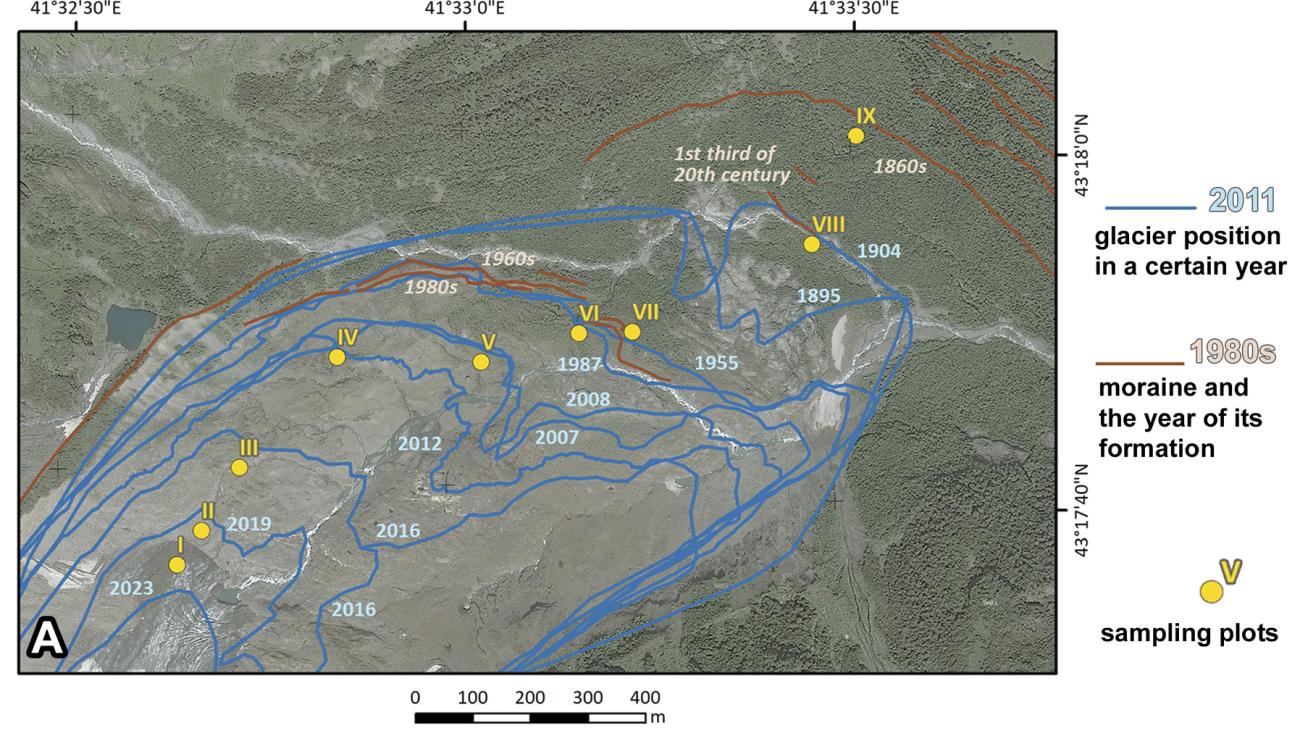
Photo 1: A – Chronology of the Alibek Glacier retreat; B–E – successional stages of revegetation
Glacial retreat driven by global climate change creates unique sites for studying primary succession - the process by which biotic communities form from scratch on barren, lifeless surfaces.
Collembola (springtails) are small soil arthropods that play a key role in the pioneer ecosystems that develop following glacial retreat. However, regional studies - particularly in areas with rapid ecosystem recovery - remain extremely limited. The Caucasus, which is experiencing one of the fastest rates of glacial loss in Europe, remains very poorly studied in this regard.
Scientists from the A.N. Severtsov Institute of Ecology and Evolution of the Russian Academy of Sciences (IEE RAS), in collaboration with colleagues from the Institute of Geography of the Russian Academy of Sciences, studied the 164-year succession of Collembola communities at the foot of the Alibek Glacier in the Western Caucasus.
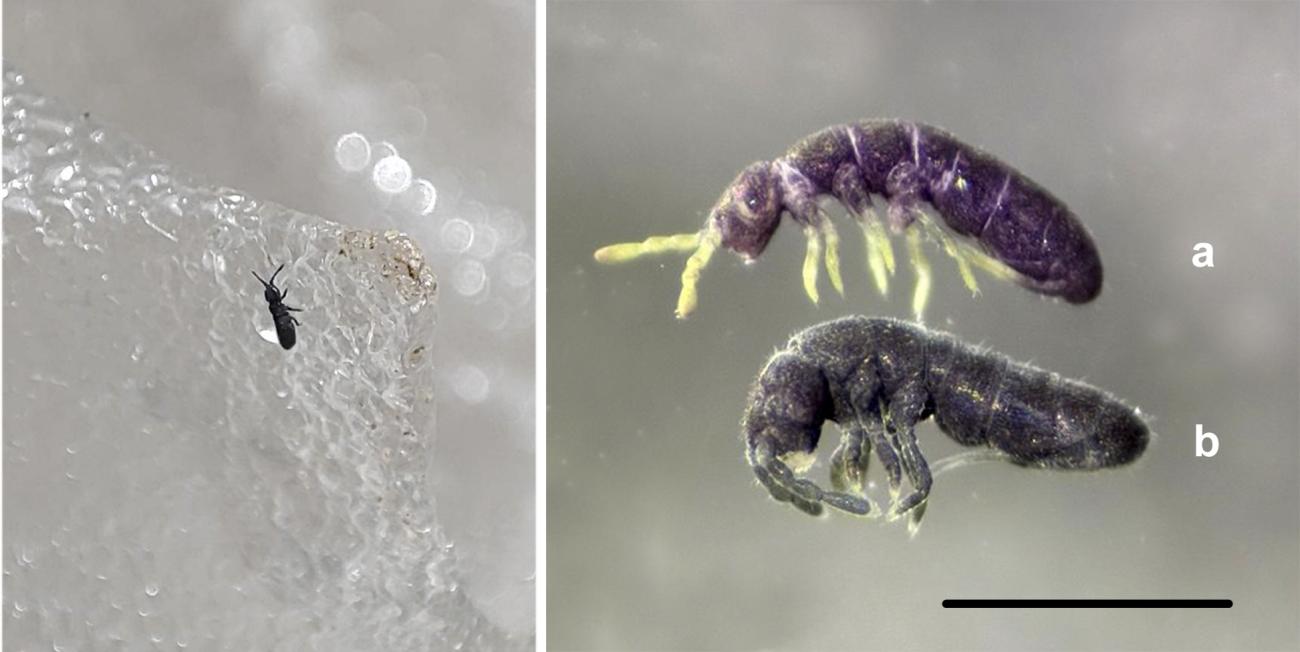
Photo 2: Pioneers of the Alibek Glacier: Vertagopus sp. 2 (a), Vertagopus sp. 1 (b). Scale bar: 1 mm.
To determine the stages of glacial retreat, researchers used a georeferenced map compiled by I.S. Bushueva of the Institute of Geography, Russian Academy of Sciences. The surface-dating methodology involved analyzing modern satellite imagery, historical maps, travelers' accounts, and photographs, as well as measuring lichen sizes on moraine boulders and tree-ring widths. Based on this data, nine study sites ranging in age from 1 to 164 years were selected to track changes in collembolan communities.
It was found that a pioneer collembolan assemblage forms right at the glacier margin, consisting of species new to science from the family Isotomidae that colonize the newly exposed terrain from the ice surface. These "super-pioneers" are true cryophiles and consequently disappear rapidly during the initial years of deglaciation. After approximately 70 years, collembolan density and species richness reach levels comparable to those found in the region's mature forests. However, the taxonomic composition of the collembolan community at this final stage differs from that of adjacent undisturbed ecosystems, indicating a high degree of local specificity.
“Overall, the succession aligns with global trends - such as increasing abundance and diversity as the surface ages - yet it also exhibits local peculiarities regarding species composition trajectories and dynamics. These findings contribute to our understanding of community assembly mechanisms and ecosystem recovery processes amidst global glacial retreat,” said Maria Antipova, a junior researcher at the A.N. Severtsov Institute of Ecology and Evolution (RAS).
RAS: "How Collembola Colonize Surfaces Exposed by the Retreat of the Alibek Glacier"