
Заголовок
Bioinformatics and Modeling of Biological Processes Room
Contacts
Head of the Laboratory
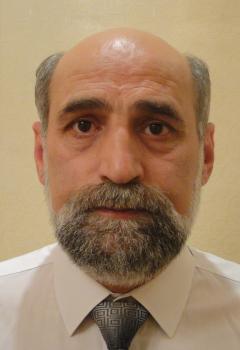
Petrosyan Varos Gareginovich
About the Room
The room was established in 2001.
The main research areas are information and software support for the study of biological systems, including
- studying the organization and functioning of biological systems at various levels using methods and tools of informatics;
- developing methodological approaches for studying the evolution of living nature based on quantitative methods for assessing population genetic structure and the phylogenetic relationships of species-level and higher taxa;
- studying the stability of ecological systems;
- computer modeling of the processes of acquiring, accumulating, processing and systematizing data on the biodiversity of Russia;
- creating new information technologies based on the results of research on living nature.
Petrosyan Varos Gareginovich – founder and long-time head of the "Bioinformatics and Modeling of Biological Processes" room. The room was established in 2001.
Academic degree – Doctor of Biological Sciences, Candidate of Technical Sciences.
Education – graduated from the Moscow Institute of Physics and Technology (MIPT) in 1981; Candidate of Technical Sciences since 1984 (dissertation defended before the MIPT council); Doctor of Biological Sciences since 2004 (dissertation defended before the council at Lomonosov Moscow State University).
Scientific awards, memberships
Laureate of the H. Ford International Award (1998) — for the development of the integrated information system "Integration of ground truth and spaceborne sensor data with a GIS for coastal zone management of the Turkish Mediterranean coasts";
Awarded the top biology prize of MAIK "Nauka/Interperiodica" for a series of papers published in the journal "Genetika" in 2001–2003;
Deputy Editor-in-Chief of the "Russian Journal of Biological Invasions";
Member of the international committee for creating an information system and database on alien species of Northern European and Baltic countries (NOBANIS, North European and Baltic Network on Invasive Alien Species, http://www.nobanis.org). The committee includes representatives from 26 EU countries;
Member of the Russian National RAS Committee for the Collection and Evaluation of Numerical Data in Science and Technology (CODATA);
Member of the RAS Commission for the Conservation of Biological Diversity, Deputy Chairman of the Section on Informatization of Biodiversity Research.
Member of the IEE RAS Academic Council,
Member of the IEE RAS Council for the Defense of Doctoral and Candidate Dissertations.
Member of the Organizing Committee of the 4th International Symposium "Alien Species in the Holarctic" (BOROK-4), 22–28 September 2013, Borok, Yaroslavl Region, Russia.
Member of the Organizing Committee of the 5th International Symposium "Alien Species in the Holarctic" (BOROK-5), 25–30 September 2017, Uglich, Yaroslavl Region, Russia.
Member of the Organizing Committee "Publishing Data to the Global Biodiversity Information Facility – GBIF", IEE RAS, GBIF Denmark, October 16, 2015;
Russian-side co-organizer of the international working group on the ecology of meiotic drive, Zurich, Switzerland, University of Zurich, 21–27 June 2015.
Accredited and included in the Federal Register of Experts of the Scientific and Technical Sphere of the Ministry of Education and Science of Russia (Registration No. 06-01537, dated 25 June 2015);
Included in the list of experts of the Russian Academy of Sciences (RAS); issued an RAS expert certificate, expert identification number 2016-01-5643-6268, RAS Presidium Order of 27.07.2016 No. 10108-509;
Member of the international expert group established on the initiative of GBIF (Global Biodiversity Information Facility) (http://www.gbif.org/newsroom/news/invasive-alien-species-task-group-launched, 6 June 2016, Denmark) to assess data fitness for use and improve GBIF's capabilities for collecting and storing information on alien and invasive species at the global, continental, regional and national levels.
International visits and collaboration:
USA – Fish and Wildlife Service, USA (1991-1992; two months each year)
USA – University of Alaska Fairbanks, Juneau, Alaska, USA (1993-1994; two months each year)
USA – USGS, Anchorage, Alaska, USA 1997 – three months)
Turkey – Istanbul Technical University, Turkey (1997, 2 months)
Italy – Italian National Academy of Science, Rome (2002, 1 month);
Denmark – Copenhagen, Denmark, NOBANIS meeting (2006, 2 months);
Italy – Siena, Italy, Zoological congress (2007, 2 weeks);
France – Paris, France, International symposium (2008, two weeks);
Denmark – Copenhagen, Denmark, GBIF meeting (2009, two weeks);
Poland – 7th International Moose Symposium, Mammal Research Institute of the Polish Academy of Sciences (2012 – two weeks)
Croatia – 6th International Beaver Symposium, Faculty of Forestry, University of Zagreb, Croatia (2012 – two weeks);
Republic of Armenia – 2nd International Scientific Conference "Biological Diversity and Problems of Fauna Conservation in the Caucasus", Yerevan, Republic of Armenia, 23–26 September 2014;
Republic of Belarus – International Scientific-Practical Conference "Modern Technologies in the Activities of Protected Areas" (GIS-Naroch 2014), Minsk-Naroch, 12–16 May 2014.
Switzerland – Workshop "Ecology of meiotic drive" (21–27 June 2015);
Cyprus – 9th Symposium on the Lacertids of the Mediterranean Basin & 1st Symposium on Mediterranean Lizards (Limassol, Cyprus), 20–23 June 2016;
Luxembourg – NEOBIOTA 2016. Biological Invasions: Interactions with Environmental Change, 9th International Conference on Biological Invasions, Vianden, Luxembourg, 14–18 September 2016;
Germany – Workshop "Strategic approaches and interventions for improving data fitness for use for A&IS". GBIF Task Group on Data Fitness for Use in Research on Invasive Alien Species, German Centre for Integrative Biodiversity Research, Leipzig, Germany, 9–11 July 2016
Australia – Workshop "Top priorities and key recommendations for improving the data fitness for use for alien and invasive species". GBIF Task Group on Data Fitness for Use in Research on Invasive Alien Species, School of Biological Sciences at Monash University, Clayton, Melbourne, Australia, 8–14 October 2016;
Poland – Workshop, University of Białystok and Polish National Academy of Science, "Mechanisms affecting the transfer of matter and energy from phytoplankton to zooplankton in freshwater ecosystems", 10–25 June 2017.
Leadership of (participation in) Russian and international programs (grants)
1. RFBR grants, 1996–2009:
Grant Nos. 96-04-49409-a, 98-04-48799-a, 01-04-48388-a, 01-04-49850-a, 01-04-96006-r2001center, 02-04-48516-a, 02-04-49946-a, 02-04-63143-k, 03-04-96314-r2003center_a, 04-04-49436-a, 06-04-96302-r_center_a, No. 09-04-91331-NNIO_a;
Grant from the U.S. Fish and Wildlife Service (Program V "Nature Conservation and Organization of Nature Reserves" under the Russian-American Agreement on Environmental and Natural Resource Protection) – No. 98210-5-G249, "Creation of a Web-Based Information Retrieval System on the Fauna and Flora of Russian Nature Reserves", 2006–2007;
RFBR grant 08-04-00668-a, "Molecular nature of allelic polymorphism of microsatellite loci in parthenogenetic lizards of the genus Darevskia"; 2008–2010, Team member
Projects and grants over the last 5 years:
1. RFBR grant No. 11-04-00754-a, "Genomic polymorphism and genetic diversity of parthenogenetic species of the genus Darevskia"; 2011–2013, Team member;
2. RFBR grant No. 12-04-90859-mol_rf_nr, "Study of the impact of the Eurasian beaver (Castor fiber L.) on the ecosystems of specially protected natural areas of the Russian Federation using information technologies". 2012; Principal Investigator;
3. RFBR grant No. 15-04-06423, "Ecological consequences of the recovery of Eurasian beaver (Castor fiber L.) numbers in suboptimal and marginal habitats of small-river ecosystems, using specially protected natural areas of European Russia as an example", 2015–2017; Principal Investigator;
4. RFBR grant No. Ofi_m 15-29-02528, "Inventory of the parasitic worm collection of the IEE RAS Helminthological Museum and creation of a web-based information retrieval system for the integration of interdisciplinary research on the systematics, morphology, zoogeography and evolution of these organisms", 2015–2017; Team member;
5. RFBR grant Ofi_m 15-29-02550, "Study of invasions of alien species posing the greatest threat to the ecosystems of European Russia: pathways of spread, vectors, biological features and control methods", 2015–2017; Team member;
6. Basic Research Program of the RAS Department of Biological Sciences, "Biological Resources of Russia: Status Assessment and Fundamental Monitoring Principles", topic: "Creating a set of simulation models to assess dynamic trends in resource populations of artiodactyls based on long-term ground monitoring and satellite data"; 2009–2011; Principal Investigator;
7. RAS Presidium Basic Research Program "Biological Diversity", topic: "Information support for the inventory of the vertebrate fauna of Russia (including specially protected natural areas)"; 2009–2011; Principal Investigator;
8. Federal Target Program "Scientific and Scientific-Pedagogical Personnel of Innovative Russia" for 2009–2013, code "2012-1.1-12-000-1001-064", Agreement of 20 July 2012 No. 8051, "Development of technologies for risk assessment and ecological control methods for invasions of alien species into European Russia", 2012–2013; Lead Researcher;
9. Federal Target Program "Scientific and Scientific-Pedagogical Personnel of Innovative Russia" for 2009–2013, code "2010-1.1-234-069-065", State Contract of 28 June 2010 No. 02.740.11.0867, "Creating a database on biological invasions of alien species and other forms of anthropogenic impact on the ecosystems of the Volga-Caspian basin; developing scientific foundations for preventing and ecologically controlling such impacts", 2010–2012; Lead Researcher;
10. Federal Target Program "Scientific and Scientific-Pedagogical Personnel of Innovative Russia" for 2009–2013, code "2010-1.1-220-142-050", State Contract of 20 September 2010 No. 14.740.11.0410, "Integrated monitoring of ocean and atmospheric parameters to assess the dynamics of Arctic ice melting and the impact of climate change on Arctic ecosystems", 2010–2012; Lead Researcher;
11. RAS Presidium Program "Living Nature: Current State and Development Problems", "Development and improvement of a suite of web-based information-analytical systems for inventorying the vertebrate fauna of Russia and the flora of state nature reserves (protected areas) using modern Google Maps API technologies"; 2012–2014; Principal Investigator;
12. Basic Research Program of the Department of Biological Sciences, "Biological Resources of Russia: Dynamics under Global Climatic and Anthropogenic Impacts", "Mathematical models and databases for managing populations of Russia's key resource artiodactyl species and developing practical recommendations for regulating the use of game animal resources", 2012–2014; Principal Investigator;
13. Biological invasion of alien species into terrestrial and aquatic ecosystems under global climatic and anthropogenic impacts, Russian Science Foundation grant, 2016–2018; Principal Investigator;
14. RFBR grant No. 17-04-00396, "Origin and formation of clonal diversity in unisexual (parthenogenetic) lizard species of the genus Darevskia", 2017–2019; Team member
Expert activities
From 2012 to 2017, reviewed more than 40 papers published in Russian and international journals — Russian Journal of Biological Invasions, Doklady RAS, Izvestiya RAN Biological Series, Genetika, Uspekhi Sovremennoi Biologii, Ecology and Evolution, Arctic Research, SpringerPlus, PLoS ONE, Biological Invasions, Gen Genet, Journal of Heredity, and others.
Expert review of applications and reporting materials — 32 in 2007, 20 in 2008, 12 in 2009, 6 in 2010, 29 in 2011, 24 in 2012, 8 in 2013; carried out within the Federal Target Program "Research and Development in Priority Areas of Russia's Scientific and Technological Complex, 2007–2013", organized by the Ministry of Education and Science of the Russian Federation (review areas: bioinformatics, information systems, databases, mathematical modeling, biological invasion);
Expert review of applications and reporting materials — 14 in 2014, 14 in 2015, 17 in 2016, 8 in 2017, carried out under the Fund for the Information Support of Science (FION) within the Program "Research and Development in Priority Areas of Russia's Scientific and Technological Complex, 2014–2020" (review areas: bioinformatics, information systems, databases, mathematical modeling, biological invasion).
Review of 3 projects (2008–2010) within "RFBR International Programs with Foundations of Other Countries" in the field of bioinformatics and the application of information technology in biology and ecology;
Review of the "Draft Standards for the Permissible Residual Oil Content (PROC) in the Bottom Sediments of Water Bodies of the Autonomous Okrug for Assessing the Quality of Remediation Work (Bottom Cleanup)", submitted under State Contracts No. 187 and 188 (dated 28 November 2011) of the Khanty-Mansi Autonomous Okrug–Yugra target program "Ensuring Environmental Safety in Khanty-Mansi Autonomous Okrug–Yugra, 2011–2013";
Review of 3 Russian Science Foundation applications in 2015 (topics: population and community dynamics of aquatic organisms; an integrated soil monitoring system; farm animal and plant populations; genome-wide association analysis of quantitative trait loci);
Review of 3 Russian Science Foundation applications in 2016 (topics: biocenosis transformation under invasion/introduction of alien species; evolution of mutual adaptations in systems following the introduction of alien species; monitoring the impact of climate change on vulnerable ecosystems);
Review of 7 Russian Science Foundation applications in 2017 (topics: innovative principles and methods of information-measurement systems; analysis of statistical processing methods for direct and remote-sensing data in agriculture; assessing the effectiveness of unmanned autonomous systems in ecology; the neutralization and disposal of pollutants in Lake Baikal and its catchment basin; climate-driven dynamics of woody vegetation and its effect on changes in carbon stocks at local and regional levels; monitoring the range expansion of southern arthropod species; modeling scenarios of mollusk invasion in Western Siberia);
Review of 4 scientific results in 2017, obtained with federal budget funding and carried out within the RAS expert system (topics: mathematical modeling and forecasting of the states and processes of comprehensive urban environmental safety; biotic components of ecosystems, their properties, resource potential and dynamics under conditions of environmental transformation).