

How insect traps help scientists monitor Moscow’s natural environment
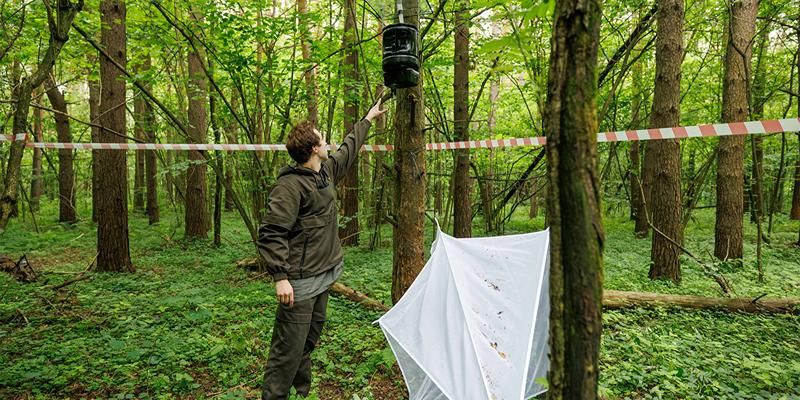
Specialists regularly collect samples from the installed traps.
Scientists from the A.N. Severtsov Institute of Ecology and Evolution of the Russian Academy of Sciences (IEE RAS), on behalf of the Moscow Department of Nature Management and Environmental Protection, have begun large-scale research in Moscow parks and green spaces. The specialists are studying biodiversity and recording changes in the Moscow section of Losiny Ostrov National Park, as well as in the Tsaritsyno Museum-Reserve and the Pokrovskoye-Streshnevo and Kuskovo estates.
When walking through these green spaces, visitors should exercise caution and avoid damaging research traps, as this could interfere with scientific work.
"The main goal is to form a complete picture of insect species composition and abundance in order to objectively assess the condition of the capital's natural areas. Two types of traps are used to collect data - each designed for a specific group of insects," noted Anton Goncharov, a senior researcher at the Laboratory of Soil Zoology and General Entomology at IEE RAS.
To study pollinators and other dipterans, scientists use Malaise traps (insect tent traps). Insects fly into them, rise to the dome, and end up in a container with a preservative. Based on the species composition of the collected specimens, specialists assess the diversity of flora in each green area.
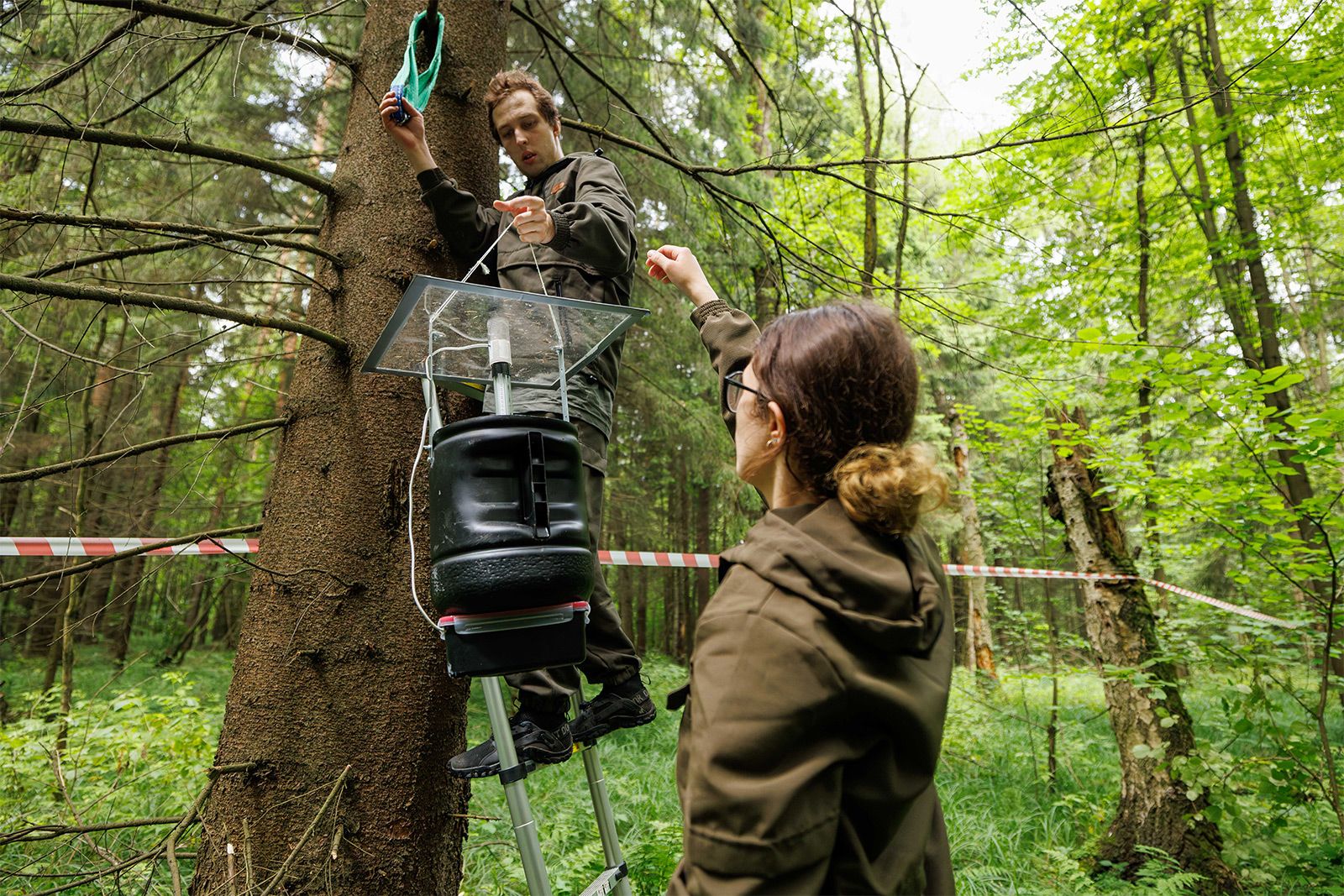
Photo: Press Service of the Moscow Department of Nature Management and Environmental Protection
Сontainers with a light bulb and battery (light traps) are used for moths. Using the captured insects, specialists assess the diversity of tree and shrub species in the study area.
Specialists regularly check the equipment and collect the samples. Each trap operates for five days, which is sufficient time to obtain the necessary data.
As the researchers note, monitoring allows them to track the population dynamics of species: the populations of some species are increasing, while others are gradually declining.