





The forest canopy is inhabited by a variety of invertebrates, some of which are traditionally considered to be soil dwellers.
News
12
February
2025
Hybridization in butterfly agamas leads to an increase in ploidy and a transition to reproduction without males
Among the many animal species, only a few have abandoned males and switched to unisexual reproduction.
11
February
2025
A rare specimen of the three-toothed lamprey found in the northwestern Pacific Ocean
Cases of catching two individuals of the three-toothed lamprey in the northwestern Pacific Ocean have expanded our knowledge of the morphological characteristics and biology of this species during its marine life.
11
February
2025
Habitat suitability in Chechnya for the Persian leopard assessed
Information on the current state of habitats and the degree of their suitability for the species in different parts of its range, which in the Russian Caucasus is its northwestern edge, is in great demand.
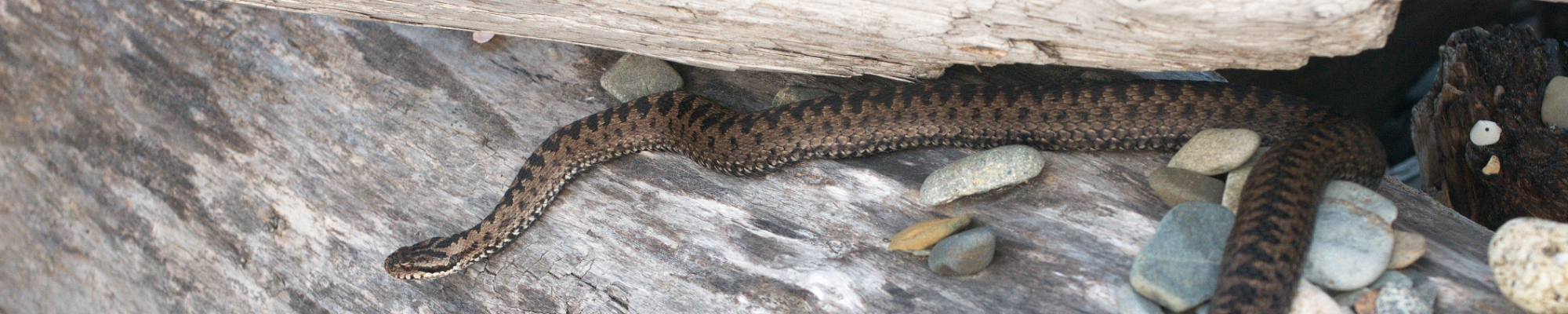
A new study on the phylogeography of the eastern subspecies of the grass snake has shed light on how this snake species spread across northern Eurasia after the Last Glacial Maximum.
10
February
2025
Study of mammal evolutionary histories sheds light on existence of continental bridge between Africa and Arabian Peninsula
The study of speciation processes occurring at the Pliocene-Pleistocene boundary in individual groups of mammals allows us to reconstruct the picture of the evolution of biological diversity in poorly studied parts of the world.
10
February
2025
First detailed study of millipede viruses
Advances in sequencing technologies and bioinformatics have led to a breakthrough in the study of viral diversity, but viruses of most soil animals (except ants) remain largely unstudied.
08
February
2025
February 8 - Russian Science Day
This holiday was established in 1999 in honor of the 275th anniversary of the founding of the Russian Academy of Sciences (RAS) by Peter I in 1724.
The film was shot in Kamchatka on the territory of the Kronotsky Nature Reserve over the course of three years. In total, three expeditions from 2020 to 2022 lasted 26 months.
30
January
2025
The Atlas of Distribution of Mammals of the European Part of Russia is available for pre-order
The Atlas of Distribution of Mammals in the European Part of Russia is almost ready and will soon be published.
29
January
2025
The monograph "Diagnostics and prevention of helminthiasis in reindeer in zoos: methodological recommendations" is available for download
These guidelines were developed based on the results of a study of reindeer helminths in fifty zoos and menageries in the Russian Federation, conducted in 2024.
17
January
2025
New data on the ecology of two poorly studied fish species in the Russian Arctic have been obtained
Scientists have obtained new data on the slender eelblenny Lumpenus fabricii (Stichaeidae) and the bigeye sculpin Triglops nybelini (Cottidae) in the seas of the Russian Arctic.
16
January
2025
New data gives bloodsucking flies another genus
Hippoboscidae bloodsucking flies have a large number of unique morphological and physiological adaptations, most of which are closely related to their ectoparasitic lifestyle.
31
December
2024
Happy New Year!
May the new year fulfill all your dreams and wishes, bring confidence, hope, health and well-being to every home!
28
December
2024
River otters from the Russian Far East are genetically distinct from otters from European Russia and the Caucasus
The nominative subspecies of the otter is widespread from Western Europe to the Russian Far East, the Caucasian subspecies (L.l. meridionalis) lives in the North Caucasus, Transcaucasia up to the north of Iran.
28
December
2024
Taxonomy of polychaete nereids associated with hermit crabs from Russian waters of the northeastern Pacific Ocean
The work presents molecular genetic analysis and data on the ecology and distribution of the symbiotic polychaete genus Cheilonereis Benham, which is associated with hermit crabs in the southern part of Primorye.
27
December
2024
Among the colonists, the females are bold and the males are timid
Human activity, which actively influences global processes, has accelerated the movement of habitats of living organisms so much that it allows us to study it in real time.
27
December
2024
Lake Elgygytgyn in Chukotka - a point of Arctic endemism
In the very heart of Chukotka, in the middle of the Anadyr Plateau, just north of the Arctic Circle, lies Lake Elgygytgyn, formed as a result of a meteorite fall about 3.6 million years ago.