

Заголовок
Laboratory of Mammalian Microevolution
Head of the laboratory
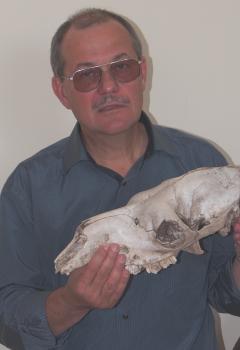
Lavrenchenko Leonid Aleksandrovich
About the laboratory

The laboratory was organized in 1950 by Professor S.N. Bogolyubsky. Its task initially was to study the morphology of domestic animals and their wild relatives; later, the main focus shifted to the field of mammalian microevolution.
Using modern molecular-genetic, cytogenetic, and morphometric methods, research is carried out on microevolutionary processes in populations, phylogenetic reconstructions of species evolution, and even the history of the formation of entire faunas. The influence of global climate change on the processes of evolutionary diversification and genetic differentiation of small mammals is being studied.
A special place in the research is occupied by the study of hybridization zones between closely related forms, which represent an ideal natural laboratory for addressing a wide range of questions related to the species problem. The features of microevolutionary processes along a pronounced altitudinal gradient of natural conditions are studied, as well as the significance of the consequences of interspecific hybridization for the adaptation of individual species to the harsh climatic conditions of high mountains. In a broad geographic context, the genetic variability of the naked mole-rat — the only eusocial species among mammals and a unique model organism for a number of fields of evolutionary and medical biology — is studied.
Research is also carried out on the coevolution of mammals with their pathogens and parasites.