
Заголовок
Laboratory of Aquatic Community Ecology and Invasions
Head of the laboratory
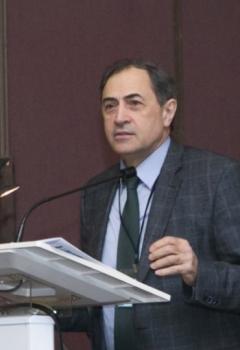
Dgebuadze Yury Yulianovich
About the laboratory
The laboratory's research aims to study the composition, structure and functioning of aquatic communities in space and time, including the history of their formation.
Considerable attention is paid to studying the taxonomic composition of aquatic invertebrates, above all the water fleas (Cladocera), a group that plays a dominant role in inland water ecosystems. This group is studied on a worldwide faunal scale. The main focus is on the detailed description of species-level taxa, analyzed both morphologically and by molecular genetics. In addition to numerous papers on this subject, a number of identification guides for the group have been published, and international and national training schools/seminars are held to improve the qualifications of zooplankton specialists.
The morphology, embryology, ecology, physiology and zoogeography of water fleas are also studied, including to clarify the history of the evolutionary development and phylogenetic relationships both of the whole group within the class Branchiopoda and of its individual subdivisions. Modern molecular-genetic methods are used for phylogeographic reconstructions analyzing the history of the spatial distribution of individual species and species groups.
Long-term observation of zooplankton communities is indispensable for studying their long-term dynamics and reorganizations, caused both by natural processes and by anthropogenic impact. Many years of regular annual surveys of the pelagic zooplankton of Lake Glubokoye (Moscow Region), as a reference natural water body, make it possible to assess the results of a substantial reorganization of the lake community following strong anthropogenic impact on the water body linked to land reclamation of its catchment.
Research at Lake Glubokoye, one of the most thoroughly studied water bodies in Russia and the world, aims at the fullest possible study of the composition of its biota and its individual groups, for which specialists from various institutions and countries are involved.
Paleolimnological research is aimed at studying the history of the development and formation of modern freshwater communities. For this purpose, both vertical sections of lake sediments and their surface layers are studied, as well as data of another kind, such as the composition of resting stages of water fleas found in the fur of mammoths and other animals of the glacial and postglacial epochs.
The development of theoretical and applied research on the biological invasions of alien species occupies a significant place in the laboratory's work:
- identifying new invasion corridors and vectors and refining known ones;
- studying the adaptations of invasive species to new conditions;
- assessing the vulnerability of native ecosystems and the risk of invasions;
- studying the genetic and evolutionary consequences of invasions;
- identifying the consequences of the impact of invasive species on native species and ecosystems.
The main subjects of research on the invasion process are invertebrates (crustaceans, insects) and vertebrates (fish, amphibians, reptiles).
In addition, the laboratory studies the mechanisms of intraspecific speciation (microevolution) in fish. This research is conducted in the world's «centers of diversification» — the Central Asian internal drainage basin (Mongolia) and the water bodies of the Abyssinian Highlands (Ethiopia).
In recent years, the laboratory has begun research on the qualitative characteristics of matter flows in the food webs of aquatic and semi-aquatic ecosystems, and the role of boundary zones (ecotones) in these processes.
The laboratory conducts extensive teaching activities. Leading laboratory staff constantly supervise the dissertation work of postgraduate students and degree candidates (on average 2–3 per year). Over the laboratory's existence (from 2006 to 2018), one doctoral dissertation was defended at the laboratory, and 7 postgraduate students and 3 degree candidates of the laboratory defended candidate dissertations; in addition, under the supervision of laboratory staff, a further 2 doctoral and 5 candidate dissertations were defended by researchers from other laboratories and institutions. Every year, at the Lake Glubokoye biological station, laboratory staff conduct summer field practicals for students of the Department of Invertebrate Zoology, Faculty of Biology, Lomonosov Moscow State University. Two lecture courses for master's and postgraduate students have been developed and are taught at the Faculty of Biology of Lomonosov Moscow State University, at Siberian Federal University, and at IEE RAS.
The laboratory was an initiator and one of the organizers of regular international symposia: «Invasions of Alien Species in the Holarctic» (the most recent, 6th symposium, held in 2021) and «Crustaceans: Diversity, Ecology, Evolution» (the most recent held in 2024).
The laboratory was the initiator of the electronic periodical «Russian Journal of Biological Invasions». The journal has been published since 2008, is translated into English, is distributed by Springer, and is indexed in the Scopus database.
The laboratory was the initiator of the establishment of the Russian Carcinological Society.