

Scientific research has resumed in the part of the Losiny Ostrov National Park. During environmental field work, specialists study the biological diversity of water bodies and the state of populations of rare species.
Plastic pollution of the planet is one of the most serious environmental problems of our time. Plastic causes diverse and well-documented harm to aquatic ecosystems, from small invertebrates to fish, seals, and seabirds.
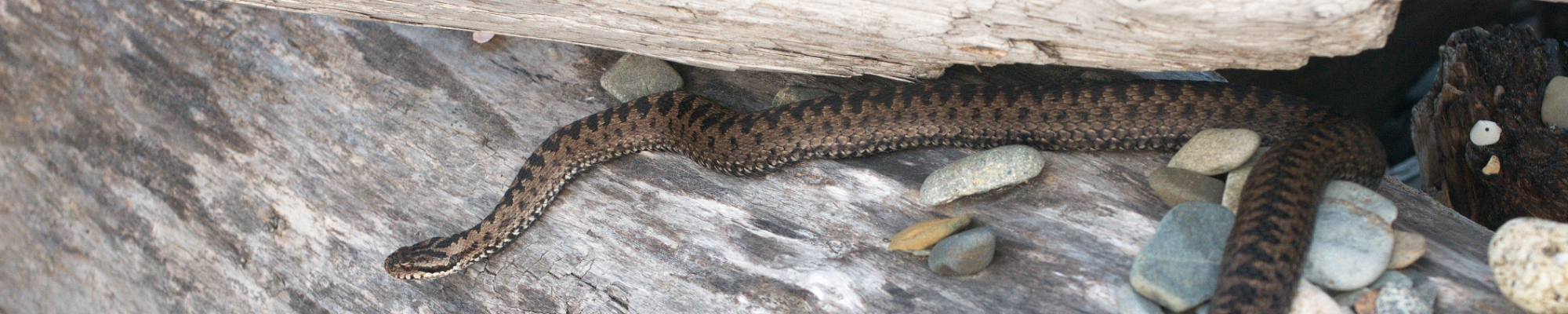
December 18, 2024 marks the 100th anniversary of the birth of CM of the RAS Ilya Sergeevich Darevsky, a leading Russian herpetologist, founder and first President of the A.M. Nikolsky Herpetological Society.
The exhibition is illustrated with rare archival photographs. We invite you to visit the exhibition and learn about the Institute's contribution to the Victory!
Ongoing climate change and human activities are transforming the dynamics of pathogenic bacterial populations in the natural environment, increasing the risk of infectious diseases.
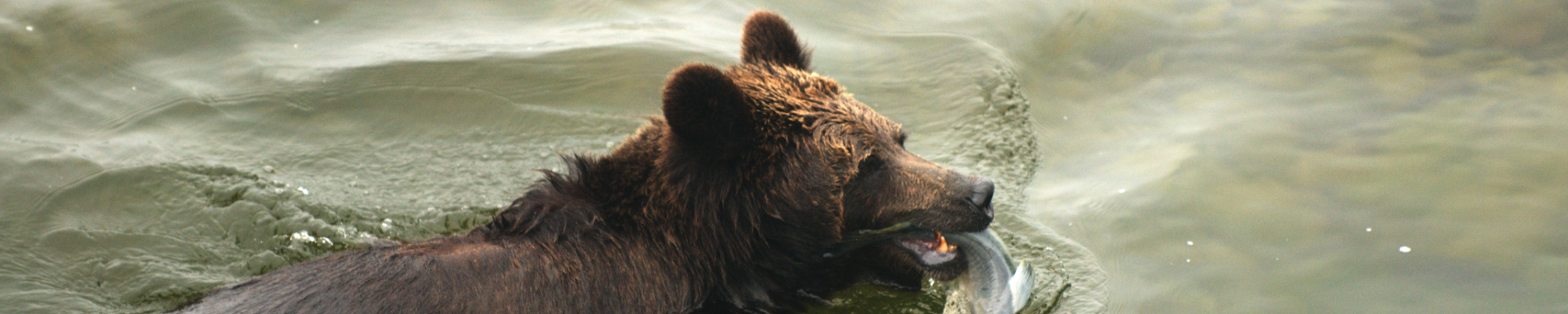
As part of scientific and scientific-technical cooperation between the IEE RAS and the "Taimyr Nature Reserves", a meeting was held ahead of the field season for studying the polar bear.
Scientists from theIEE RAS have demonstrated the successful use of nanomaterials (silver, silicon, selenium, and nickel nanoparticles obtained by laser ablation) to combat nematodes.
Currently, the genus of conger eels Gnathophis Kaup, 1860 includes 27 valid species, of which only three species have been recorded, although some unidentified species have also been reported previously.
Scientists have found that the appearance in some stores dried sharks, intended for feeding and playing with pets, increases the anthropogenic load on the population of the Pacific spadenose shark.
Scopus has provided new scientometric data on journals for 2024, according to which the journal "Problems of Ichthyology/Journal of Ichthyology" entered the second quartile (Q2).
Siberian parasitologists are looking forward to welcoming their colleagues from September 15-17, 2026, at the Institute of Systematics and Ecology of the Siberian Branch of the Russian Academy of Sciences, located at 11 Frunze Street.
2026 marks the 70th anniversary of the birth of Maxim Grigorievich Sinitsyn, PhD in Biology, the founder and first director of the Kologrivsky Forest Nature Reserve. To commemorate this anniversary, a scientific and practical seminar on the study of protected areas will be held on March 24, 2026, at the Center for Ecological and Practical Forestry of the Russian Academy of Sciences (Moscow). The seminar program will include reminiscences from Maxim Grigorievich's colleagues and scientific papers on the monitoring and study of protected natural complexes.
The A.N. Severtsov Institute of Ecology and Evolution of the Russian Academy of Sciences (IEE RAS), the I.D. Papanin Institute of Biology of Inland Waters of the Russian Academy of Sciences (IBW RAS), and the P.G. Demidov Yaroslavl State University invite you to participate in the Seventh International Symposium "Alien Species in the Holarctic. Borok-VII."
We invite you to the IV All-Russian conference with international participation "Mechanisms of Microorganism Adaptation to Various Environmental Conditions – MICRAD-2026," which will be held from August 24 to 29, 2026, in Irkutsk and at the Uyuga tourist center on the shore of Lake Baikal.
We invite you to participate in the 25 International Scientific and Practical Conference "Problems of botany of South Siberia and Mongolia". In 2026, the organizers decided to hold the anniversary meeting in person during the summer field season 20 – 23 of July at the Altai State University internship center in the Altai Republic.
The conference "Biological Morphogenesis: Mechanisms of Morphogenetic Processes, Intra- and Interscale Interactions in Developing Systems, and the Potential and Limitations of Formation" opens a series of scientific events dedicated to the 110th anniversary of the publication of W. D'Arcy Thompson's 1917 book "On Growth and Form." It will be held November 11–12, 2026, at the A.A. Borissiak Paleontological Institute of the Russian Academy of Sciences.