



News
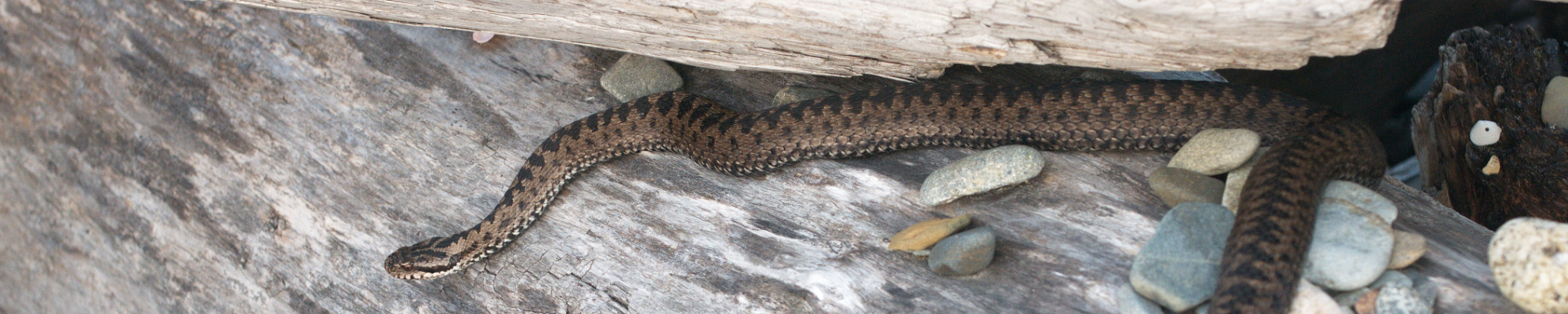
A new study on the phylogeography of the eastern subspecies of the grass snake has shed light on how this snake species spread across northern Eurasia after the Last Glacial Maximum.
The study of speciation processes occurring at the Pliocene-Pleistocene boundary in individual groups of mammals allows us to reconstruct the picture of the evolution of biological diversity in poorly studied parts of the world.
Advances in sequencing technologies and bioinformatics have led to a breakthrough in the study of viral diversity, but viruses of most soil animals (except ants) remain largely unstudied.
This holiday was established in 1999 in honor of the 275th anniversary of the founding of the Russian Academy of Sciences (RAS) by Peter I in 1724.
The film was shot in Kamchatka on the territory of the Kronotsky Nature Reserve over the course of three years. In total, three expeditions from 2020 to 2022 lasted 26 months.
The Atlas of Distribution of Mammals in the European Part of Russia is almost ready and will soon be published.
These guidelines were developed based on the results of a study of reindeer helminths in fifty zoos and menageries in the Russian Federation, conducted in 2024.
Scientists have obtained new data on the slender eelblenny Lumpenus fabricii (Stichaeidae) and the bigeye sculpin Triglops nybelini (Cottidae) in the seas of the Russian Arctic.
Hippoboscidae bloodsucking flies have a large number of unique morphological and physiological adaptations, most of which are closely related to their ectoparasitic lifestyle.
May the new year fulfill all your dreams and wishes, bring confidence, hope, health and well-being to every home!
The nominative subspecies of the otter is widespread from Western Europe to the Russian Far East, the Caucasian subspecies (L.l. meridionalis) lives in the North Caucasus, Transcaucasia up to the north of Iran.
The work presents molecular genetic analysis and data on the ecology and distribution of the symbiotic polychaete genus Cheilonereis Benham, which is associated with hermit crabs in the southern part of Primorye.
Human activity, which actively influences global processes, has accelerated the movement of habitats of living organisms so much that it allows us to study it in real time.
In the very heart of Chukotka, in the middle of the Anadyr Plateau, just north of the Arctic Circle, lies Lake Elgygytgyn, formed as a result of a meteorite fall about 3.6 million years ago.
Heavy metals are widespread and circulate freely on the ground, in the atmosphere and in water.
Many parasites are able to change the behavior of their hosts to their advantage. This evolutionary adaptation is called "parasitic manipulation".
The half-century anniversary of the book is an integral part of the great scientific history of the IEE RAS, which recently celebrated its 90th anniversary.
Mathematical models in ecology have traditionally focused on asymptotic or long-term dynamics, such as the study of equilibrium states.