

Research Directions
Research is carried out in various natural zones, but special attention is paid to communities under extreme conditions, especially marginal segments of climatic gradients (the Arctic and Subarctic), mountain areas, salt marshes, caves, and others, as well as urbanized landscapes.
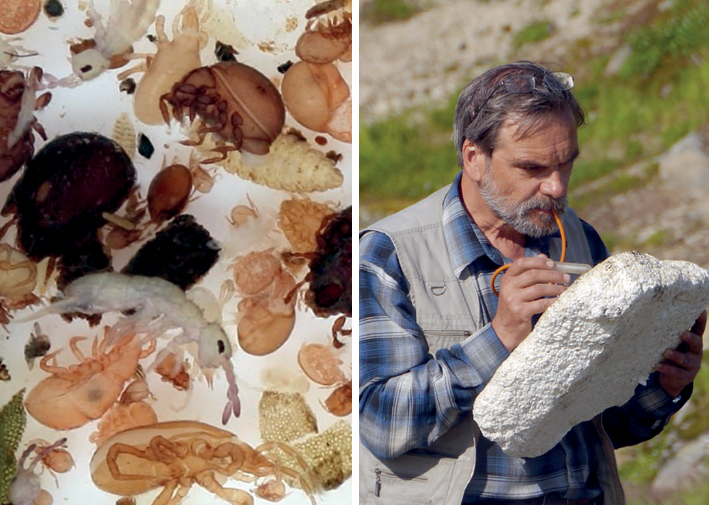
Unique data have been obtained on the structure of the animal community of the polar desert zone, showing that it is dominated by the most ancient (Paleozoic) animal groups — nematodes, mites, and springtails. Analysis of long-term changes in animal communities in arid areas, the Arctic, and the urban environment is ongoing. Taxonomic and inventory studies of invertebrates, chiefly arthropods, occupy an important place in the laboratory's work. Considerable attention is also devoted to conservation issues, i.e. developing the scientific basis for environmental monitoring, organizing specially protected areas, and maintaining the national Red Data Books.