

Research Directions
MAIN RESEARCH AREAS
- Development of the scientific basis for great bustard (Otis tarda L.) conservation in Russia
- Study of steppe ecosystem dynamics during demutational succession on fallow land and pastures, and under climate change and anthropogenic pressure
- Study of vertebrate species diversity in the semi-arid territories of southeastern Russia
- Phenology of spawning migrations and dynamics of sex structure in anuran amphibians
RESEARCH RESULTS
1. Development of the scientific basis for great bustard (Otis tarda L.) conservation in Russia.
Study of the ecology of the Trans-Volga bustard population.
Since 1996, we have conducted research on the ecology of the East European bustard population in the Saratov Trans-Volga region. Data on the spatial-ethological structure of the bustard population and on the state of the food base during the chick-rearing period, as well as on reproductive success, were obtained for the first time. Large-scale abundance surveys of the species were conducted for the first time across a representative part of its range, and satellite telemetry was used to study female migration routes to and from wintering grounds (Oparina, Oparin, 2001; Oparina et al., 2001; Watzke et al., 2001; Oparina et al., 2002; Oparin et al., 2003; Trofimova et al., 2003, Oparina, Oparin, 2005; Watzke, 2007; Oparina et al., 2008; Oparin et al., 2012; Oparina et al., 2015; and others).
Long-term monitoring of the Trans-Volga bustard population is being carried out, together with the identification of environmental factors driving changes in its numbers.
We have established that the Trans-Volga bustard population is declining rapidly under current land-use patterns. The observed trend toward a reduction in the area of early spring cereal crops, on which bustards breed successfully, and an increase in the share of row crops and winter cereals preceded by fields left under bare fallow and repeatedly cultivated over the summer, has a negative effect on bustard reproductive success. At the same time, the presence of old fallow land allows the birds to retain some of their clutches. However, the spontaneous nature of land use — whereby land is abandoned for several years after sunflower cultivation, which severely depletes the soil, while old fallow land is ploughed up again — gives no grounds for a positive forecast of population recovery for this species.
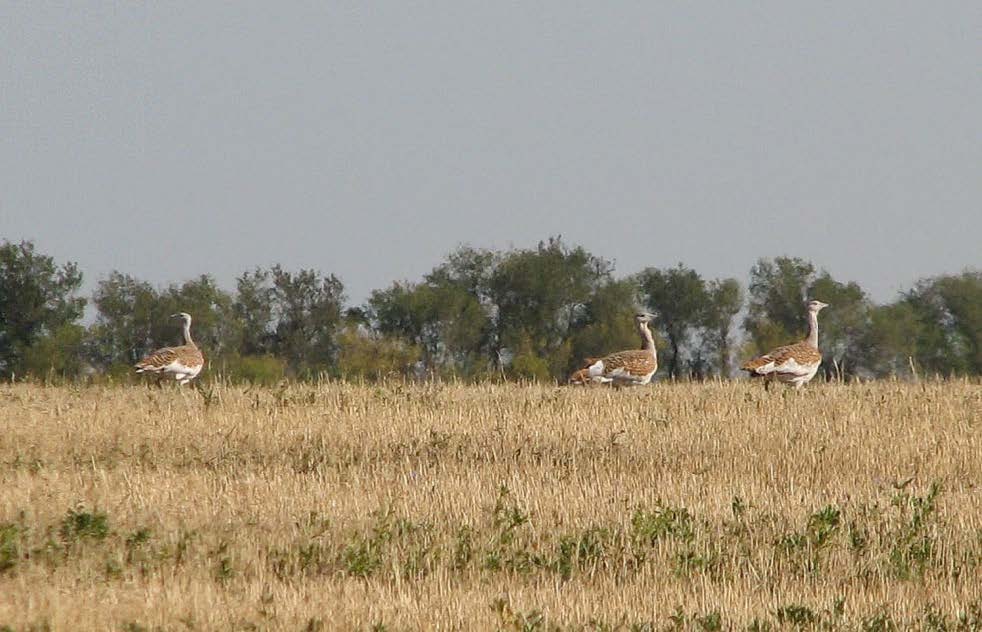
A study of the spatial distribution dynamics of the bustard in the Saratov Trans-Volga region over two decades made it possible to conclude that bustard density in the study area has declined significantly and that the breeding range has become fragmented. In addition, a redistribution of density across the territory should be noted. In the late 1990s, areas of high bustard breeding density were located in the Fyodorovsky and Sovetsky districts of the Saratov Trans-Volga region. Currently, the highest bustard density has been recorded in the Krasnokutsky, Pitersky and Novouzensky districts. As noted above, since 1998 we have monitored the Trans-Volga bustard population, currently the largest in Eastern Europe, for 20 years. During the 2000s-2010s we recorded a decline in this population, which, according to our data, amounted to 68.6% between 2011 and 2014 compared with 2000. By 2015, the decline had reached 80% compared with 2000. The area of habitat suitable for bustard nesting has shrunk by nearly 11% compared with 2000, and now accounts for 24% of the surveyed territory (winter and early spring cereal crops); 18% is conditionally suitable (fallow land) and 58% is unsuitable (row crops, late spring crops such as millet, virgin pastureland, settlement land, water bodies, forest plantations, roads, etc.). The decline in bustard numbers is further compounded by intensifying agrochemical use (ground- and aircraft-based treatment of winter crops during the period when female bustards are incubating clutches).
Development of measures for conserving the bustard in the wild;
We have developed and tested, for the first time, methods for conserving the bustard — a rare species that has shifted from virgin steppe to inhabiting crop-rotation fields. It has been shown that establishing protected areas of any level, without regulating the activities of agricultural producers, does not ensure bustard conservation in the wild. A scheme of measures to conserve the breeding population of the bustard has been developed. It envisages cooperation between research organizations, federal and regional conservation authorities, and agricultural producers who are land users in areas hosting the species' most significant breeding aggregations. Implementing these measures requires the adoption of legislative acts at the federal and regional levels and the allocation of funds for compensation payments to agricultural producers.
Establishment of a captive bustard flock for breeding the species in captivity.
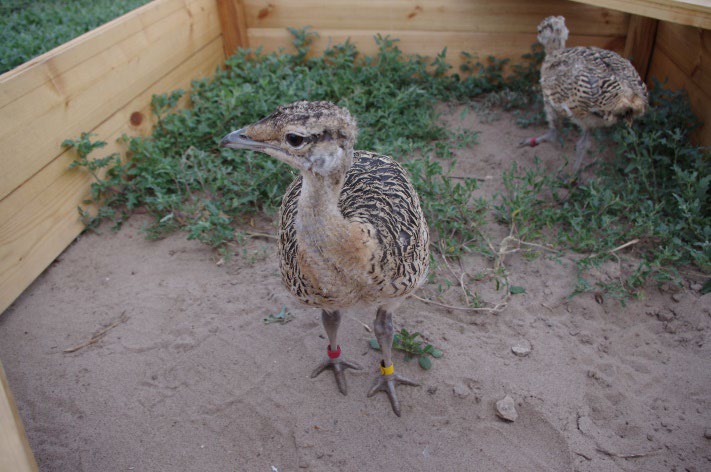
This area of work is very important, since the Trans-Volga bustard population is the last reproductively self-sustaining territorial group of this species in Russia and neighboring countries (the steppe countries of the CIS and Eastern Europe). Facilities for year-round housing of the birds have now been built at the field station, and an enclosure complex has been established.
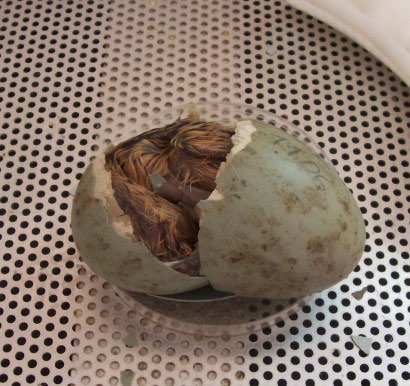
Work on captive bustard breeding began in 2012. Studies of the birds' behavior and social relationships are being conducted using a continuous video-monitoring system in the enclosures.
2. Study of Steppe Ecosystem Dynamics During Demutational Succession on Fallow Land and Pastures and Under Climate Change
Identifying stages of degradation and natural recovery of steppe natural complexes and the dynamics of their ecosystem components under natural and anthropogenic factors:
Study of demutational vegetation succession on fallow land and pastures under reduced anthropogenic pressure.
A characteristic feature of steppe ecosystems is their dynamism. This is manifested above all in changes in vegetation cover occurring under anthropogenic (mainly agricultural) pressures that vary in intensity and direction. Anthropogenic succession (the replacement of one plant community by another as a result of human economic activity) is one of the most important properties of plant communities (Ramensky, 1938; Rabotnov, 1983). As anthropogenic pressure on steppe ecosystems has decreased, previously disturbed plant communities are recovering through a relatively rapid sequential replacement of several short-lived communities, forming stages of demutational (recovery) succession. The essence of such succession lies in the gradual restoration of the coenotic environment of the plant community that had been disrupted by external impact. These processes have their own regional specificity, which our research addresses.
3. Study of Vertebrate Species Diversity in the Semi-Arid Territories of Southeastern Russia
Dynamics of community structure of model groups of terrestrial vertebrates and of population abundance of model species during the recovery of steppe vegetation.
Our research is devoted to the dynamics of zoocenoses during fallow-land demutational succession of steppe vegetation (Oparin et al., 1999; Oparin et al., 2000; Oparin et al., 2003; Oparin et al., 2005; Oparin et al., 2001; Oparin, Oparina, 2006; Oparin, 2007; Oparin, Oparina, Trofimova, 2016). It should be noted that relatively few studies have addressed this problem. We studied the dynamics of small-mammal and ground-nesting bird communities during fallow-land vegetation succession in typical and dry steppes of the Saratov Trans-Volga region from 1996 to the present, across the territory from the Bolshoy Irgiz River in the north to the extreme southeast of the Syrt Plain of the Saratov Trans-Volga region. We found that, along the demutational fallow-land series of habitats, there is a gradual decline in the proportion of mesophilic faunal elements that dominated agrocenoses and early-succession fallow land, and an increase in the number and abundance of the original steppe xerophilic bird and mammal species. The rate of vegetation and animal community recovery in the region we studied is fairly high. The presence of surviving virgin-steppe plots provides propagule sources for the demutation process.
Dynamics of the terrestrial vertebrate fauna in the steppes of the Lower Volga region against the background of climate-change trends and human economic activity.
We used a method of retrospective analysis of the dynamics of the natural environment of the study region over the 20th century, which allowed us to show that the transformation of semi-arid steppe ecosystems currently under way results from a system of natural and anthropogenic factors. In our view, climatic factors and agricultural production play the leading role. The rate of change in the vertebrate community structure proved to be very high. Over several decades, as a result of climate change in the Trans-Volga steppe region we studied — manifested as milder winters and increased moisture — mesophilic mammal and bird species spread into the territory from the north, west and east. This process was facilitated by a deep decline in agricultural production. In spreading southward across the region, many species — for example, the speckled ground squirrel, bank vole, root vole, and yellow-necked and field mice — made use of anthropogenic landscape elements (forest shelterbelts, road and railway verges, pond cascades along gullies, and irrigation canals), but in our view all these processes were ultimately driven by climate change. At the same time, representatives of the steppe's xerophilic fauna retreated to the southeast, driven both by increased moisture and by demutational processes caused by the sharp decline in agricultural production. All of this is illustrated using mammals and birds that inhabited, and still inhabit, the Trans-Volga steppe. The changes noted above most likely explain the spread into the Trans-Volga steppe territory of desert mammal species such as the Mediterranean pipistrelle, the jackal, and the steppe cat.
Study of the relationship between the territorial distribution of model species of ground-nesting steppe birds and the landscape structure of the Trans-Volga steppes and semi-deserts, using remote-sensing data.
We have studied the community structure and abundance of a model lark group in the semi-desert of the Caspian Lowland from 2011 to the present. The work is carried out in the Aleksandrovo-Gaysky District of Saratov Oblast and the Bokeyordinsky and Dzhanibeksky Districts of West Kazakhstan Oblast, Republic of Kazakhstan. We have described the interannual dynamics of the lark community in this territory (Oparin et al., 2013) and studied the distribution of breeding lark pairs across habitats (Oparin et al., 2014). The density of singing male larks — and, from this, the approximate number of breeding pairs — was determined using a transect method with variable-width count strips during the breeding season (Ravkin, Chelintsev 1990; Bibby et al., 2000). Our work uses remote-sensing data. Conditional above-ground green (vegetating) biomass reserves are estimated from the sum of NDVI vegetation-index values in 5×5 km squares (20×20 pixels) at key sites. We consider this estimation procedure valid based on numerous studies showing that the vegetation index correlates with above-ground phytomass reserves (Box et al., 1989; Paruelo et al., 1997; Kensuke Kawamura et al., 2005; Fedorova, 2012, and others). We used the NDVI vegetation index from the MOD13Q1 raster data product (MODIS spectroradiometer) for June 10, 2011-2016, at 250 m resolution. Soil maps of the sites were compiled by us based on visual analysis of Landsat-8 imagery for May-June 2013-2014, drawing on medium-scale soil maps of the Caspian Lowland and southern Trans-Volga region (scale 1:200,000, 1951); the vegetation of individual soil contours was described during geobotanical surveys.
We work with a model group of species — larks — that leave no visible signs of their presence. In studying the dependence of the abundance of individual lark species on the landscape structure of the key sites, we used, in addition to ground surveys, data obtained by interpreting high-resolution satellite imagery. Within the virgin-steppe territories of the Northern Caspian region, contrasts in ground cover are most pronounced in the late-summer to early-autumn period (Gonin, 1980; Vinogradov, 1984; Trofimov, 2001). In spring, these contrasts are smoothed out by the rapid growth of ephemerals and ephemeroids. Accordingly, imagery from the August-September period is the most informative for interpreting the soil and vegetation cover of the semi-desert territory. In this work we used a detailed multispectral image with 2 m spatial resolution from the Pleiades satellite, which captures imagery in the blue (0.43-0.55 µm), green (0.49-0.61 µm), red (0.60-0.72 µm) and near-infrared (0.79-0.95 µm) spectral bands. The imagery date was September 2, 2014. Along the variable-width count transects used to survey larks, a 150 m radius buffer zone was created (the maximum possible detection distance for singing male larks), within which the structure of the soil and vegetation cover was analyzed, taking into account image heterogeneity and ground-based soil and geobotanical survey data. Analysis of image heterogeneity was performed using cluster analysis in the SAGA software (Hill-climbing algorithm (Rubin 1967)). In total, 87 count transects with a combined length of 92,450 m were analyzed in this way. Interpretation of the satellite imagery yielded a description of the vegetation cover structure within the count strip of each transect. In processing the resulting data, we performed correlation analysis and approximated the resulting empirical curves with theoretical distributions.
We established a correlation between lark abundance and the share of a given community in the vegetation cover of a specific count transect. We also found that the empirical distributions of count data for the black lark and the Asian short-toed lark matched a polynomial distribution (2nd-degree polynomial) when studying the dependence of these species' abundance on the area of their characteristic habitats along specific transects (R2 = 0.737 for the black lark and R2 = 0.918 for the Asian short-toed lark). For the sky lark, the empirical distribution matched a theoretical polynomial distribution (3rd-degree polynomial) (R2 = 0.541). For the white-winged lark, we were unable to find a theoretical distribution that significantly matched the empirical distribution.
Thus, by using high-resolution satellite imagery to interpret plant-association units, and applying statistical methods, we were able to show a close relationship between the distribution of several lark species inhabiting the semi-desert of the Caspian Lowland and the specific plant associations they prefer as nesting sites. Continuing this research will make it possible to develop an algorithm for assessing the suitability of specific landscape-ecological districts for particular vertebrate species using remote-sensing data, so that this assessment can be based on freely available medium-resolution multispectral Landsat 8 satellite imagery.
Population dynamics and formation of the modern community structure of small mammals in the steppe Right Bank and Trans-Volga regions
The study of community structure, population dynamics and distribution of small mammals in the steppe zone of the Lower Volga region has been carried out practically since the branch's founding. From 2003 to 2012, annual stationary surveys and abundance counts were conducted on the Volga Upland in the steppe Right Bank region and in the Khoper River valley. Since 2013, abundance monitoring has continued in the Pri-Eruslan steppe of the Saratov Trans-Volga region. The main objectives of the research are to assess changes in the composition of the small-mammal fauna in relation to the nature and degree of anthropogenic transformation of the territory, and to identify the main patterns of population dynamics of background species and small-mammal communities under different ecological conditions.
4. Phenology of Spawning Migrations and Dynamics of Sex Structure in Anuran Amphibians
In addition to anthropogenic impact, global climate change has, in recent decades, become the most significant driver of changes in amphibian abundance dynamics, spawning migration patterns, and breeding timing. Accordingly, a comprehensive analysis has been initiated for the most abundant amphibian species in river valleys of the northern Lower Volga region, examining changes in their abundance, size-sex structure, spawning-migration phenology and other parameters under the influence of both anthropogenic and weather-climatic factors.
Based on long-term field studies of floodplain lakes in the Medveditsa River valley (Saratov Oblast), conducted in 2009-2016, the features of spawning-migration phenology of the fire-bellied toad (Bombina bombina), common spadefoot toad (Pelobates fuscus) and marsh frog (Pelophylax ridibundus) were identified.
The dates of onset of the main phases of this phenomenon (start, peak, end) were determined, along with the critical water-temperature values in spawning water bodies at the onset of each phase. Species-specific temperature parameters characterizing the studied species during each phase of spawning migration were identified. Interpopulation differences among these amphibian species are minor and are attributable to local features of the spawning water body (position in the river valley, feeding-regime characteristics, flood influence, year-specific conditions, and distance from the wintering site). Generalizing the interspecific differences made it possible to establish a clear temporal sequence of arrival of the studied species at the spawning water body, which was consistently reproduced across all studied spawning lakes over a number of years: P. fuscus → B. bombina → P. ridibundus.
Analysis of changes in the calendar dates of onset, end and duration of hibernation of the common spadefoot toad (Pelobates fuscus) in the Medveditsa River valley revealed a shortening of hibernation duration by an average of 7 days over the past 120 years, driven by a shift of the hibernation onset date to later and the end date to earlier. Changes in the end-of-hibernation date began mainly in the 1950s, and in the onset date in the 1980s, accelerating substantially in 2002-2014. The periodicity of changes in hibernation onset and end dates is mainly attributable to cycles of winter severity (8–9 years) and wet-dry cycles (Brückner cycles: 36–38 years). Analysis of the temperature regime in the soil profile showed that the shortening of hibernation duration is due mainly to an earlier onset of spring spawning migration by sexually mature P. fuscus individuals. The depth at which P. fuscus occurs in the soil profile has been consistently decreasing since the early 1980s. Predictive models have been developed suggesting that, if the current climate trend continues, movement of individuals of this species within the soil-profile horizons they occupy during the active period may cease by the mid-21st century, and hibernation duration may shorten substantially or even disappear entirely as a phase of the annual cycle within a few hundred years. Such forecasts can clearly be used in predicting the status of this species' populations, as well as in developing and planning a set of conservation measures for specific territories.
The sex ratio in local populations of B. bombina ranged from 1:1 (balanced) to 1.73:1 (no consistent trend in sex-structure change was identified), while in P. ridibundus it ranged from 1.96:1 to 4.13:1, with a male predominance whose share is gradually increasing. Within the study area, a balanced sex ratio in P. fuscus was observed relatively rarely — in 30% of surveys (females predominated in 14%, males in 56%). The male-to-female ratio in P. fuscus populations ranged from 2.76:1 to 1:1.92. In many male-predominant P. fuscus populations, a temporal trend toward an equal sex ratio is observed, accompanied by an increase in the number of females.