

Researchers from IEE RAS presented projects for the recovery of rare feline species at COP17
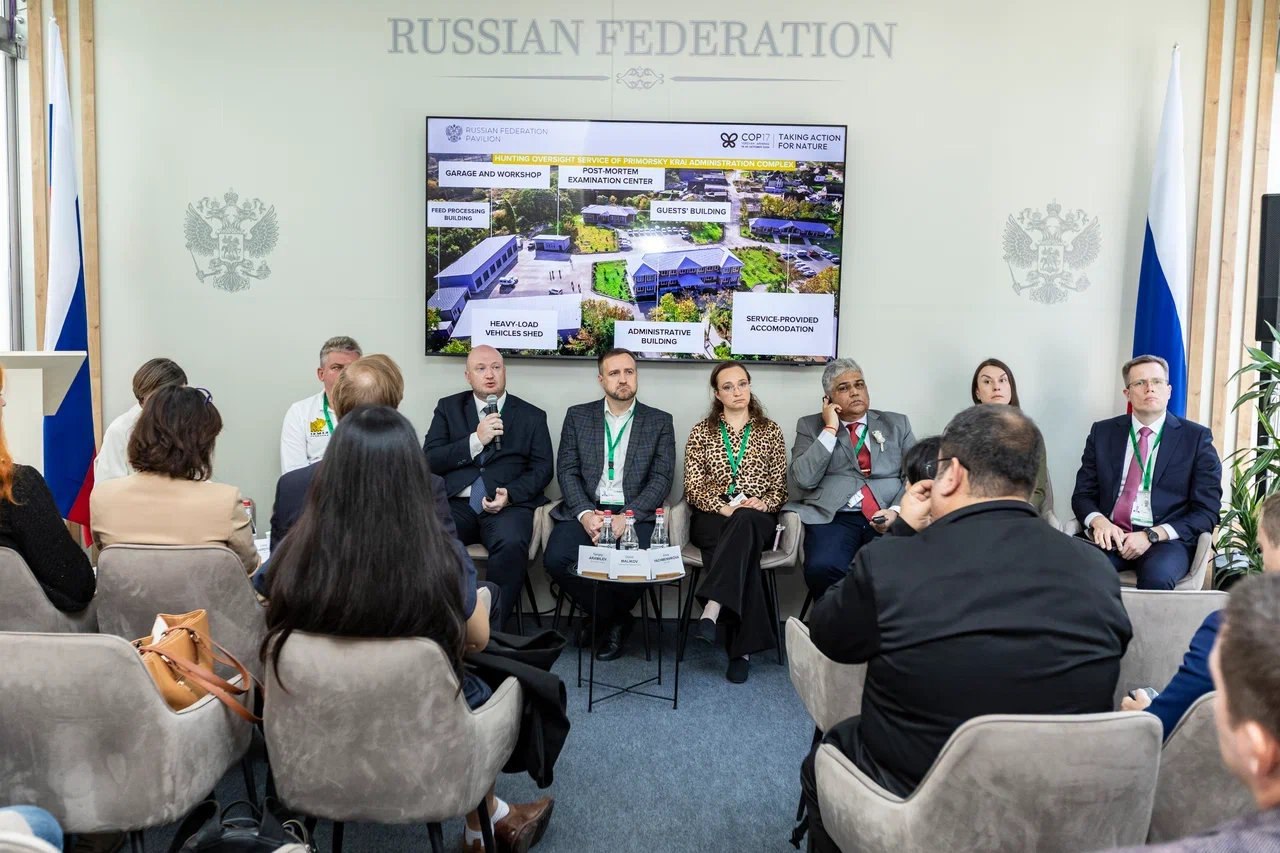
On October 27, 2026, a session titled "Ecology, Evolution, and the Future of Big Cats" was held at the Russian pavilion during the 17th Conference of the Parties to the UN Convention on Biological Diversity (COP17) in Yerevan. The event brought together representatives from conservation organizations and the scientific community, including Anna Yachmennikova, a senior researcher at the A. N. Severtsov Institute of Ecology and Evolution of the Russian Academy of Sciences (IEE RAS) and a Candidate of Biological Sciences.
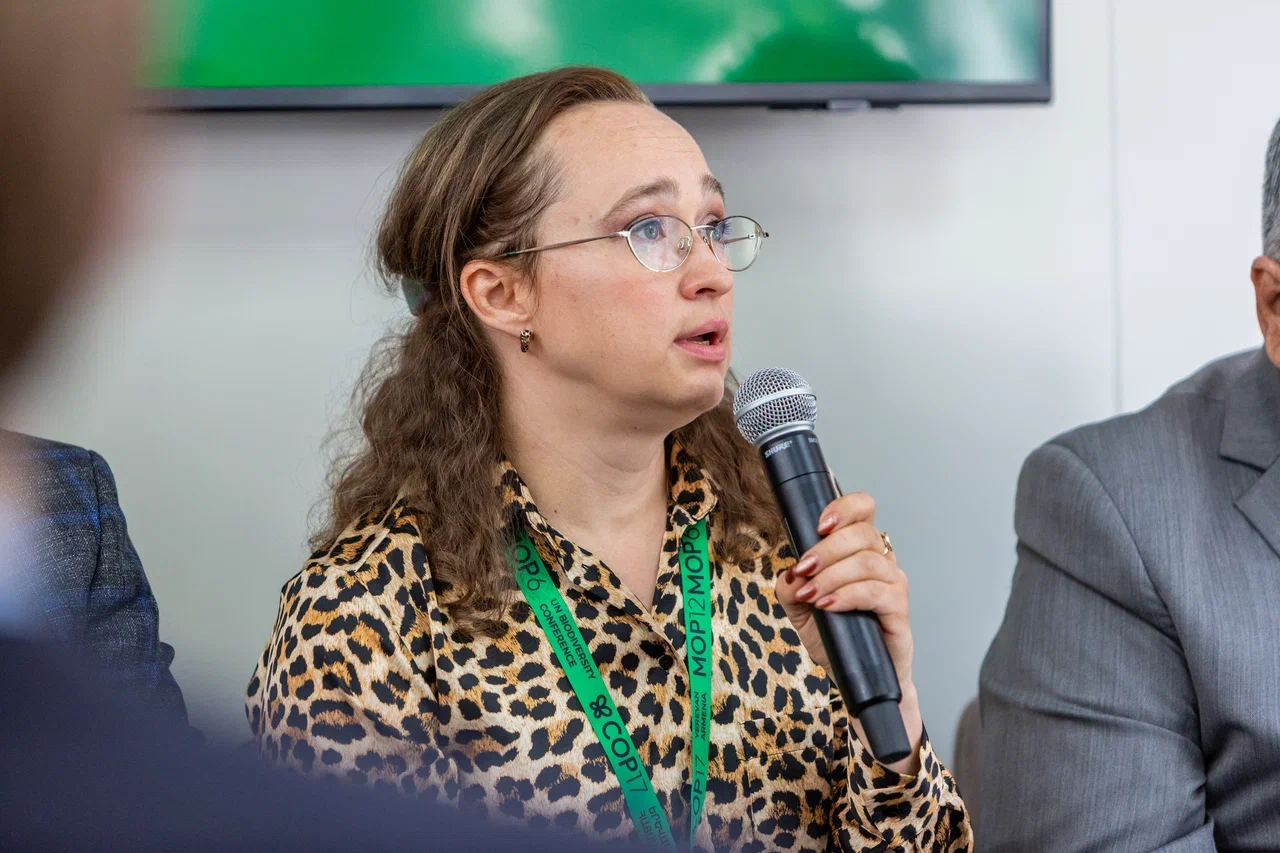
Anna Yachmennikova spoke about the restoration of the Persian leopard population in Russia, the work of the Center for the Restoration of the Leopard in the Caucasus, where the animals are bred and prepared for release into the wild, and the monitoring of released leopards, which is conducted by specialists from the IEE RAS.
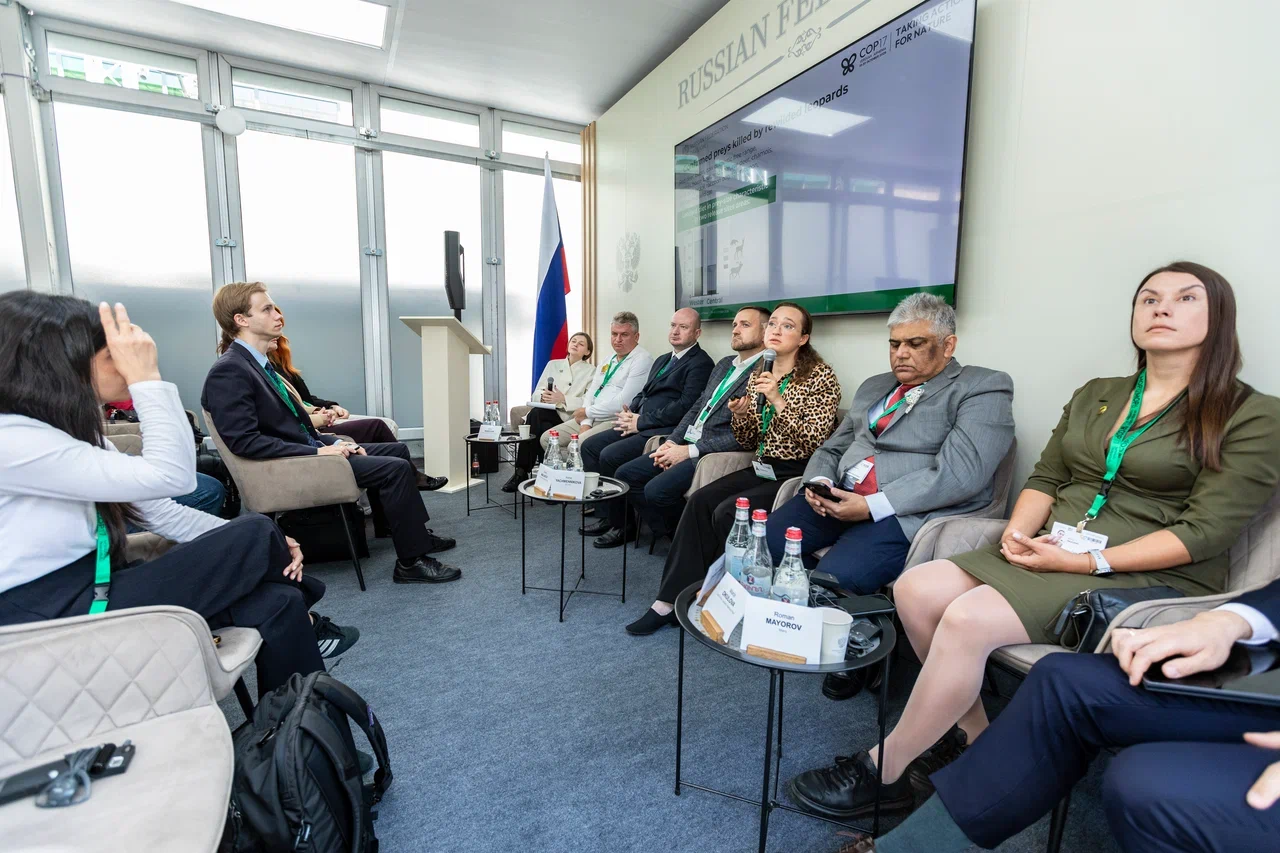
Session participants discussed the outcomes of conservation programs and international cooperation aimed at preserving rare feline species. Viktor Bardyuk, Director of the "Land of the Leopard" (Zemlya Leoparda) Federal State Budgetary Institution, presented insights gained from the establishment of the "Land of Big Cats", a joint Russian-Chinese transboundary reserve that began operations in 2024. Collaborative monitoring, utilizing data from camera traps, enables the identification of individual tigers and Amur (Far Eastern) leopards, allowing for more accurate population estimates on both sides of the border. Throughout 2026, Dina Matyukhina and Taisia Marchenkova from the "Land of the Leopard" National Park’s scientific department worked extensively with their Chinese counterparts, conducting individual comparisons of the unique spot and stripe patterns of every leopard and tiger across the combined protected areas of both nations. Since the establishment of the "Land of the Leopard" National Park in 2012, the population of Amur leopards in Russia has grown to 135 individuals.
Sergey Aramilev, Director General of the Amur Tiger Center, provided an update on the status of the Amur tiger population and the measures being taken to conserve it. He estimates that there are currently between 750 and 780 tigers living in Russia. He also noted a decline in poaching over the last decade and described the process of preparing tigers for release into the wild in Kazakhstan - a method developed at IEE RAS for the initial tiger releases in 2013 and 2014.
Denis Malikov, Director of the Saylyugemsky National Park, presented findings from research on snow leopards in the Altai region. Monitoring data indicates that the largest population of snow leopards in Russia consisting of 26 individuals inhabits the Argut River basin. At least another 10 individuals have been identified in the area of the South Chuya Range. A crucial aspect of conserving this species involves protecting its natural habitat and its prey base.
Representatives from the company Mars spoke to the participants about the conservation of the Pallas’s cat. In Russia, the population size and distribution of this rare species are being studied using camera traps. Scientific oversight for the program is provided by experts from IEE RAS. The project also includes educational outreach for local residents and schoolchildren, with future plans to foster collaboration with researchers from Kazakhstan, Mongolia, and China.
Soumitra Dasgupta, Director of the International Big Cat Alliance (IBCA) program, spoke on the global context of big cat conservation. The Alliance brings countries together to collectively protect seven species of large felids, safeguard their habitats, and study the factors affecting their population status. Russia joined the organization in December 2025.
Participants in the session emphasized the importance of science-based decision-making in big cat conservation, the use of modern non-invasive methods for scientific monitoring, international data sharing, and the coordination of conservation efforts to protect rare species.
Related materials:
Ecograd: "COP17: The status of rare big cat populations is under special oversight by the Russian Federation"