

Hydrobiologists in search of tundra-steppes: an expedition to "Pleistocene Park" and the vicinity of the settlement of Chersky
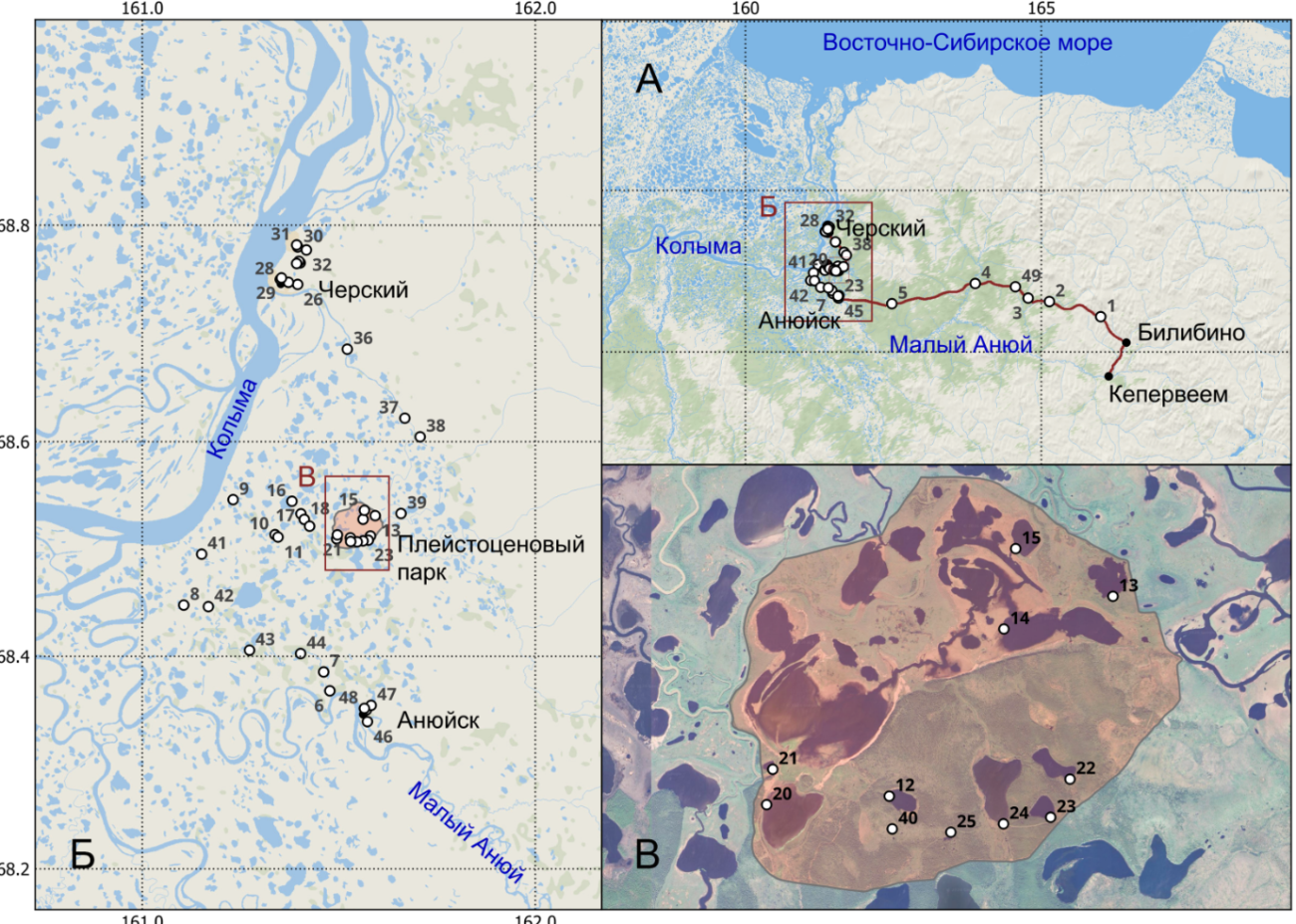
Between July 20 and August 15, 2026, a multidisciplinary expedition involving the A.N. Severtsov Institute of Ecology and Evolution of the Russian Academy of Sciences (IEE RAS), Kazan State University, and the Faculty of Biology at Lomonosov Moscow State University was conducted in the lower Kolyma River basin. The research team (E. S. Chertoprud, A. A. Novikov, D. N. Sharafutdinova, M. A. Trukhan, and I. P. Sadchikov) traveled beyond the Arctic Circle to assess how global climate change and an experiment aimed at recreating the "mammoth steppe" (a Pleistocene-like tundra-steppe ecosystem) might affect Arctic aquatic ecosystems. The primary objective was to study the fauna of microscopic crustaceans, specifically copepods (Copepoda) and cladocerans (Cladocera). Despite their minute size, these organisms play a pivotal role in Arctic food webs and serve as highly sensitive bioindicators of environmental health.
The expedition began in the town of Bilibino, Chukotka, from where the scientists traveled across the Anyuy Highlands to the settlement of Anyuysk. The team then navigated the channels of the Kolyma River floodplain. The main research areas and sampling sites are shown in Figure 1.
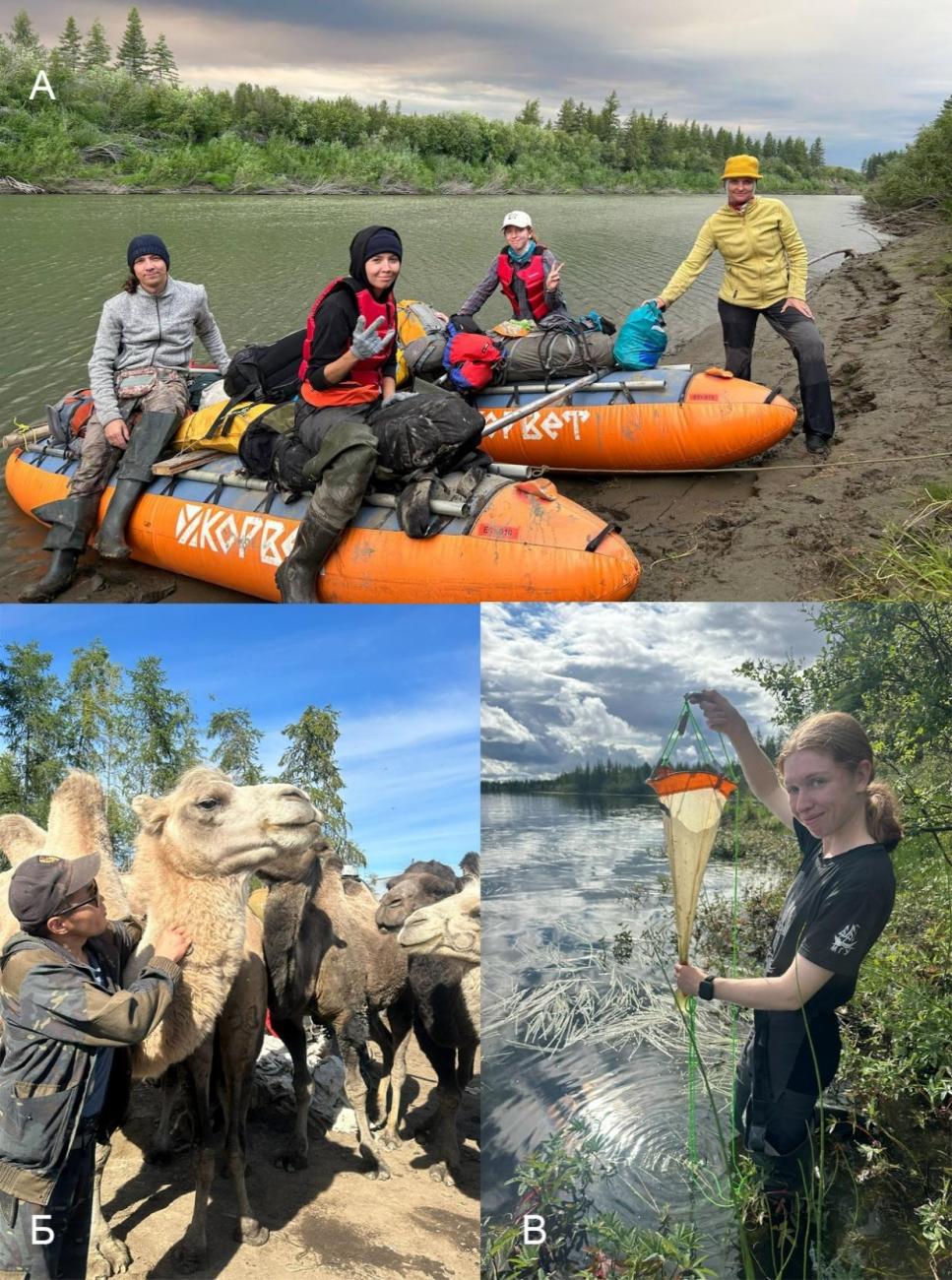
After assembling an inflatable catamaran, the researchers traveled approximately 80 km to the "Pleistocene Park" nature reserve (Northern Yakutia), established in 1996 by S. A. Zimov. This unique project serves as a large-scale experiment in which researchers are attempting to transform taiga and tundra landscapes through the introduction of large ungulates such as steppe bison, musk oxen, Yakutian horses, and Bactrian camels into highly productive "mammoth steppe-tundra" ecosystems, similar to those that existed during the Pleistocene. The hydrobiologists sought to determine how the grazing of megafauna affects freshwater ecosystems. Preliminary results have already been obtained: hydrochemical analysis revealed that in lakes where ungulates graze extensively along the shores, there is a significant increase in nitrogen compounds, specifically dissolved nitrites. This indicates a substantial influx of nutrients into the water bodies, which may boost their productivity by triggering a rapid proliferation of phyto- and zooplankton.
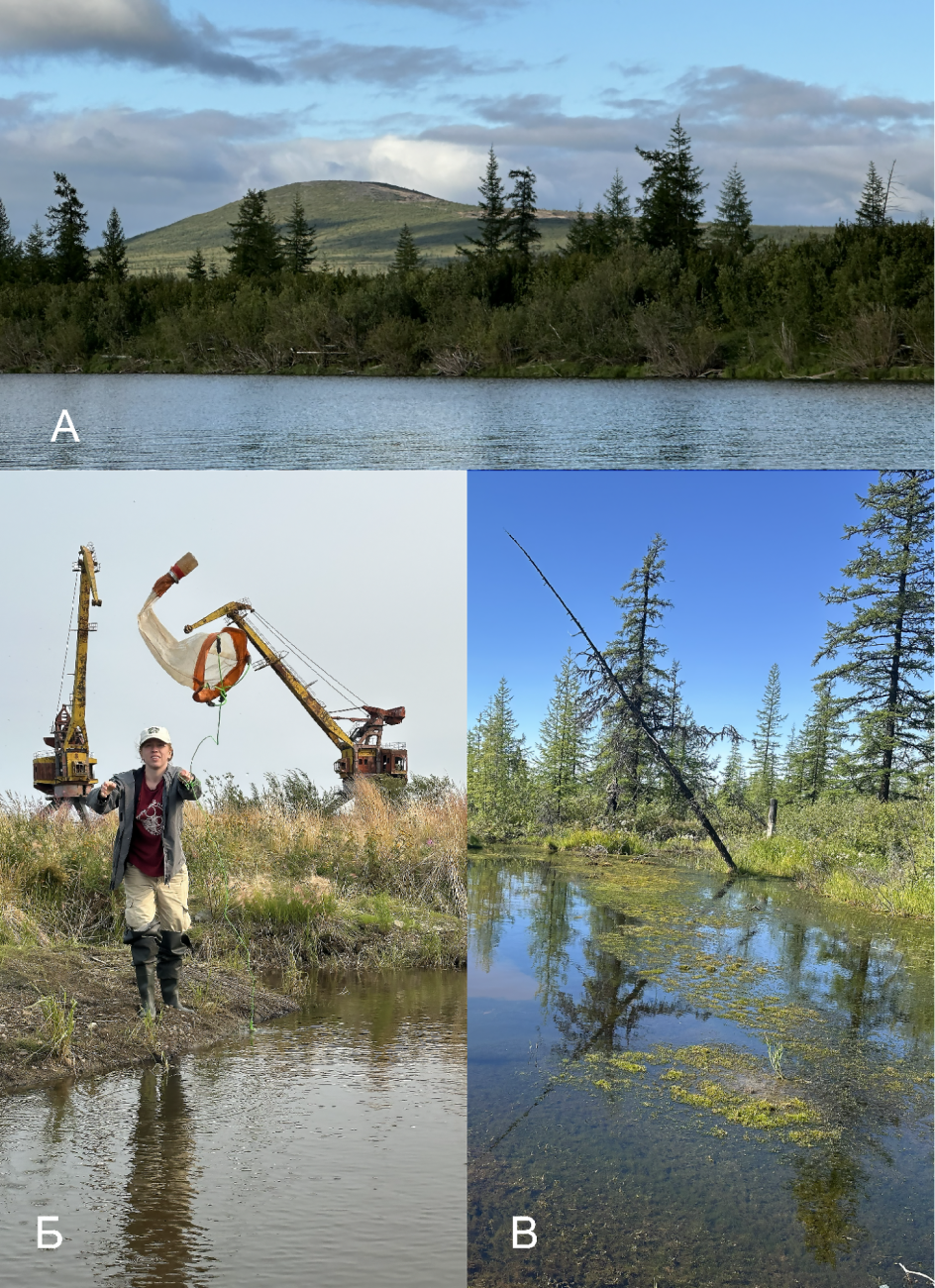
While the "Pleistocene Park" is situated directly within the Kolyma River floodplain and is subject to regular flooding, the next stop on the expedition’s route was the settlement of Chersky, located on the high, stable bank of the Kolyma. Comparing water bodies in the river floodplain with those on the high terraces will help reveal the specific characteristics of fauna in habitats protected from floods. Furthermore, data was collected to assess the unique features of the forest-tundra in the vicinity of the settlement, which has been altered by human activity.
The research conducted in the lower reaches of the Kolyma River is just one part of a large-scale project to study the aquatic fauna of Eastern Siberia. Several questions remain open: to what extent are aquatic communities transformed by the grazing of megafauna? Do modern Arctic ecosystems retain traits of their Pleistocene predecessors? What proportion of the fauna in Northern Yakutia and Chukotka consists of "Beringian" relict elements? The zooplankton and meiobenthos samples have now been delivered to laboratories, where they will undergo meticulous taxonomic identification and molecular-genetic analysis. We hope that these findings will provide a fresh perspective on the aquatic invertebrate fauna of the lower Kolyma River - a subject for which, until now, only fragmentary data existed.
The expedition team extends their sincere gratitude to Nikita Sergeevich Zimov, director of the Pleistocene Park Nature Reserve, for his assistance and support of the field research.
The expedition was supported by grant No. 25-24-00881 from the Russian Science Foundation, https://rscf.ru/project/25-24-00881/.