

How social interactions in the common hamster affect the structural organization of grooming
Everyone has at least once observed pets grooming themselves, licking their fur, or cleaning their paws. This behavior, which scientists call grooming, is typical for most animals and serves many important functions: it helps maintain body cleanliness, eliminate parasites, maintain warmth, and cope with stress. Despite the fact that grooming has been studied for many decades, the extent to which its structure depends on the animal's circumstances has remained unclear.
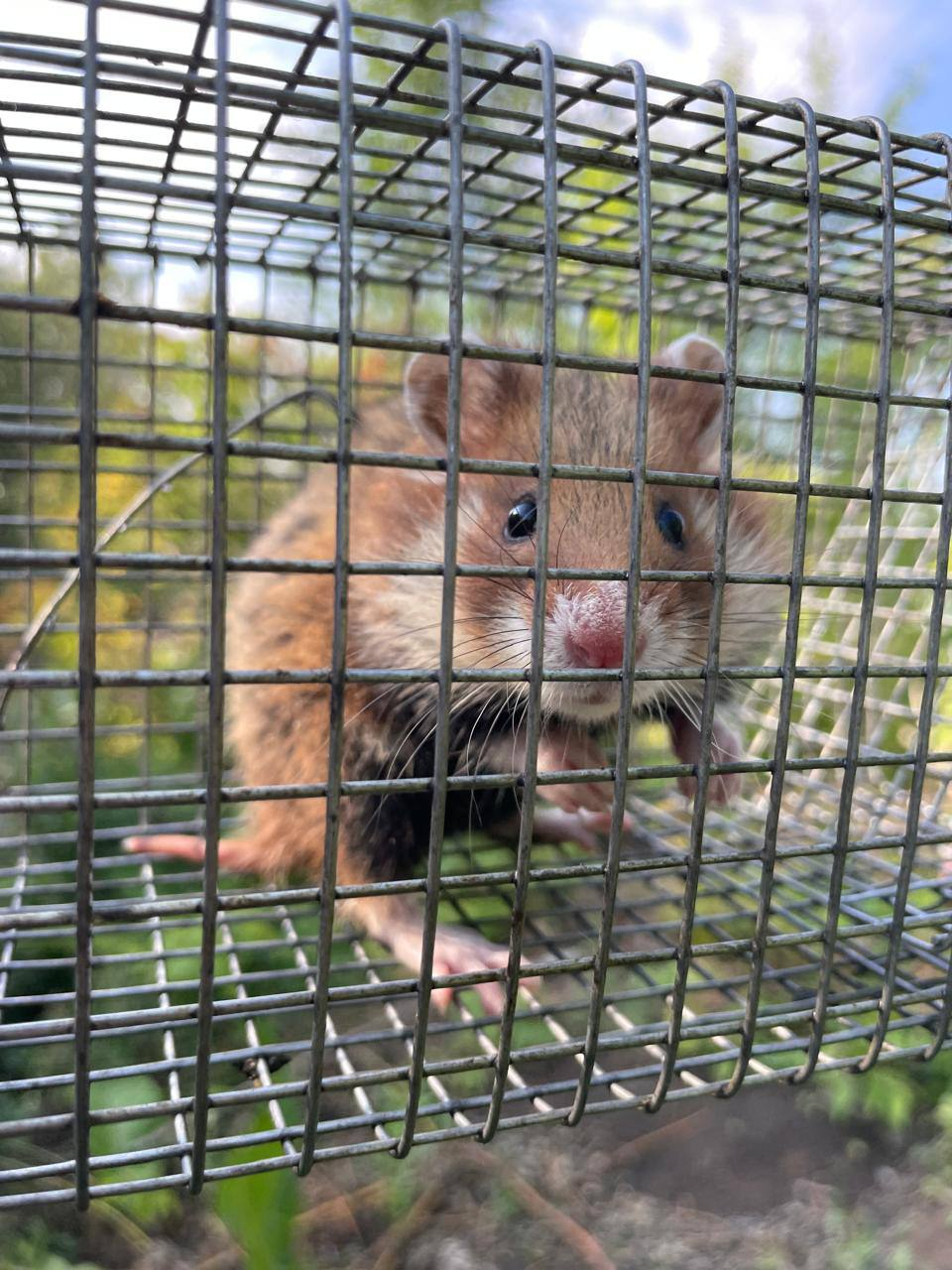
Researchers from the A.N. Severtsov Institute of Ecology and Evolution of the Russian Academy of Sciences (IEE RAS), together with colleagues from the German Primate Center (Göttingen, Germany) and the Institute of Animal Systematics and Ecology of the Siberian Branch of the Russian Academy of Sciences (Novosibirsk), studied how the grooming structure of male common hamsters (Cricetus cricetus) changes depending on the social context.
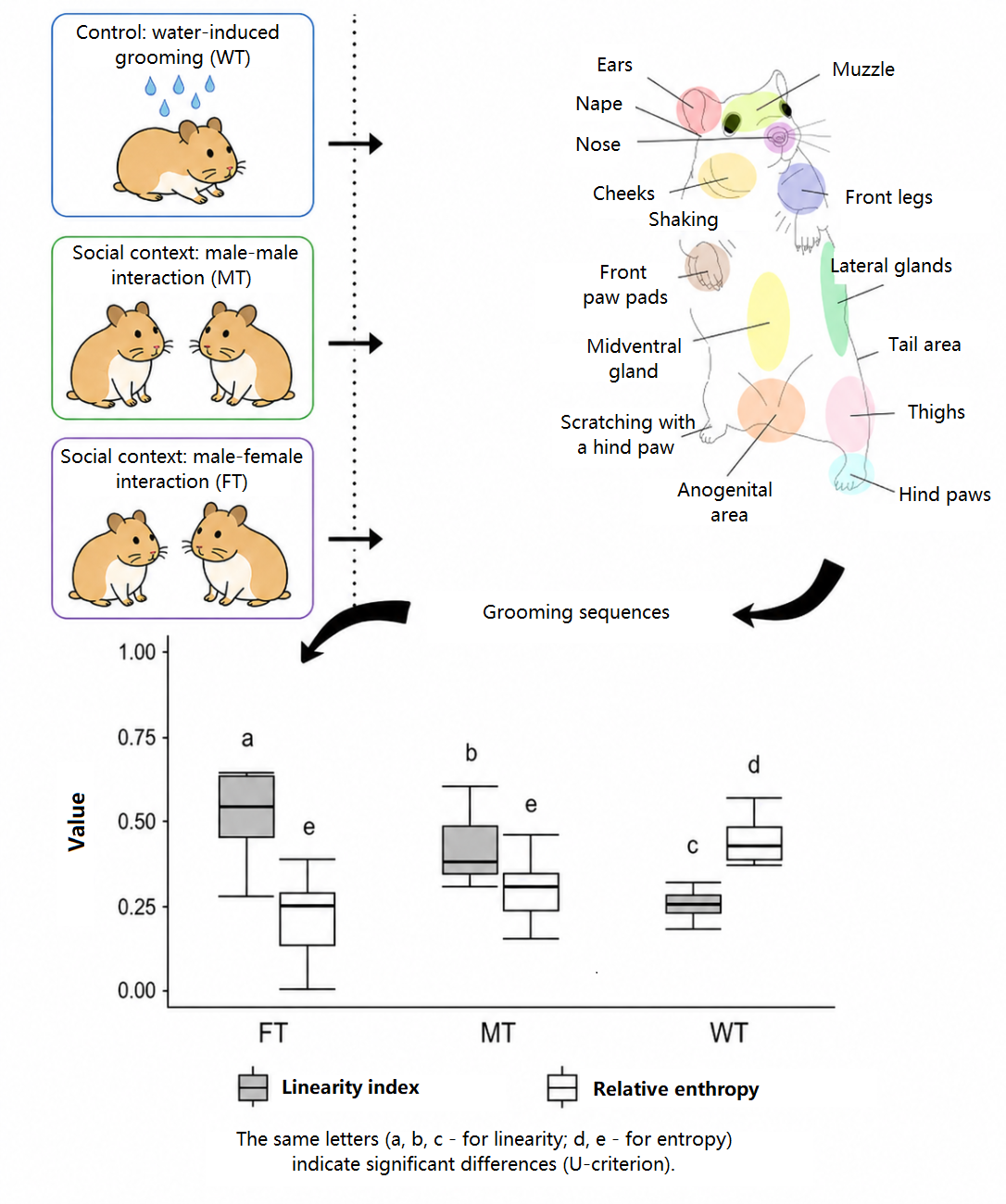
Scientists compared three situations: grooming after wetting their fur, during contact between a male and another male, and during interaction between a male and a female. The animals' behavior during the experiment was videotaped, after which the sequence of behavioral elements was analyzed in detail.
It turned out that after wetting their fur, the hamsters used the longest and most varied grooming sequences. The animals frequently returned to previously completed steps, making the process resemble a unique grooming cycle consisting of numerous repetitions. Grooming appeared completely different during social interactions. In the presence of another male or female, the sequences became significantly shorter, and the transitions between individual movements became more orderly and predictable. This suggests that the social situation makes behavior more stereotyped, organized, and predictable.
"Our study shows that grooming cannot be viewed as a simple set of automatic movements repeated over and over again. Even this innate behavior is highly flexible, and the sequence of elements demonstrated by the animal changes depending on the context. Using information theory methods, we were able to quantify this flexibility and demonstrate how the structure of grooming changes in different situations," notes Vladimir Kupriyanov, the study's lead author and junior researcher at the Institute of Ecology and Evolution (IEE) of the Russian Academy of Sciences.
Moreover, the general principle of behavioral organization remained unchanged regardless of the experimental conditions. This suggests that grooming has a stable internal structure, and that various life situations primarily alter the order of individual sequences, rather than the underlying behavior itself.
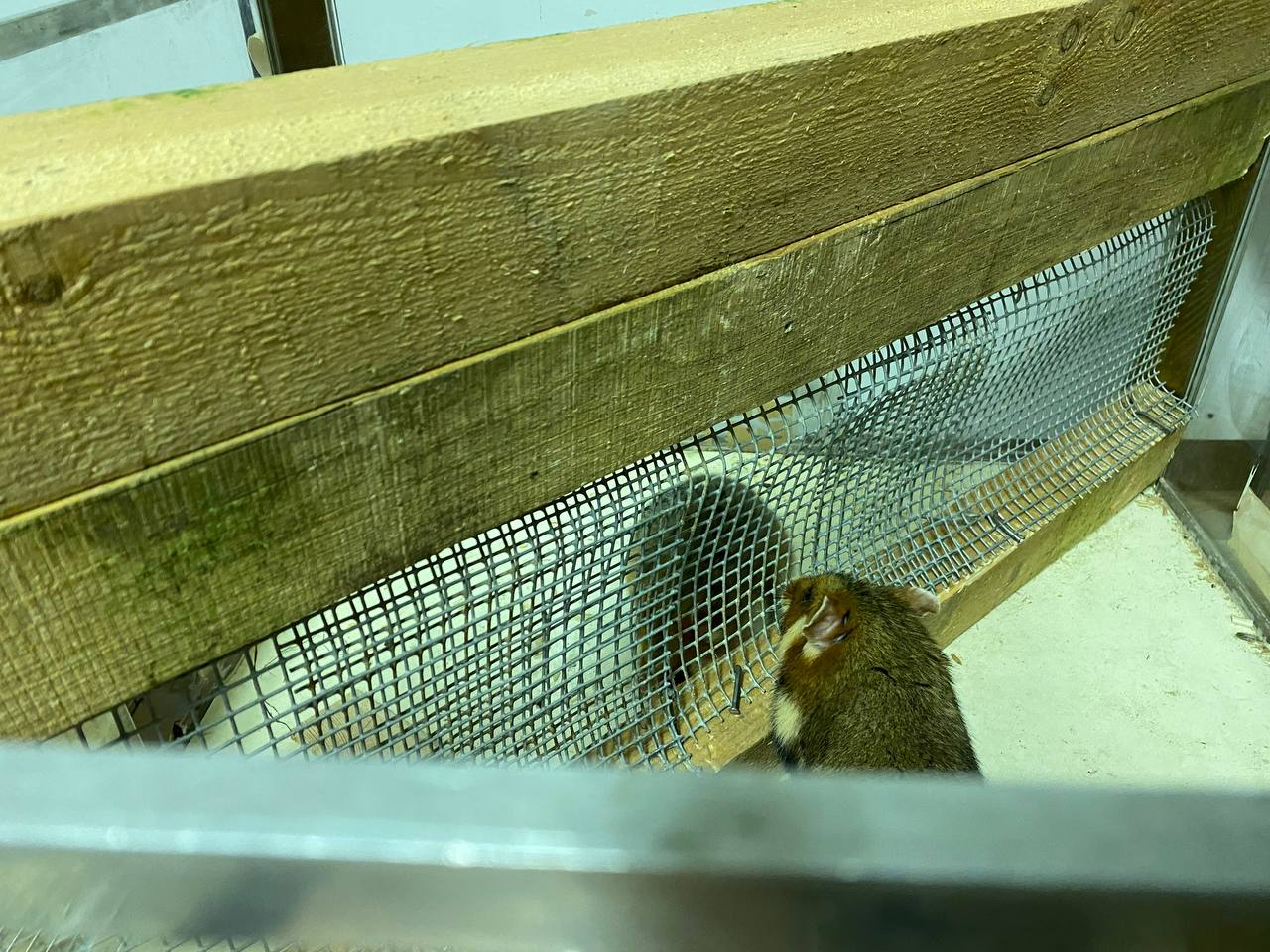
Photo 3. Male-male test (MT): two male common hamsters in the experimental arena, separated by a mesh partition.
The obtained results expand our understanding of the mechanisms underlying complex animal behavior. The approach proposed by the authors can be used in studies of the effects of stress, social environment, drugs, and various external factors on animal behavior. Furthermore, quantitative measures of grooming organization may become a convenient tool for comparative studies in neurobiology, ethology, and experimental medicine.
Article summary:
Kupriyanov, V., Dolotovskaya, S., Levenets, J., Surov, A. The Role of Social Context in Self-Grooming Patterns: Variability of the Common Hamster (Cricetus cricetus) Ethology. 2026.
DOI: 10.1111/eth.70036
Related materials:
Moscow Region Today: "Diagnosis by Grooming: Scientists Find Similarities in the Habits of Humans and Hamsters"
Regions: "Like People: Scientists Unravel the Hidden Meaning of Hamster "Grooming""