History
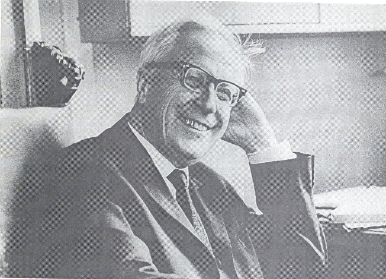
The Laboratory of Soil Zoology (since 1974 — Soil Zoology and Experimental Entomology) was established in 1956 within the Institute of Animal Morphology (now the A.N. Severtsov Institute of Ecology and Evolution RAS) by a special decree of the Presidium of the USSR Academy of Sciences. Its founder and head was Professor (later Academician) Merkury Sergeevich Gilyarov, the «father of Soviet soil zoology,» who gathered around him a group of young enthusiasts and trained a cohort of highly gifted scientists, through whose efforts soil zoology became one of the leading fields of Russian biological science and gained high international standing. The cornerstones of the new discipline were Gilyarov's famous work «Features of the Soil as a Habitat and Its Role in Insect Evolution» (1949) and its conceptual continuation, «Patterns of Arthropod Adaptations to Life on Land» (1970). A special place in the establishment of the new science and the Laboratory belongs to Professor Konstantin Vladimirovich Arnoldi, a brilliant taxonomist and zoogeographer who played a major role in the study of Russia's soil fauna and was a friend and advisor to Gilyarov.
Gilyarov considered the primary task of his discipline and of the Laboratory to be a detailed inventory of the fauna and populations of soil-dwelling animals across our country. This research — extremely labor-intensive soil excavations — was carried out consistently in all geographic zones and soil types (from deserts to the Far North), mountain belts, and diverse natural landscapes and agrocenoses of the Soviet Union. This is how the broad expertise of the Laboratory's staff — soil zoologists, geographers and soil scientists — developed, and methods of work were refined for different environmental conditions. Gilyarov insisted that every staff member master some group of soil fauna as a systematist and taxonomist. An equally important task for the young discipline of soil zoology was the experimental assessment of the nature and scale of the activity of soil-dwelling animals (zoopedobionts), their role in decomposition and soil-formation processes, and the development of the methodological foundations of functional soil biology, both in the field and in the laboratory, using instrumental methods of analysis.

The first result of this work was the Laboratory's fundamental collective monograph «A Key to Soil-Dwelling Insect Larvae,» published in 1964 and still relevant today. The books «Methods of Soil-Zoological Research» (1975) and «Quantitative Methods in Soil Zoology» (1987), prepared by the Laboratory's staff, remain standard reference works for every soil zoologist in Russia to this day. The new discipline quickly gained important applied significance: Gilyarov's book «The Zoological Method of Soil Diagnosis» (1965) laid the ecological foundations for using soil fauna to diagnose soil type and developmental stage, and to assess key environmental parameters and soil fertility potential. The Laboratory's further bibliography includes numerous books, keys to various groups of soil fauna, and thousands of articles in Russian and international journals.
In 1985, the Laboratory was headed by Prof. B.R. Striganova. Under her leadership, the scope of research expanded significantly. In addition to the traditional areas (morphology, systematics and faunistics, community structure and dynamics, adaptive strategies and ecophysiology of soil invertebrates), research intensified on various aspects of soil-fauna activity (especially zoo-microbial relationships), the taxonomic and functional biodiversity of soil systems, trophic energetics, and the trophic and social structure of soil communities. Considerable attention was given to practical issues: zoological diagnostics and biodiversity monitoring of natural and technogenically disturbed soils, the role of animals in soil fertility formation, and the development of vermiculture technology.
Since 1958, the Laboratory has organized regular All-Russian Conferences on Soil Zoology, often with the participation of foreign scientists (the most recent, the 17th Conference, was held in 2016). In 1985, the 9th International Colloquium on Soil Zoology was held, bringing together leading soil zoologists from around the world. From 2004 to 2012, a Russian–Polish «School for Young Ecologists» operated, held every two years alternately in Poland and Russia. For the past 8 years, under the guidance of A.V. Tiunov, a Field School on Soil Zoology and Ecology for young scientists has run on a regular basis. Participation in international biological forums, joint research projects with leading foreign specialists, and expeditions to poorly studied corners of the world have become standard practice for the Laboratory's staff.
In 2006, the Laboratory was reorganized: it was joined by the Laboratory of Insect Morphology and Ecology (headed by Prof. L.N. Medvedev), the Xylobiont Ecology and Morphology Group (headed by Prof. N.P. Krivosheina), and the Group for Theoretical and Applied Problems of Biological Control (headed by Prof. A.A. Panov). The research scope of the merged Laboratory is extremely broad, and a significant part of its staff consists of young researchers and graduate students. Since 2014, the Laboratory has been headed by Dr. Sci. (Biol.) A.V. Tiunov.