Research Directions
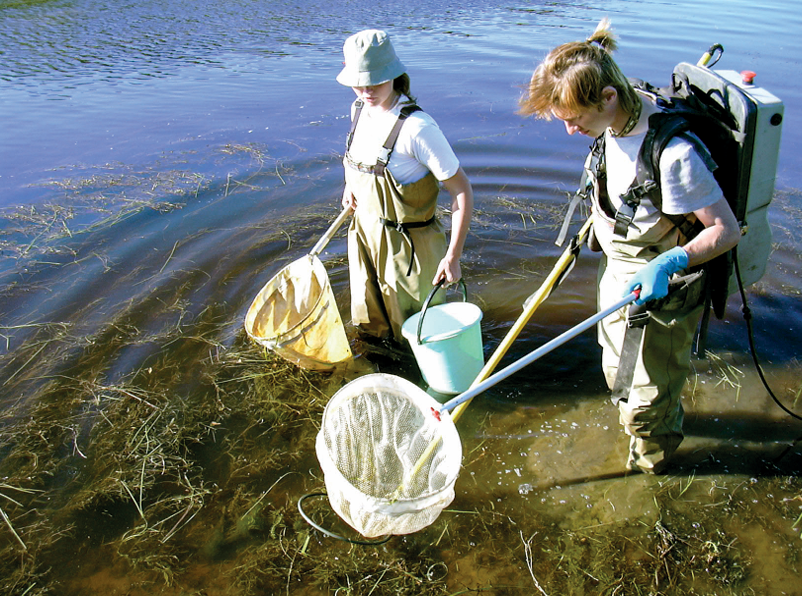
The laboratory's main work is aimed at studying the ecological and evolutionary aspects of fish and other lower vertebrate behavior, and the role of behavior in the overall complex of fish adaptations at the organismal, population, and coenotic levels of organization.
Among the most important and theoretically promising problems currently being developed in the laboratory are:
- mechanisms of feeding, exploratory, reproductive, social, and defensive behavior of fish and amphibians, patterns of fish migration and distribution in different types of water bodies;
- intrapopulation heterogeneity of fish behavior;
- sensory basis of fish and amphibian behavior, electrosignaling, and the evolution of fish electrical systems;
- the role of fish parasites in regulating behavior and ecological interactions.
- ethological organization of communities;
- ontogeny of behavior;
- ecological and evolutionary aspects of behavioral variability;
- development of theory, methods, and techniques for controlling fish behavior.