
History
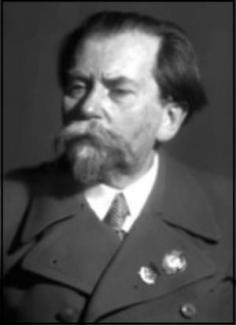
The Helminthological Museum of the Center for Parasitology, IEE RAS, is one of the largest repositories of scientific collections of parasitic worms (helminths) and other parasitic organisms, collected in various regions of the former Soviet Union and other countries over the many years of existence of the Helminthological Laboratory of the USSR Academy of Sciences, now the Center for Parasitology, IEE RAS. The collection began with material from 317 All-Union Helminthological Expeditions, conducted from 1919 under the direction of Academician K.I. Skryabin, aimed at the systematic study of the helminth fauna of the human population and of farm, game, domestic and wild animals in various climatic and geographic zones of the country.
It is well known that parasitic worms are among the most dangerous organisms causing diseases in humans, animals and plants. After 1945, the collection material from the All-Union Helminthological Expeditions began to be deposited at the Helminthological Laboratory of the USSR Academy of Sciences (now the Center for Parasitology, IEE RAS). In 1958, by order of the Director, all collection material was declared the property of the Institute, and L.V. Filimonova was appointed responsible for preserving and systematizing the museum's holdings. The museum remained in this status until 1998; throughout these years, L.V. Filimonova curated the zoohelminth collection on a voluntary basis, and the museum's only permanent staff member was a senior laboratory assistant. By decision of the Bureau of the Department of General Biology (No. 95 of 22.10.1999), the Helminthological Museum was granted the status of an independent unit. The collection was included in the reference work «A Guide to Parasitic Collections of the World», Special Publication of the American Society of Parasitologists, 1982, p. 79. Material collected during the expeditions has, from the earliest years of the Helminthological Laboratory's existence, been actively used by staff and postgraduate students to develop various scientific problems in helminthology. Individual groups of parasites were identified and systematized by leading helminthologists of the country such as Corresponding Member of the USSR AS K.M. Ryzhikov (helminths of Anseriformes), Corresponding Member of the RAS M.D. Sonin (filariids), Corresponding Member of the RAS and Academician of the Lithuanian Academy of Sciences V.L. Kontrimavichus (helminths of mustelids), Academician of the Moldavian AS A.A. Spassky, Professors V.E. Sudarikov (strigeids), V.M. Ivashkin (spirurids), V.I. Freze (cestodes), V.A. Roitman and A.A. Akhmerov (fish helminths), A.A. Mozgovoi (ascaridids), and A.A. Shigin (diplostomids). Material from these collections has provided the basis for 20 doctoral and more than 60 candidate dissertations in zoo- and phytohelminthology. The Center for Parasitology currently holds zoohelminth collections from: Białowieża Forest, the Komi and Karelia Republics, the Volga Delta, Dagestan, Lakes Chany and Baikal, the Kulunda Steppe and Altai Krai, the middle and lower reaches of the Ob and Yenisei rivers, the Tyva and Sakha (Yakutia) Republics, Primorsky and Khabarovsk Krais, Kamchatka, Chukotka, Kolyma, Georgia, Kyrgyzstan, Turkmenistan, northern Vietnam, and Mongolia.
Количество видов зоогельминтов, представленных коллекции, по географическим регионам России
Data about the Museum have been published in the reference work "Музеи Российской академии наук: альманах" / Russian Academy of Sciences, Museum Council of the RAS; [ed.-in-chief A.P. Buzhilova]. — Issue 9. — Moscow: Taus, 2012. — 272 p.: ill. — ISBN 978-5-903011-96-4.
The Museum's archive includes card catalogs recording all the material; field diaries of the All-Union Helminthological Expeditions; dissertations based on the Museum's material; offprints of publications describing new species held in the collection; a library of works on the systematics, taxonomy, fauna and biology of helminths; inventory books recording the type material deposited in the Museum; and logbooks recording preparations issued for scientific work with the collections.
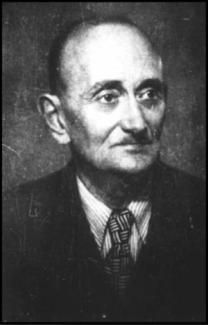
The Helminthological Museum of the Center for Parasitology, IEE RAS (Moscow), holds the largest collection of plant-parasitic nematodes in Russia. It was founded in 1952 by Professor A.A. Paramonov and is linked to the development of phytohelminthological research in Russia.
The plant-nematode collection currently consists mainly of species of the orders Tylenchida, Aphelenchida, Dorylaimida, Rhabditida, Cephalobida, Panagrolaimida, obtained from a huge diversity of cultivated and wild host plants from various soil-climatic regions of European and Asian Russia, as well as from the Transcaucasian and Central Asian republics of the former Soviet Union. A significant part of the collection consists of material from Vietnam. The collection also includes material on soil-dwelling and free-living nematodes. In total, the plant-nematode collection comprises about 2,000 permanent preparations, including more than 18,000 nematode specimens belonging to 650 identified species in 296 genera.
In 2006, work began on creating a database and information retrieval system for the collection. In the first stage, a publicly accessible web portal was developed to perform key functions related to inventorying and documenting the collection's depository and meeting information needs in the field of biodiversity of this group of organisms, including the morphology and systematics of helminths, their hosts, localization in organs and tissues, distribution regions, and more. In subsequent years, work was carried out to modify and expand the database and retrieval system with new functions. The local version of the database was improved to simplify the systematic analysis of parasites and the taxonomic analysis of hosts, and the comparative analysis of the frequency of parasite localization in host organs; in parallel, the database was regularly updated with new records.
In its activities, the Museum is guided by the orders of the head of the founding institution and the Regulations on the Museum (see the museum's website http://www.sevin.ru/Helminths/ ), and, with regard to the recording and storage of its holdings, by the Federal Law on the Museum Fund of the Russian Federation and Museums of the Russian Federation, the Instructions on the Recording and Storage of Museum Holdings, and other documents governing the activities of museums in the Russian Federation.