IEE RAS scientists took part in the "Science 0+" festival
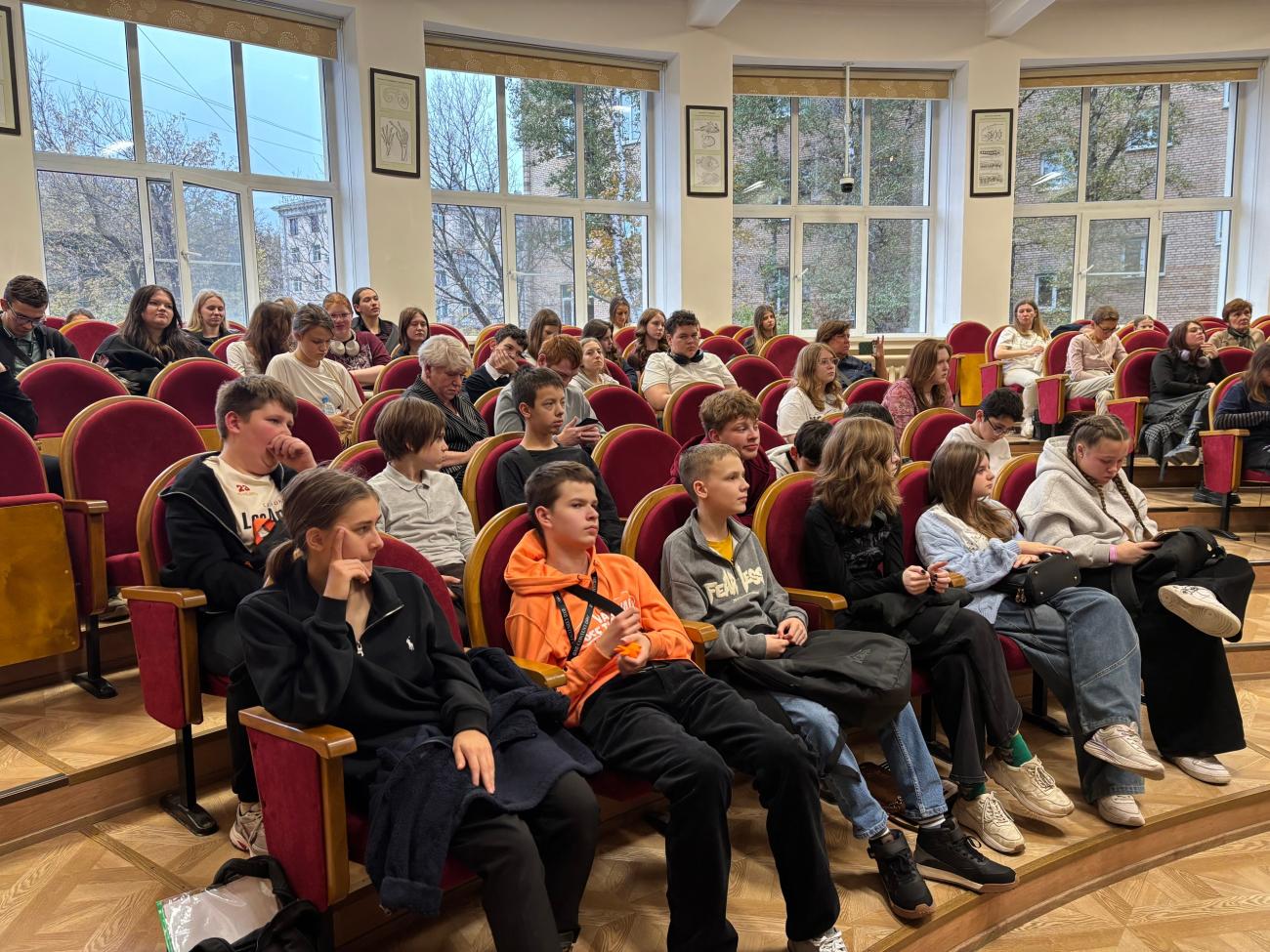
The A.N. Severtsov Institute of Ecology and Evolution of the Russian Academy of Sciences (IEE RAS) traditionally participates in the All-Russian "Science 0+" festival, introducing a broad audience to research in the fields of ecology and evolution. This year, events were held at the Institute’s premises on Leninsky Prospekt on October 9, and on October 11, scientists gave presentations at the festival’s central venues in Moscow. The events drew both schoolchildren and adults, with a total of over 150 participants across our own site and the central festival venues.
The program featured a mix of lectures and hands-on activities covering topics such as evolution, ecology, animal behavior, parasitism, climate change, and how organisms live in changing environmental conditions.
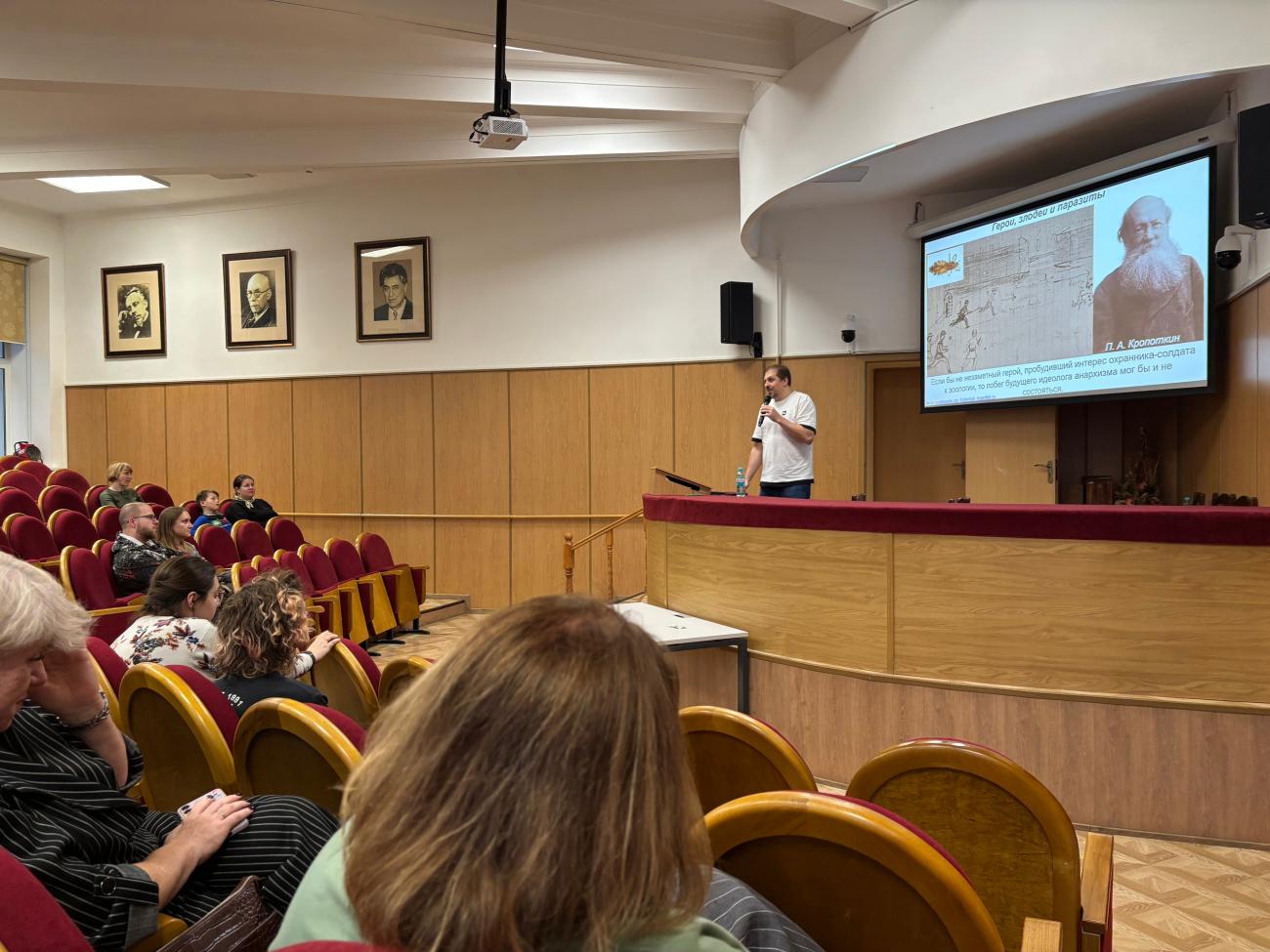
On October 9, IEE RAS hosted lectures on the diversity of living organisms and their adaptations to the environment.
Alexandra Yatsuk, Candidate of Biological Sciences, spoke about louse flies - ectoparasites that infest birds and mammals. The audience learned how a parasitic lifestyle has shaped the anatomy and physiology of these insects and why they are of particular interest to evolutionary biologists.
Tatyana Demidova, Candidate of Biological Sciences, dedicated her lecture to killifish - fish that inhabit temporary water bodies in the savannas of Africa and South America. Participants learned about the unique life cycle of these fish: the adults live for only a few months - as long as the water body persists - while their eggs can survive periods of drought, remaining in the dried-out soil until the arrival of the next rainy season.
Another lecture focused on the role of parasites in ecosystems. Mikhail Vitalyevich Gopko, a Candidate of Biological Sciences, explained why parasitic organisms play a crucial part in maintaining ecological balance, linking different levels of food chains and influencing how ecosystems function. Special attention was given to the vulnerability of parasites to the threat of extinction and the importance of preserving them to maintain biodiversity.
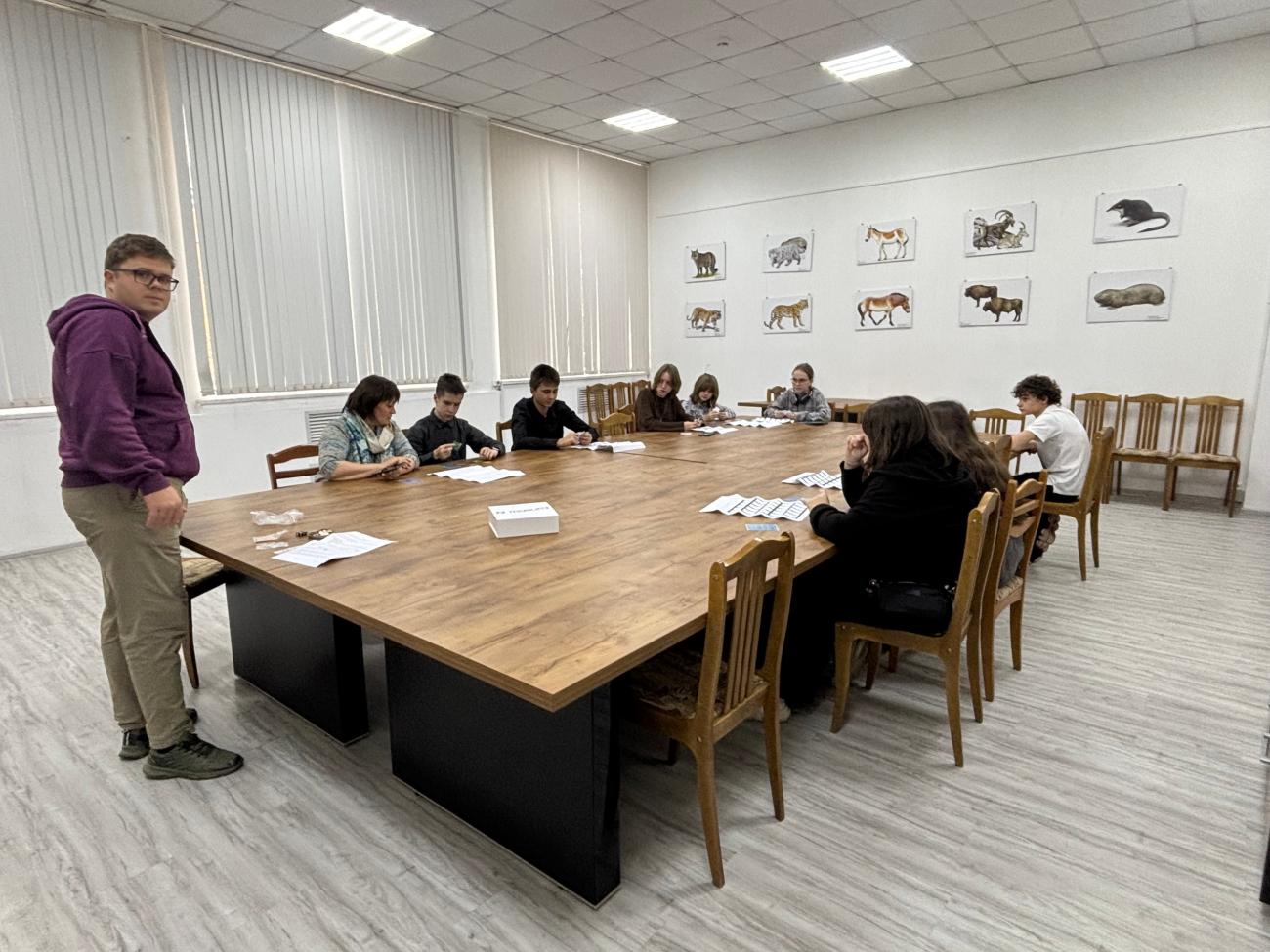
The institute also hosted a scientific board game titled "Coralia / Reef / Acropora." It was facilitated by the game’s creator, Vadim Alexeyevich Merkin, a junior researcher at IEE RAS. Through the game, participants were introduced to the world of coral reefs.
On October 11, scientists from IEE RAS gave presentations at the festival’s main venues.
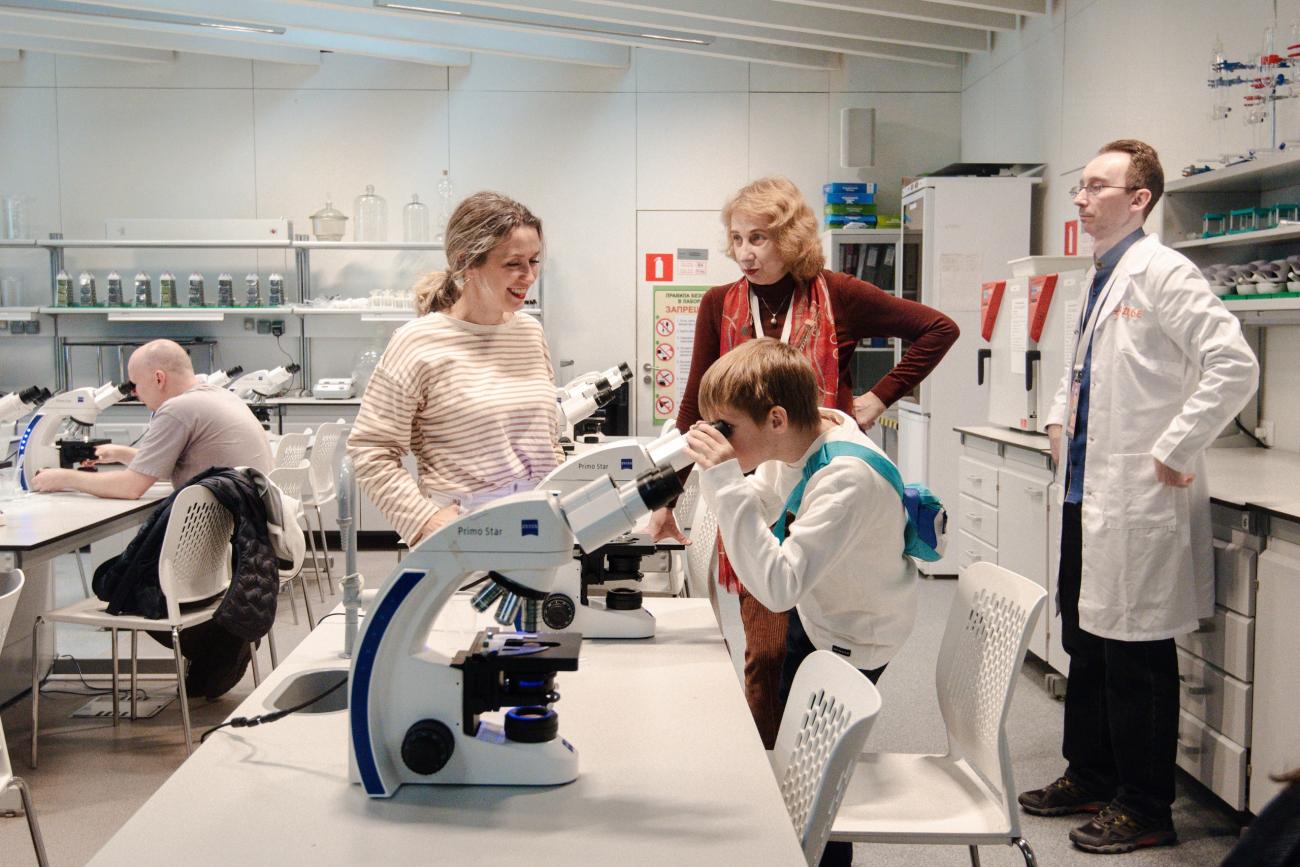
At the "Nature Embassy" pavilion in Zaryadye Park, Renat Khusainov, a lead engineer at IEE RAS, held a workshop titled "Soil Nematodes: From Microbe-Eaters to Parasites." Participants were introduced to microscopic roundworms, learned about their role in soil ecosystems, and had the chance to observe nematodes, along with other soil-dwelling organisms such as tardigrades and rotifers, under a microscope. The practical segment of the workshop covered methods for extracting nematodes from soil and preparing temporary microscope slides.
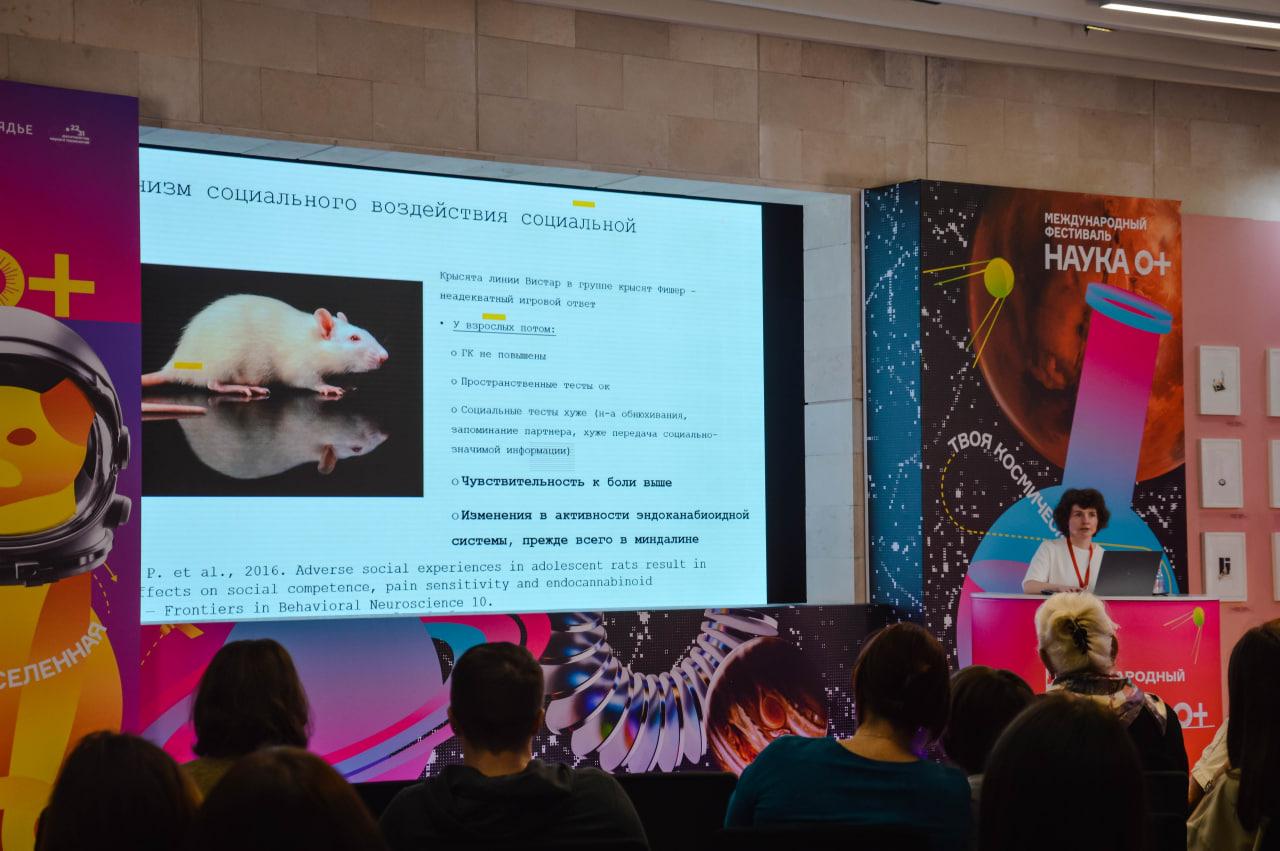
Following this, Anastasia Antonevich, a Candidate of Biological Sciences and senior researcher at IEE RAS, delivered a lecture titled "The Great Escape from Reality: How Animal Play Led to Space Exploration." She discussed various hypotheses regarding the origins of play behavior, its role in the lives of animals, and the potential significance of play in human evolution.
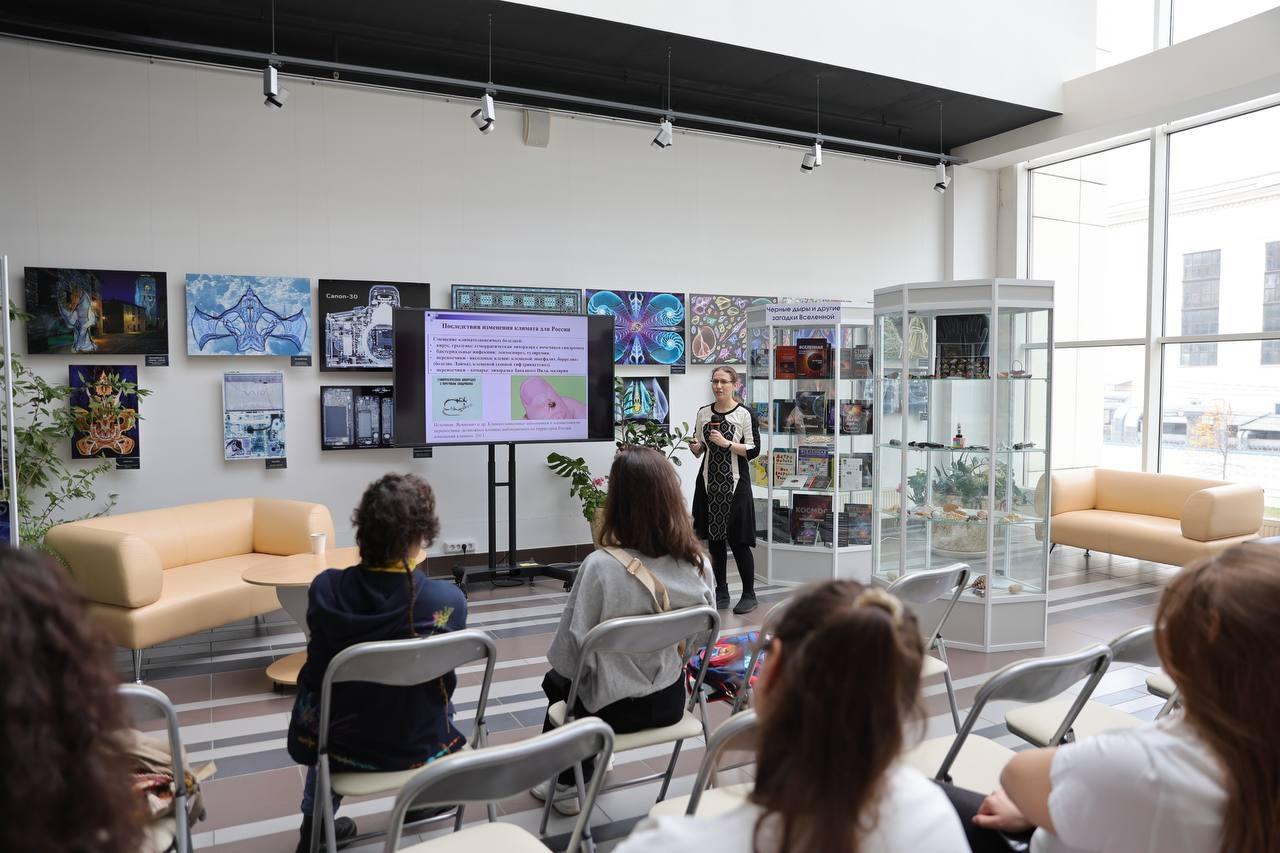
At the main building of the State Public Scientific and Technological Library of Russia, Olga Kuricheva, a Candidate of Biological Sciences and researcher at IEE RAS, delivered a lecture titled "Climate Change: Risks and Opportunities for Russia." The speaker explained the distinction between weather and climate, discussed the causes of global warming, and examined its specific manifestations in Russia. Participants also explored topics such as rising global sea levels, the retreat of mountain glaciers, and ongoing research at the Dzhankuat glacier in the Caucasus. The session took the form of an open dialogue, with attendees asking questions and sharing their own observations.
Participation in the "Science 0+" festival provided IEE RAS scientists with an opportunity to share their latest research in ecology and evolution with a broad audience, showcase the institute’s diverse range of scientific fields, and engage in discussions on pressing scientific issues with visitors of all ages.
We extend our gratitude to all the scientists, participants, and event organizers. Special thanks go to Natalia Abramenko and Varvara Ivanova for their assistance in organizing the festival at the IEE RAS venue.
Photographs from the events can be viewed at this link.