
A critical analysis of the effectiveness and accuracy of paleoecological reconstructions of freshwater bodies based on bottom sediments has been conducted
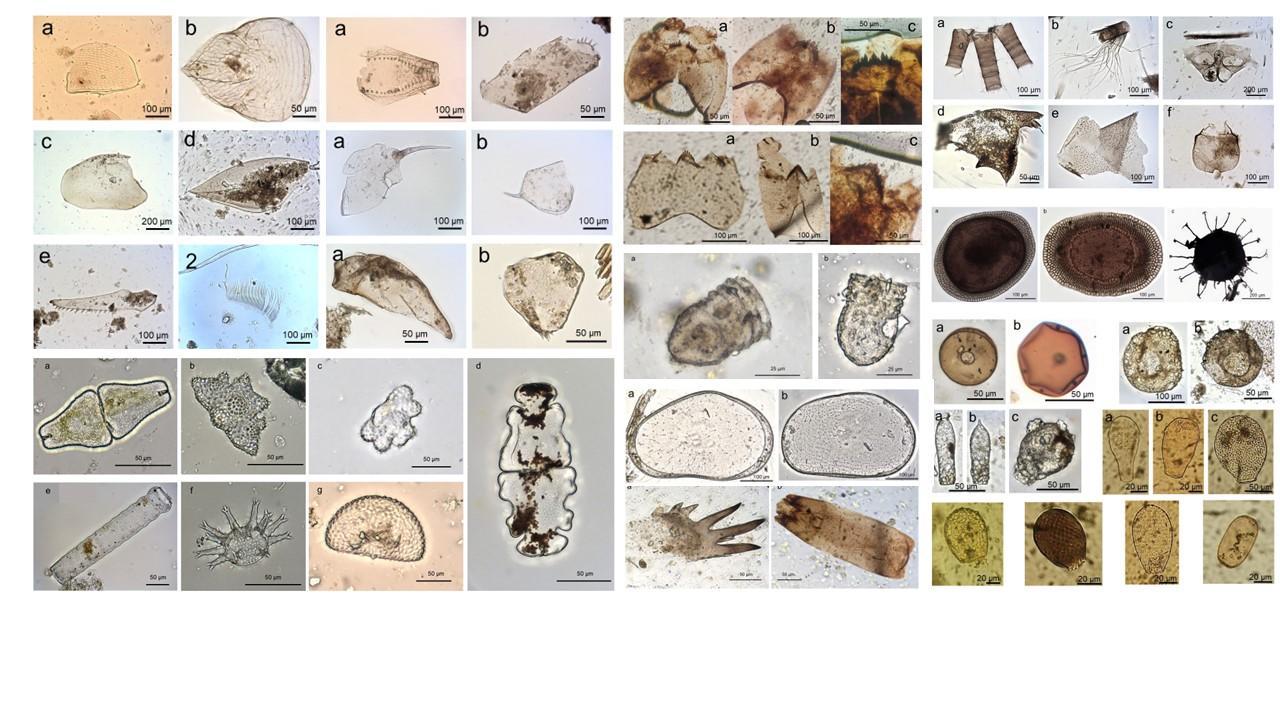
Sediments from water bodies and wetlands serve as a natural archive, preserving information about the formation and development of both extinct and extant continental aquatic ecosystems, as well as about climate change, anthropogenic pressure, and other environmental conditions. This information can be extracted from the sedimentary record using a variety of analytical methods - chemical, geological, and biological. The latter hold a special place in the paleoecological toolkit, as sediments formed in aquatic environments typically contain a wealth of remains from diverse living organisms (algae and higher plants, protozoa and invertebrates) that inhabited the water body at various stages of its existence and were buried in chronological order. Many specific paleoecological techniques, based on the analysis of subfossil remains from particular groups of aquatic organisms (such as diatom, cladoceran, or chironomid analyses), originated in the first half of the 20th century; they have continued to evolve ever since and are becoming increasingly prominent in natural science research worldwide.
At the same time, a number of unresolved problems and questions remain regarding the applicability and effectiveness of these methods, as well as the interpretation of the results obtained through them. The primary source of these issues lies in taphonomic processes, which operate at every stage of the formation of the sedimentary record. These processes introduce qualitative and quantitative distortions, causing assemblages of subfossil remains (taphocoenoses) to deviate significantly from the composition of the original living communities (biocoenoses). Despite this, very little research has been conducted to elucidate the patterns governing the formation of taphocoenoses in continental water bodies, which impacts the quality of paleoecological reconstructions negatively.
Researchers from the A.N. Severtsov Institute of Ecology and Evolution (RAS), in collaboration with colleagues from the I.D. Papanin Institute for Biology of Inland Waters and the University at Buffalo (USA), have published a review article based on both a literature analysis and their own data examining the taphonomic characteristics of various freshwater organisms. The remains of these organisms are frequently found in the sediments of continental water bodies and are used by researchers as paleoecological indicators.
In this publication, the authors address issues such as the representativeness of subfossil assemblages, the indicator value of different groups of aquatic organisms, the spatial heterogeneity of taphocoenoses (taphonomic assemblages) in water bodies, and the preservation, as well as the selective destruction, of the remains of aquatic organisms.
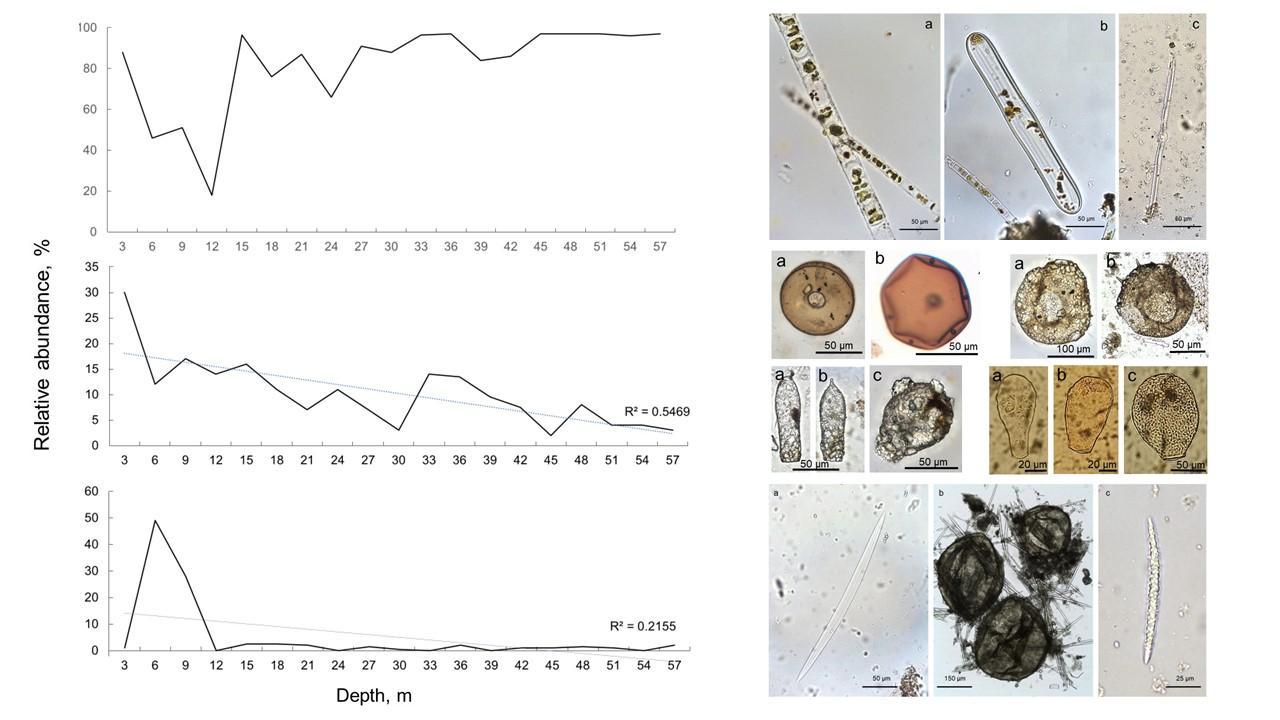
The authors argue that the efficiency and accuracy of paleoecological reconstructions of aquatic environments can be improved through two complementary approaches: (1) a targeted and comprehensive study of the processes and patterns governing the formation of lacustrine taphocoenoses, and (2) the combined use of various indicator groups of organisms in so-called "multi-proxy" studies. It is noted, however, that while "classical" multi-proxy studies provide significantly more paleoecological information than individual, specialized analytical methods, they suffer from a major drawback: they do not describe the composition of a taphocoenosis in its entirety, but rather merely aggregate the results of several distinct, specialized analytical techniques. Consequently, the role of the specific indicator groups being studied within the overall structure of the taphocoenosis remains unknown, and many other components which may also contain valuable paleoecological signals are entirely overlooked. To address this issue, the authors propose employing a three-level algo-zoological analysis of bottom sediments, a method developed by the Soviet and Russian hydrobiologist and carcinologist N. N. Smirnov (1928–2019) which allows for the description of the structure of “Since Smirnov’s method is currently used only by Russian researchers, and his methodology has previously been published only in brief form and within Russian-language literature, the authors have provided a detailed guide in this review, enabling a broad range of paleolimnologists and hydrobiologists to master this approach,” explained Alexey Kotov, a corresponding member of the Russian Academy of Sciences and chief researcher at the A.N. Severtsov Institute of Ecology and Evolution (IEE RAS). as a cohesive whole, based on taxa of intermediate and high taxonomic rank.
“Since Smirnov’s method is currently used only by Russian researchers, and his methodology has previously been published only in brief form and within Russian-language literature, the authors have provided a detailed guide in this review, enabling a broad range of paleolimnologists and hydrobiologists to master this approach,” explained Alexey Kotov, a corresponding member of the Russian Academy of Sciences and chief researcher at the A.N. Severtsov Institute of Ecology and Evolution (IEE RAS).
In addition, the publication includes a number of original photographs of subfossil remains, which may help the reader grasp the method of integrated analysis. According to the authors, applying this method makes it possible to determine the role of each group of organisms within the structure of a taphocoenosis, to interlink the primary results obtained from various highly specialized analytical techniques, and, to some extent, to avoid interpretive errors such as those stemming from the spatial heterogeneity of taphocoenoses within the water bodies under study or the selective destruction of the remains of aquatic organisms. Through this publication, the researchers hope to draw the attention of their colleagues to the taphonomy of freshwater organisms and to promote an integrated approach to studying the history of continental aquatic ecosystems.