

A new genus of fish has been discovered in Central Asia
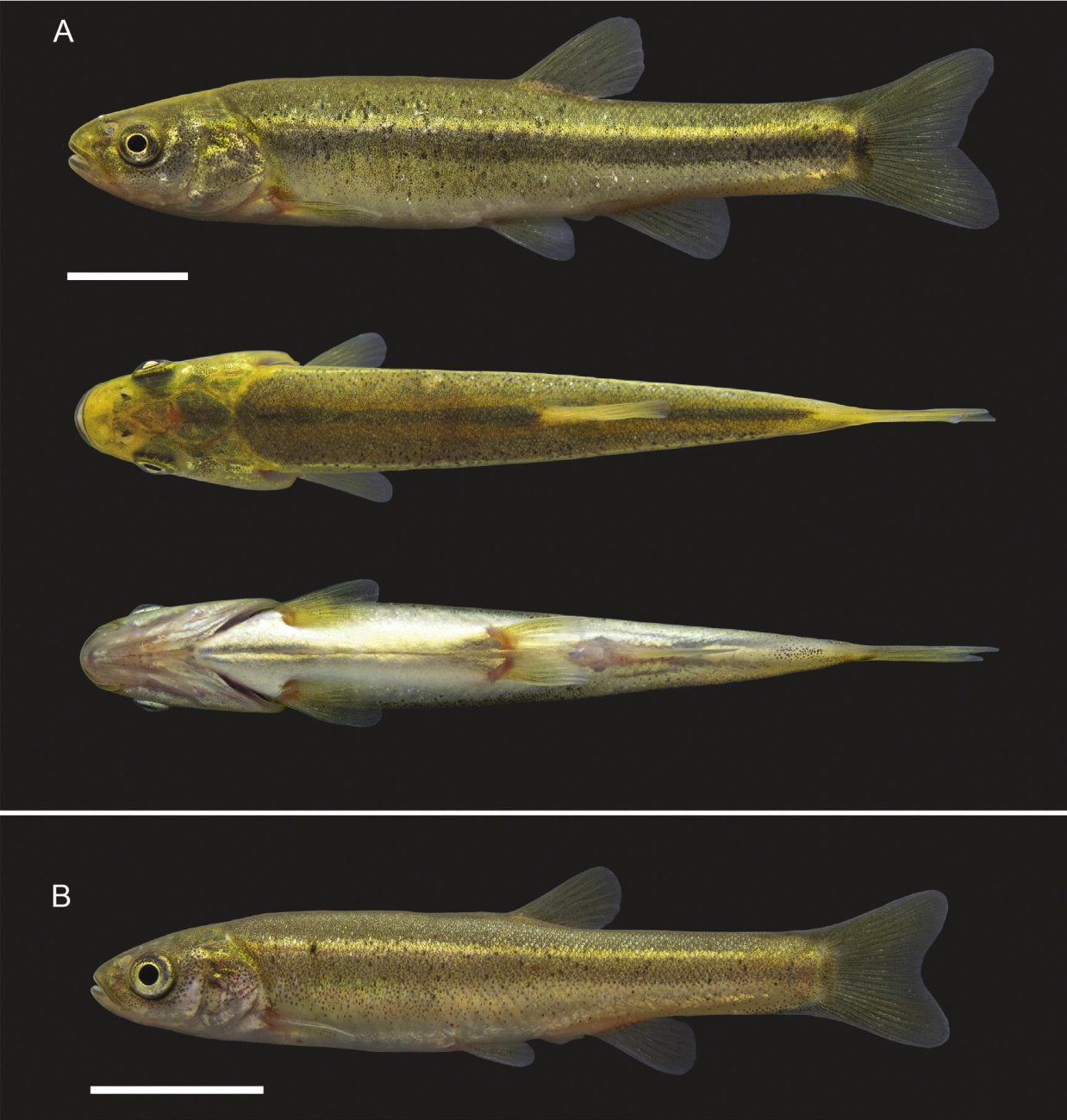
Ichthyologists have discovered that taxa indistinguishable at first glance can include not only individual fish species but entire genera. It turns out that small fish inhabiting the basins of three lakes in Central Eurasia, classified for nearly 150 years as common minnows, actually represent a distinct and ancient evolutionary lineage. Researchers have described this group as a new genus, Tianshanophoxinus (Tian Shan minnows). This discovery allows for a more accurate assessment of biodiversity in Central Asian water bodies, which is essential for the conservation of rare and vulnerable species. The findings have been published in the journal American Museum Novitates.
The development of genetic methods has enabled biologists to discover numerous cryptic species - organisms that are virtually indistinguishable in appearance yet follow independent evolutionary paths. Most often, such cryptic cases occur at the species level, involving "look-alike" organisms that belong to the same genus. Instances where an entire lineage at the taxonomic rank of genus goes unnoticed are extremely rare.
Scientists from the A.N. Severtsov Institute of Ecology and Evolution of the Russian Academy of Sciences (Moscow), the I.D. Papanin Institute for Biology of Inland Waters of the Russian Academy of Sciences (Borok), Al-Farabi Kazakh National University (Kazakhstan), and the American Museum of Natural History (USA) have discovered a new genus of fish in Central Asia.
The researchers focused on organisms that closely resemble minnows - small freshwater fish belonging to the carp family (Cyprinidae). Over the past 150 years, scientists, relying solely on external (morphological) characteristics, have repeatedly reclassified these fish, shifting them between various genera, such as Phoxinus (true minnows), Rhynchocypris (lake minnows), and Lagowskiella. However, these taxonomic decisions had never been verified using genetic methods.
The researchers collected specimens from the basins of lakes Balkhash, Alakol, and Issyk-Kul in Kazakhstan and Kyrgyzstan, and also examined historical specimens from the collection of the Zoological Institute of the Russian Academy of Sciences. They analyzed 150 individual fish based on 56 morphological traits, produced X-ray images of their skeletons, and sequenced two mitochondrial and two nuclear genes.
It turned out that the fish studied cannot be classified as "true" minnows. Genetically, they differ from their closest relatives by approximately 11% in their mitochondrial DNA - a degree of divergence comparable to that found between recognized genera of cyprinid fish. Consequently, the authors have proposed establishing a separate genus for these organisms: Tianshanophoxinus.
Genetic analysis reveals that their closest relatives are the Altai osmans (genus Oreoleuciscus), which inhabit rivers in Mongolia and the upper reaches of the Ob River. Interestingly, despite this close evolutionary relationship, the two groups differ significantly in appearance: Tian Shan minnows grow to a maximum length of only 10 centimeters, whereas osmans can reach nearly a meter in size.
The authors also identified morphological characteristics unique to this new genus. In most Tian Shan minnows, the lateral line - a sensory organ that, in many fish, runs along the entire length of the body - is almost entirely absent. Furthermore, these fish possess shorter pectoral and pelvic fins and fewer vertebrae than related groups.
The new genus comprises three species: the Tian Shan minnow (Tianshanophoxinus poljakowii), the Kulja minnow (Tianshanophoxinus kuldschiensis), and the Issyk-Kul minnow (Tianshanophoxinus issykkulensis). The authors selected reference specimens from historical collections to formally establish their scientific names.
According to the authors' hypothesis, the ancestors of these fish migrated from the Irtysh River basin, through the Dzungarian Depression, into the ancient Balkhash-Alakol Lake. During successive glacial and interglacial periods, this lake would expand and subsequently fragment into isolated bodies of water; these fluctuations drove the divergence of populations into distinct species. Later, during periods of rising water levels, the fish spread westward via the Chu River and reached Lake Issyk-Kul. Today, Tianshan minnows are frequently found near groundwater outlets. These springs and streams overgrown with vegetation likely served as refuges during periods of climatic change.
"We are accustomed to genetics revealing new 'cryptic' species - species that look identical but are genetically distinct. In this case, however, an entire evolutionary branch, a separate genus, had been hiding in plain sight for a century and a half under a familiar name. This goes to show that we underestimate the diversity of fish, even in regions considered to be well-studied," explains Boris Levin, a Candidate of Biological Sciences and leading researcher at the A.N. Severtsov Institute of Ecology and Evolution of the Russian Academy of Sciences.
This major discovery in the field of biodiversity is also significant for nature conservation. Species belonging to this new genus primarily inhabit small ecosystems that are under pressure from water extraction for irrigation, pollution, the introduction of non-native species, and an increasingly arid climate. Furthermore, Lake Issyk-Kul is facing growing strain from tourism and infrastructure development. As long as this group was classified as part of the widespread minnow family, its vulnerability remained unrecognized. It is now clear that an entire evolutionary lineage may be at risk.
This work was supported by the Russian Science Foundation.