
COP17: Russia plans to establish a school for disentangling large marine mammals
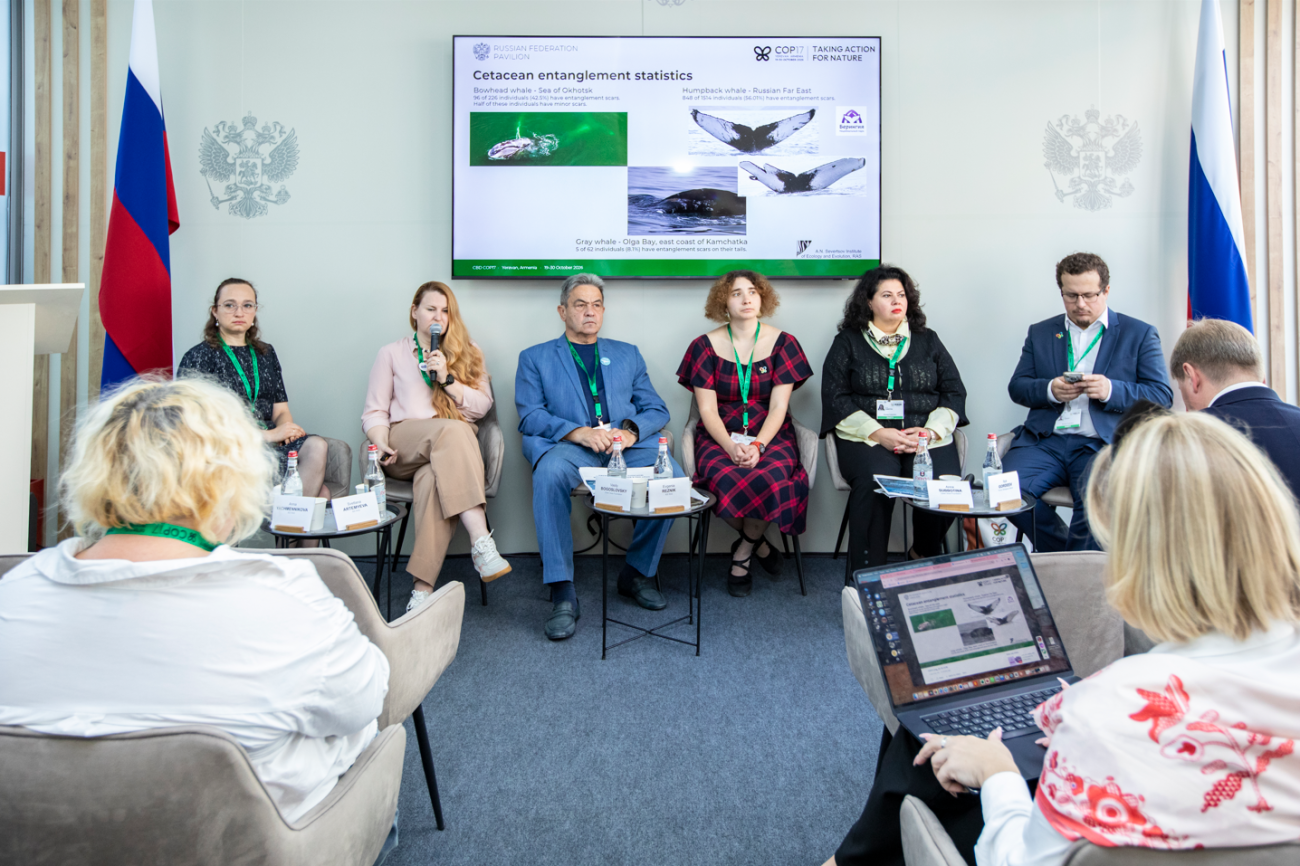
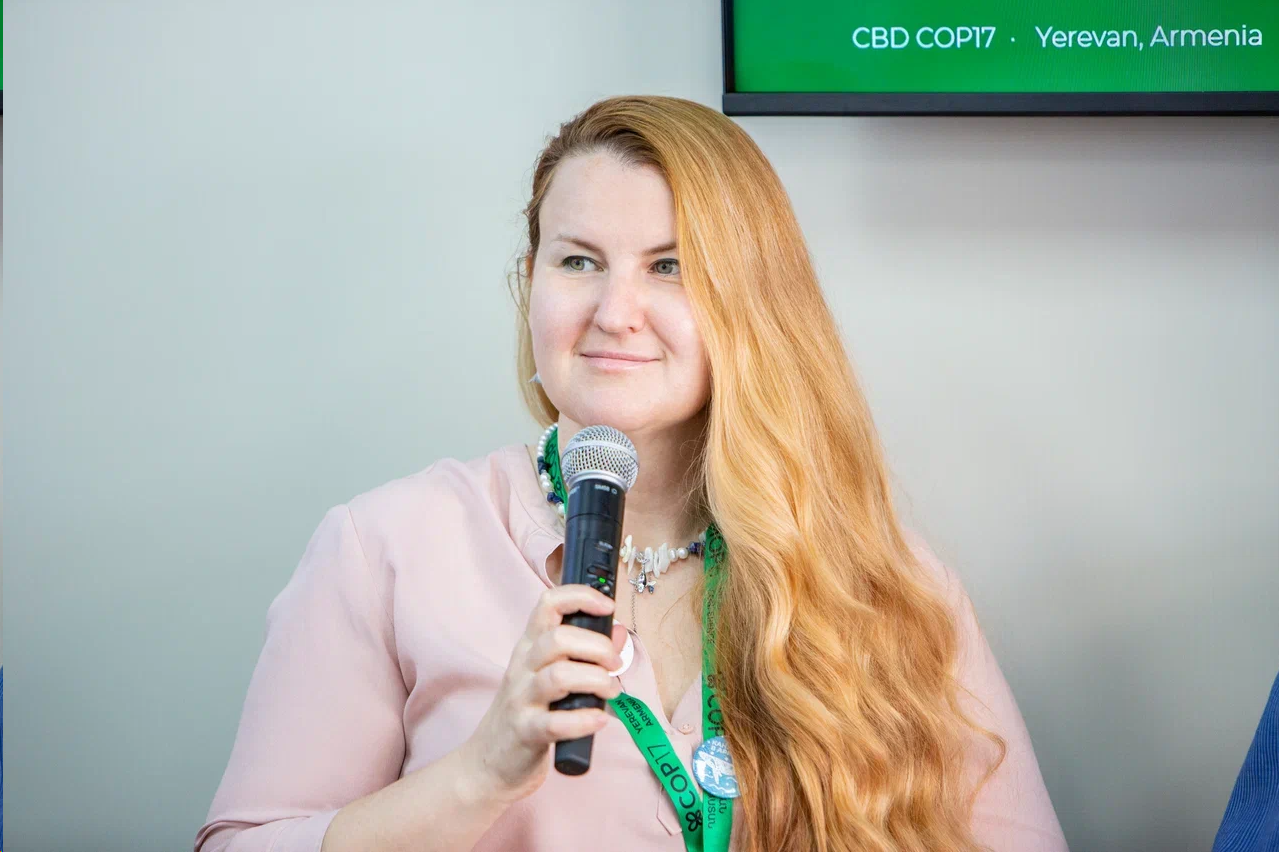
On October 22, 2026, as part of the business program at the Russian Federation pavilion during the 17th Conference of the Parties to the UN Convention on Biological Diversity (COP17) in Yerevan, Armenia, a session titled "Restoring Marine Biodiversity: Scientific and Practical Solutions" took place. The event was moderated by a senior researcher at the A.N. Severtsov Institute of Ecology and Evolution of the Russian Academy of Sciences (IEE RAS) and a Candidate of Biological Sciences Anna Yachmennikova. In her opening remarks, she highlighted the significance of the topics being addressed: "Metaphorically speaking, the seas and oceans are the planet’s 'blood reservoir'; the functioning of the biosphere as a vast, stable system would be impossible without the well-being of our oceans and seas."
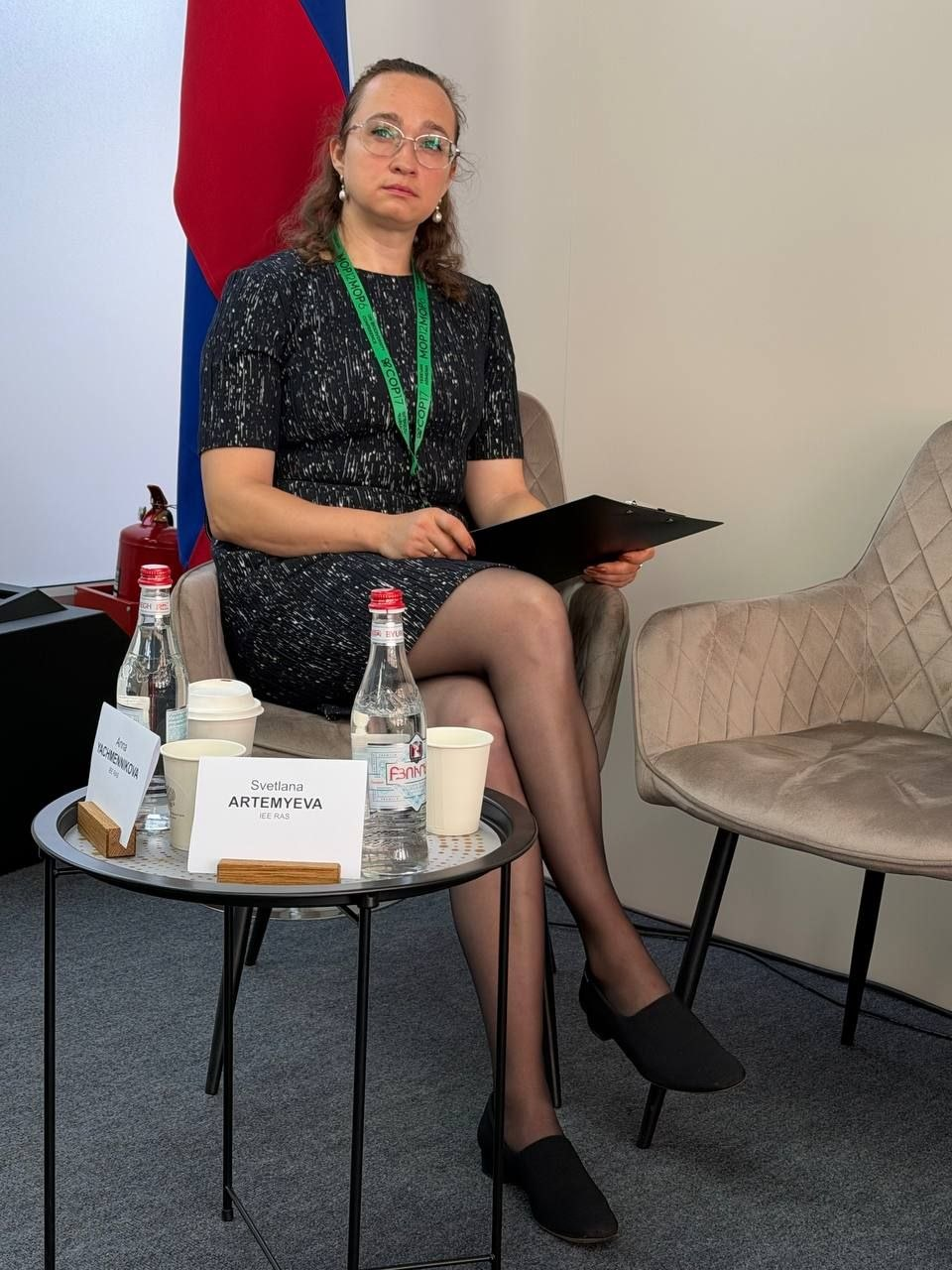
During the session, a researcher at IEE RAS, Candidate of Biological Sciences, and representative of the Laboratory for Remote Sensing and Thematic Interpretation in Ecology Svetlana Artemyeva shared Russia’s best practices for rescuing and releasing marine mammals. According to the speaker, the entanglement of pinnipeds and cetaceans in discarded fishing nets and marine debris has become a critical issue. For instance, more than 40% of the known individuals within the Okhotsk Sea population of bowhead whales, a species listed in the Red Data Book, show signs of past entanglement, such as scars or welts. Among humpback whales in the Far East, this figure is even higher, exceeding 55%. To address this challenge, the public organization "Friends of the Ocean" was established on Sakhalin in 2016. Its specialists not only carry out the disentanglement of marine mammals but also train volunteers across various regions of the country in these rescue techniques. Looking ahead, "Friends of the Ocean" plans to organize training workshops on disentangling large marine mammals and to develop operational protocols to ensure the most effective response to such incidents.
Furthermore, S. Artemyeva noted that, in order to carry out operations to disentangle marine animals in distress, it is essential to first develop protocols for coordination among the various parties involved including government agencies, scientific institutions, and public organizations, as any interaction with animals listed in the Red Data book requires specific authorizations.
General Director of the "Clean Seas" Foundation Vasily Bogoslovsky spoke about the non-profit organization’s contribution to the study and conservation of marine biodiversity. The foundation supports several major environmental projects, including one focused on researching Black Sea cetaceans listed in the Red Data Book: the common dolphin, the Altantic bottlenose dolphin, and the Black Sea harbor porpoise. Scientists are currently gathering up-to-date data on the distribution, population size, ecology, and external threats affecting these species, with the goal of developing a unified methodological approach to studying cetaceans in the Black Sea.
A junior researcher at the A.N. Severtsov Institute of Ecology and Evolution of the Russian Academy of Sciences (IEE RAS) and a representative of the Laboratory of Morphology and Ecology of Marine Invertebrates Evgenia Reznik highlighted the critical role of coral reefs in sustaining global biodiversity, protecting coastlines, ensuring food security, and maintaining the economic balance of coastal regions. Discussing methods for coral reef restoration, she cited the crisis in Nha Trang Bay (Vietnam), where reefs, having faced a combination of destructive factors since the mid-2010s, degraded to the point of near-total disappearance. To save the ecosystem, a small, protected marine area (covering just 0.06 km²) was established near a research station on Che Island. Measures included restricting access, banning fishing, regularly controlling predator populations, and conducting experiments in coral cultivation. Research by the IEE RAS has confirmed the high effectiveness of these localized interventions; even small, artificially cultivated coral reef patches, when strategically positioned relative to ocean currents, can make a significant contribution to the preservation and functioning of a region’s marine ecosystem.
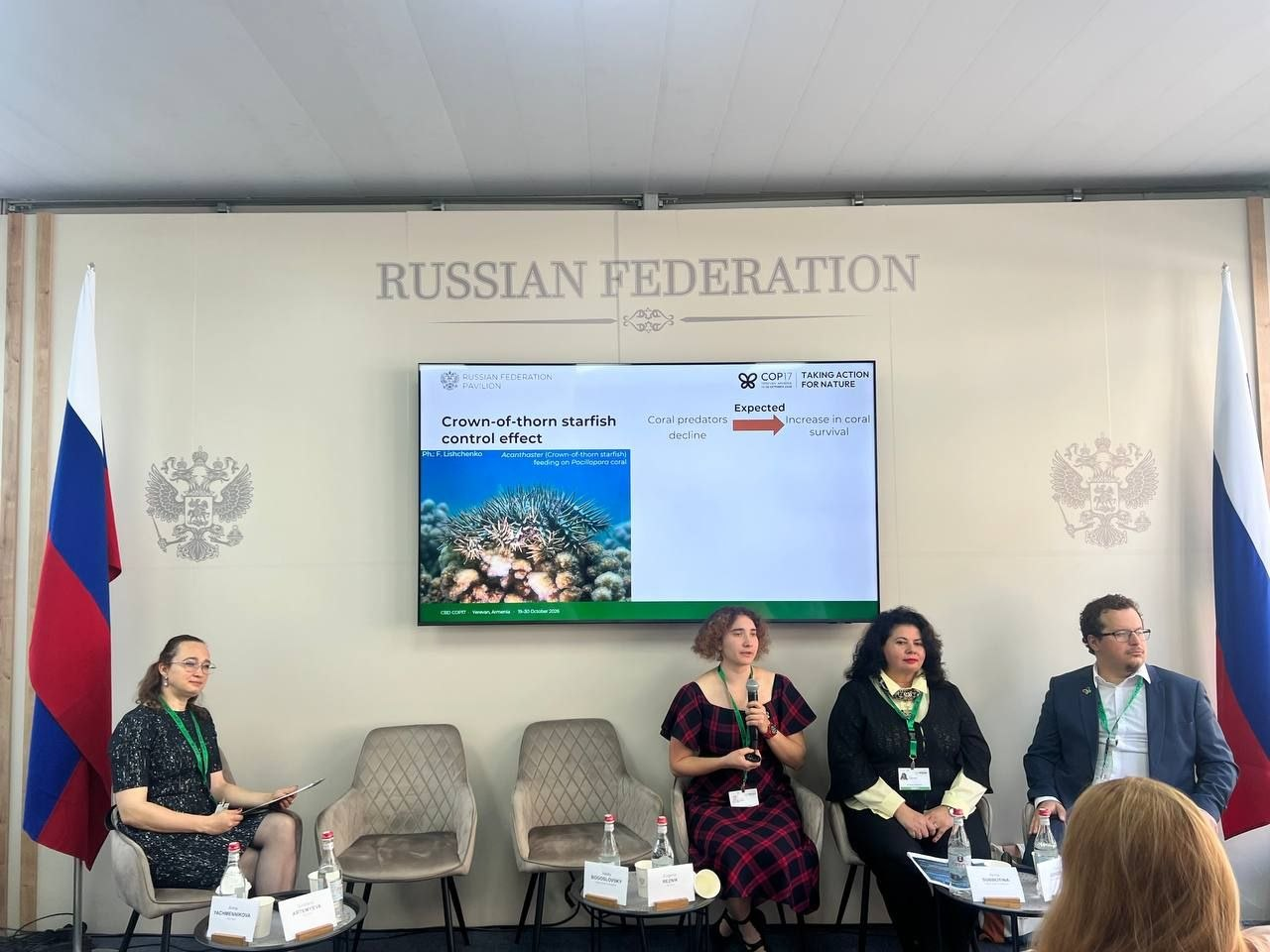
Deputy general director of the "Clean Seas" (Chistye Morya) Foundation Anna Subbotina explained that between 2019 and 2026, the foundation supported five expeditions in the Russian Arctic, in addition to two in the Caspian Sea and two in the Black Sea. Subbotina highlighted the significant challenges involved in organizing Arctic expeditions; given the remote nature and vast scale of the areas under study, each mission requires specialized technical equipment including the extensive retrofitting of aircraft used for scientific research.
Science Director at the "Aniva" biological station Ilya Gordeev introduced pavilion guests to the work being conducted at this marine research facility, currently under development at Cape Anastasia on the Krilion Peninsula in southern Sakhalin. In this area, the warm Tsushima Current meets the cold waters of the Sea of Okhotsk, creating a rare natural phenomenon where tropical and subarctic species coexist. Furthermore, specific vertical currents known as upwellings frequently bring deep-sea species into shallower waters. The establishment of a biological station in such a unique and isolated location has granted researchers access to one of the least-studied ecosystems in the Russian Far East. The field season at the station runs from May to November, involving scientists and students from various Russian research institutes and universities, as well as industry teams and volunteers. By 2030, "Aniva" is set to become a key field infrastructure hub for Sakhalin, serving as a site for long-term research, the training of young specialists, the study of biological resources, and R&D projects. In practice, the biological station has been operational since 2024, with staff dedicated to helping young scientists secure grants for their work at the facility. The project team possesses extensive experience in environmental education and in engaging colleagues in the study and conservation of marine ecosystems.
This press release was prepared by the Roszapovedtsentr (Protected Areas Center) of the Ministry of Natural Resources of Russia.