

Scientists have trained a neural network to distinguish between "look-alikes" among freshwater crustaceans
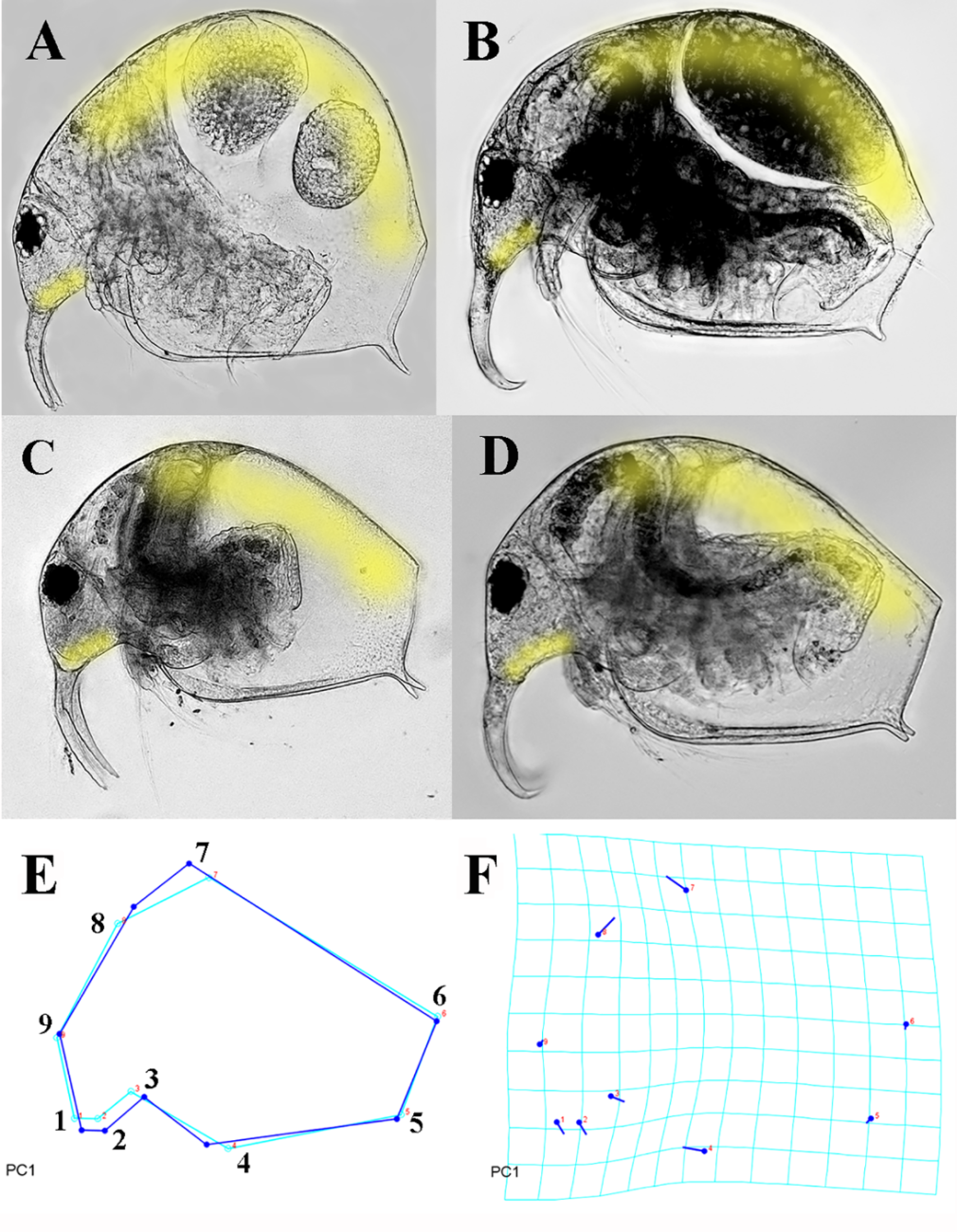
Russian researchers have used machine learning to distinguish between European and Sakhalin populations of the same crustacean species and discovered that a computer can perform this task nearly as effectively as an experienced biologist.
Freshwater cladocerans, often referred to as "water fleas," are a crucial subject for environmental monitoring, serving as indicators for assessing the health of aquatic ecosystems. However, many species are nearly indistinguishable in appearance, and individuals within a single species can exhibit significant morphological variation depending on their habitat, age, and the season. Such variability can pose a challenge even for experts. The situation is particularly complex regarding Bosmina (Bosmina) longirostris, a species commonly found in the fresh waters of Europe and Asia. These tiny crustaceans, measuring less than a millimeter, possess a rounded body and a brood chamber where females carry their offspring. Their body shape changes with age, meaning that juveniles and adults look quite different from one another.
A group of researchers from several Russian scientific centers set out to determine whether this delicate task could be entrusted to artificial intelligence. The scientists compiled a collection of photomicrographs of female B. longirostris specimens from 14 different water bodies: seven in Europe (Switzerland, Belgium, Germany, and the European part of Russia) and seven on Sakhalin Island. Starting with 165 original images, they expanded the dataset to 1,182 images by applying controlled transformations (such as rotations, reflections, and scaling) that did not distort the body shape. Each specimen was photographed under a microscope in a strictly horizontal position, with its head oriented in the same direction. The images were categorized into four classes: adult and juvenile females from Europe and from Sakhalin. For classification, the researchers employed three neural networks of varying complexity: ResNet-18, MobileNetV3, and ShuffleNetV2, all of which had been pre-trained on the ImageNet dataset.
The recognition accuracy for all three architectures ranged from 82% to 83%, with ROC-AUC scores reaching 0.94-0.96. The more computationally intensive ResNet-18 model offered no significant advantage over the lighter models; all three yielded comparable results. The most intriguing findings emerged from an analysis of the errors. The neural networks were more likely to confuse adult and juvenile specimens within the same geographic group - a result that makes biological sense, given that the transition from the juvenile to the adult stage occurs gradually. Conversely, there were significantly fewer errors when distinguishing between the European and Sakhalin populations. This indicates that the model successfully captured genuine morphological differences between the groups.
"Our study has shown that, even with a limited dataset, a neural network can develop robust representations of the body shape of these small crustaceans. This is not about identifying new species; rather, we used intraspecific variation as a model to test whether a computer could detect subtle differences that are often imperceptible to the human eye," explained Pyotr Garibyan, a Candidate of Biological Sciences and researcher at the A.N. Severtsov Institute of Ecology and Evolution of the Russian Academy of Sciences (IEE RAS).
In parallel, the scientists employed a classical geometric morphometric method - analyzing shape based on specific reference points, or "landmarks." This approach revealed that adult females from Europe and Sakhalin do indeed differ, particularly in the shape of their brood chambers and heads. However, this method has its limitations: the rounded body shape restricts the number of landmarks that can be placed, which in turn reduces the reliability of the results.
Neural networks do not require manual landmark annotation; they learn directly from the images themselves. Yet, they come with a drawback: they function as a "black box," offering no explanation as to which specific features they are using. Researchers cannot pinpoint exactly what the model is focusing on, which limits the method's application in fundamental taxonomy. Nevertheless, the practical value of this work is clear. Rapid, automated recognition of intraspecific groups is vital for ecological monitoring. It enables the tracking of invasive species, the assessment of population health, and the forecasting of changes in aquatic ecosystems. This method could serve as a valuable aid for biologists who process large volumes of samples. The authors emphasize that neural networks will not replace human morphologists, but rather serve as an additional tool.
Related materials: