

From foothills to the highest peaks - what is life like for aquatic crustaceans on the Putorana Plateau?
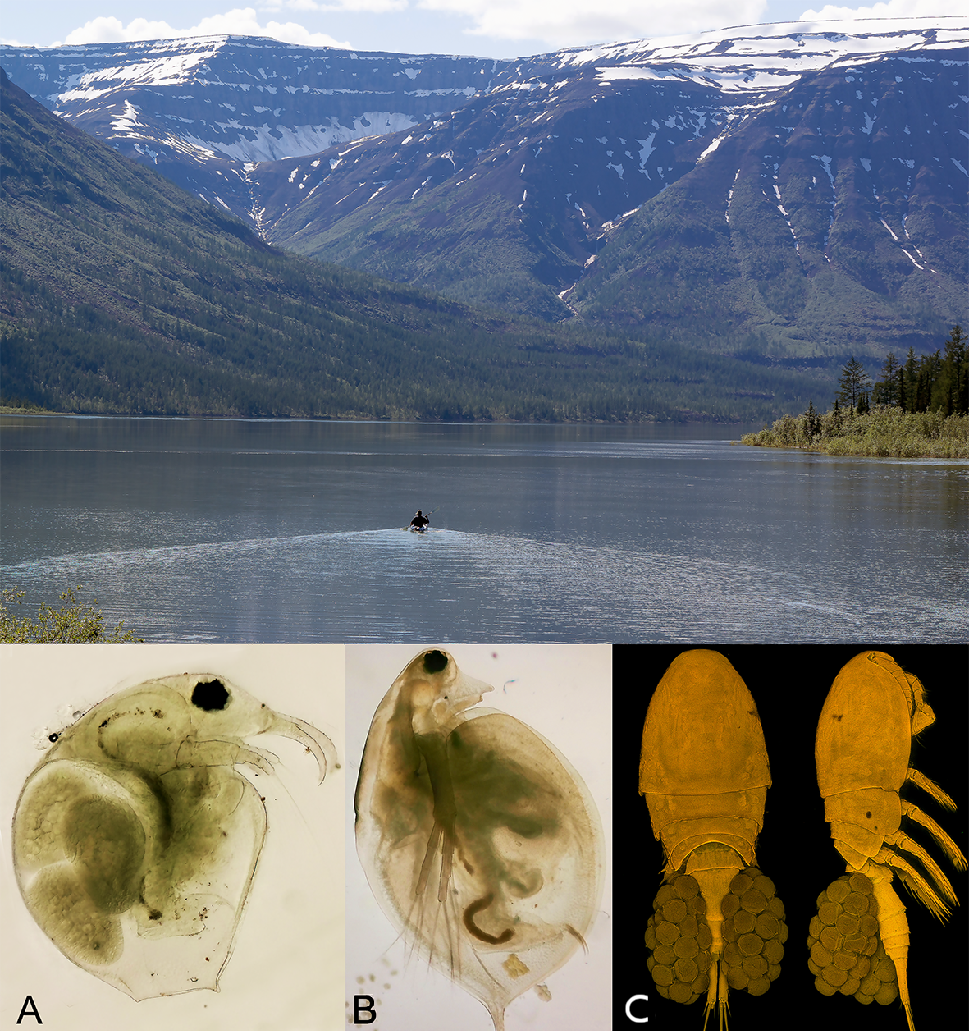
Mountain peaks have always beckoned explorers, and among the most beautiful sights encountered along the way are, without a doubt, mountain lakes. Hydrobiologists - somewhat later than botanists, entomologists, and zoologists specializing in vertebrates - also decided to venture into the mountains, armed with plankton nets and insect-collection gear…
In mountainous regions, altitude serves as a vector that drives changes in key biotic and abiotic environmental factors, which in turn determine the structure of aquatic ecosystems. Specifically, altitude correlates with gradients in microclimate, the hydrology of water bodies, hydrochemical characteristics, and the availability of nutrients. All these factors influence the taxonomic composition, as well as the qualitative and quantitative characteristics, of aquatic organisms. However, most research on the altitudinal variation of aquatic fauna has been conducted within the temperate climate zone. Meanwhile, mountain ranges in the Arctic region have long remained unstudied, due to their inaccessibility and the logistical challenges of conducting fieldwork there.
Researchers from the A.N. Severtsov Institute of Ecology and Evolution of the Russian Academy of Sciences (IEE RAS), in collaboration with colleagues from Kazan State University and the Faculty of Biology at Lomonosov Moscow State University, have conducted a long-term study to document the species composition and communities of microcrustaceans in lakes located at the base and on the summit of the Putorana volcanic plateau (Krasnoyarsk Krai). The study revealed a marked decline in the species richness of these crustaceans as altitude increases from 70 to 1,100 meters above sea level. Specifically, the abundance of cladocerans (Cladocera) decreases fourfold, while that of copepods (Copepoda) decreases twofold. The predominance of copepods in high-altitude areas is attributed to their adaptation to psychrophilic (cold-loving) conditions and oligotrophic (nutrient-poor) environments. Three distinct species assemblages of microcrustaceans were identified: one inhabiting the base of the plateau (<130 m), another found in mid-altitude areas (300-600 m), and a third occurring in high-altitude areas (>800 m) (Figures A, B, and C). The key ecological factors determining the structure of these taxocenes were the year of sampling, altitude, and the type of bottom sediment. Notably, the influence of the specific study area on the variability of microcrustacean diversity and abundance was significantly less pronounced than the effect of altitude, suggesting that the altitudinal trends in taxocene structure are consistent across the region. The distribution of Copepoda was more strongly associated with abiotic factors, whereas for Cladocera, such correlations were weaker and likely secondary to historical and biotic factors. Taken together, these findings point to different mechanisms underlying the formation of taxocenes in cladocerans and copepods.
Based on a comparative analysis of original data and existing literature, it is hypothesized that in the Arctic, even a relatively small change in elevation (300-400 m) is sufficient to alter the structure of microcrustacean taxocenes. In contrast, in temperate latitudes, a significantly greater change in elevation would be required to induce shifts of similar magnitude. This phenomenon is likely driven by climatic factors, which, in polar latitudes, change more abruptly with altitude above sea level than they do in temperate regions.
An analysis of the diversity and ecological characteristics of cladocerans and copepods on the Putorana Plateau provides a foundation for the long-term monitoring and assessment of the resilience of Arctic aquatic ecosystems in a rapidly changing environment.
The authors would like to thank the staff of the Unified Directorate of Taimyr Nature Reserves (a federal state budgetary institution), and in particular M. G. Bondarya, Deputy Director for Science and Environmental Education, for organizing the fieldwork. This research was supported by a grant from the Russian Science Foundation (Project No. 25-24-00881).