

Scientists from Russia and China have proposed the creation of ecological corridors to facilitate the cross-border migration of Amur tigers, the Russian Ministry of Science and Higher Education told RIA Novosti
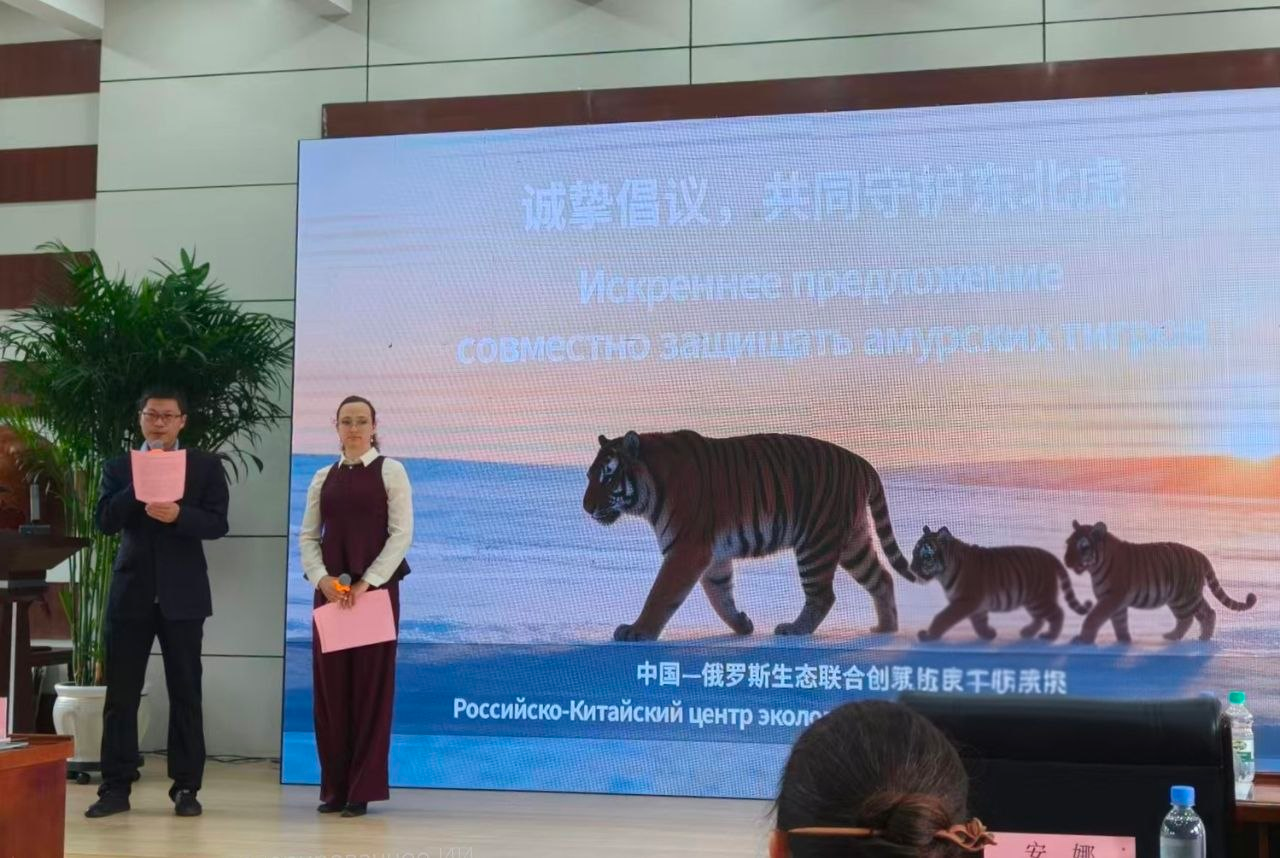
"Russian and Chinese scientists have launched an initiative to protect the transboundary Amur tiger population. The document outlines the establishment of a unified database for cross-border tiger groups, a joint assessment of habitat connectivity, and the development of a mechanism for the coordinated management of transboundary ecological corridors," the statement reads.
Furthermore, the initiative calls for the creation of technical guidelines for tiger conservation, as well as standards for ecosystem restoration.
The document has been submitted to the Department of Ecology and Environment of Heilongjiang Province. Once the Chinese side has reviewed the proposals, they are expected to be forwarded to the State Council of the People's Republic of China.

These proposed measures are the result of ten years of collaborative work by a group of Russian and Chinese scientists at the Center for Ecological Innovation Research in Harbin - a joint initiative established by the A.N. Severtsov Institute of Ecology and Evolution of the Russian Academy of Sciences (IEE RAS) and the Institute of Natural Resources and Ecology of the Heilongjiang Academy of Sciences.
The agency noted that the current transboundary population consists of approximately 20 Amur tigers that regularly migrate between the two nations, serving as a vital link between the tiger populations residing in Russia and China. At present, there are about 750 tigers in Russia, while in China - according to Chinese researchers - the number ranges from 70 to 90.

According to scientists, transboundary animal groups serve as a vital mechanism for gene exchange; without them, a population fragments into isolated segments, creating a risk of degradation - even if the total number of individuals remains stable.
Anna Yachmennikova, the project coordinator and a senior researcher at the A.N. Severtsov Institute of Ecology and Evolution (Russian Academy of Sciences), explains that enabling animals to move freely across national borders via a system of ecological corridors offers a practical alternative to translocation - the process of capturing and relocating animals to restore populations in other regions.
She noted that the most logical and effective approach is to connect animal habitats through a network of ecological corridors that remain entirely free of human-made infrastructure, spanning both countries.
Currently, the only corridor through which tigers can reach the Lesser Khingan region in China - an area suitable for their habitation - runs through Taipinggou, a protected natural area located on the border between China and Russia, near the Amur River.