

The Daurian pika emits ultrasonic calls in the face of potential danger
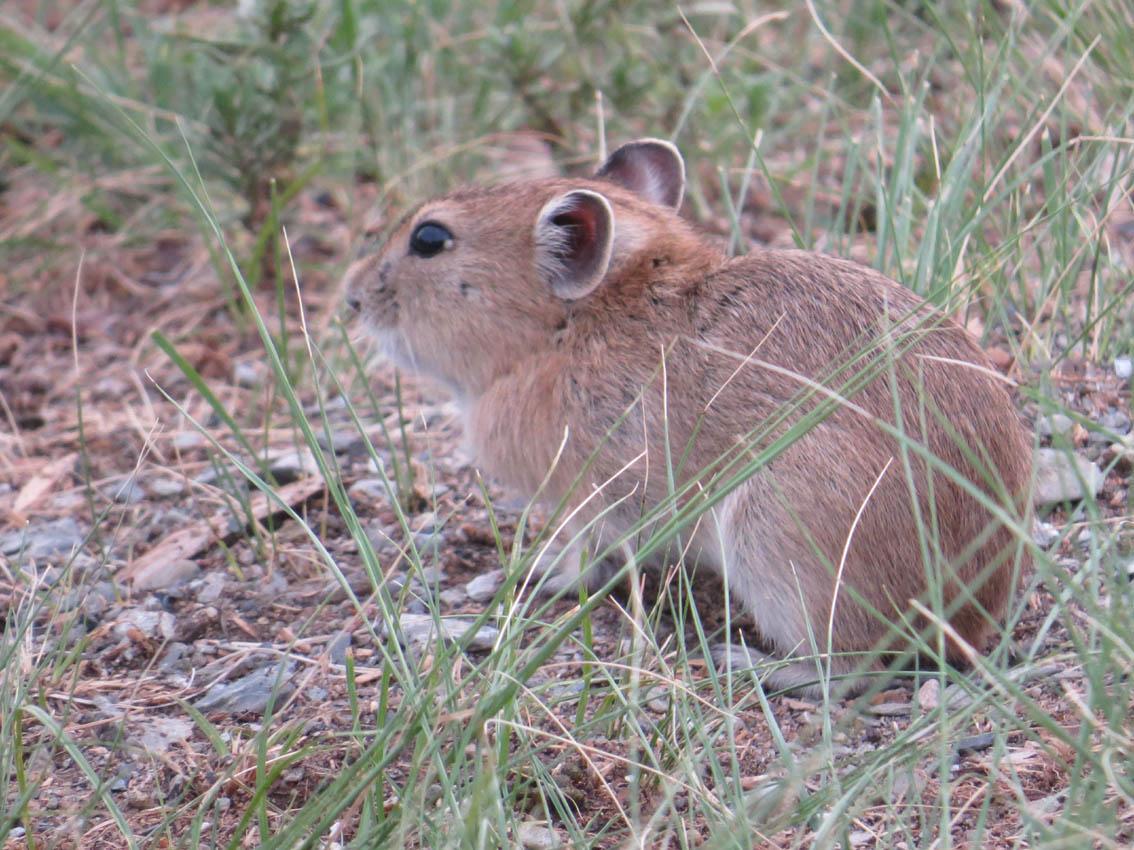
Unlike rodents, lagomorphs have never previously been observed producing ultrasonic sounds. Researchers from the A.N. Severtsov Institute of Ecology and Evolution (RAS), Lomonosov Moscow State University, and the Institute of Natural Resources, Ecology and Cryology (RAS) discovered that, alongside audible songs, trills, and alarm calls, Daurian pikas also emit ultrasonic calls when a human is present near their burrow.
The pikas emitted these ultrasonic calls while inside their burrows - likely near the entrance, given the very high intensity of some of the sounds. Some of the ultrasonic calls were produced in alternation with the species' irregular audible alarm calls or loud songs. In four instances, pikas were observed on the surface of the colony before the ultrasonic recordings began. Furthermore, the structure of the pikas' ultrasonic calls differed significantly from those of the Mongolian gerbil, Brandt's vole, and the narrow-headed vole - species that sometimes share the same burrows. All this evidence made it possible to confirm with certainty that the ultrasonic calls indeed originated from the Daurian pikas.
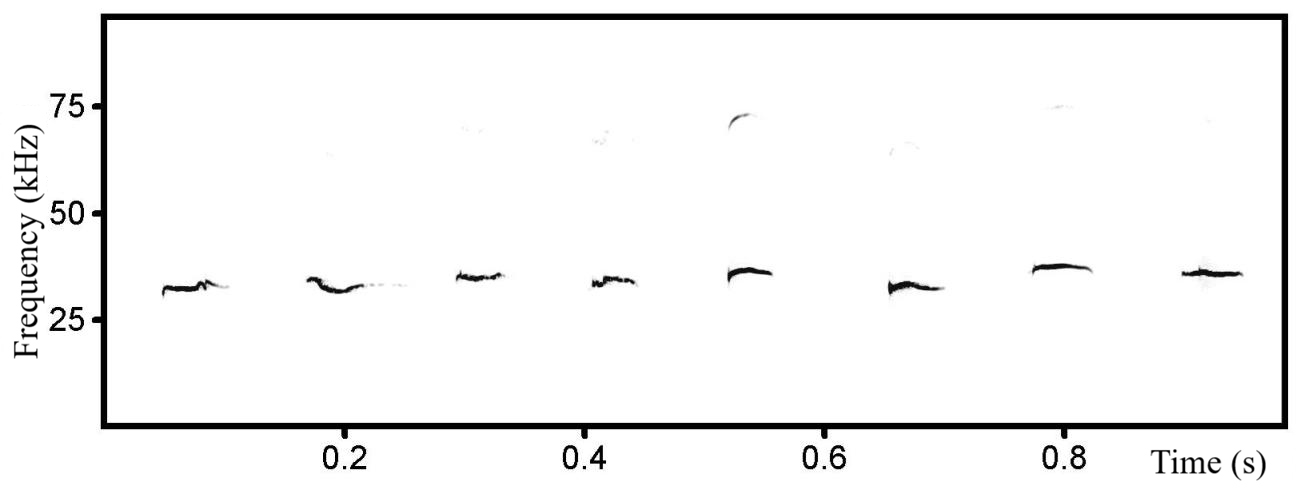
The pikas' ultrasonic calls were never produced in series and were separated by intervals of up to several minutes. The frequency range of 80% of the ultrasonic calls fell within the 31.0-37.5 kHz band, and all of them were flat in contour. The duration of the ultrasonic calls averaged 40 ms and did not exceed 77 ms. The acoustic structure of the pikas' ultrasonic calls was very simple, lacking frequency contour breaks or any nonlinear phenomena.
It was also confirmed that the audible alarm calls of the Daurian pika often begin in the ultrasonic range. Calls with such a wide frequency range, rapidly transitioning from ultrasonic to audible frequencies, are highly unusual for mammals. Subsequent to the publication of the article, experimental evidence emerged showing that similar calls produced by singing mice are generated via a whistling mechanism. Daurian pikas likely employ a similar mechanism when producing both their ultrasonic calls and audible alarm calls.
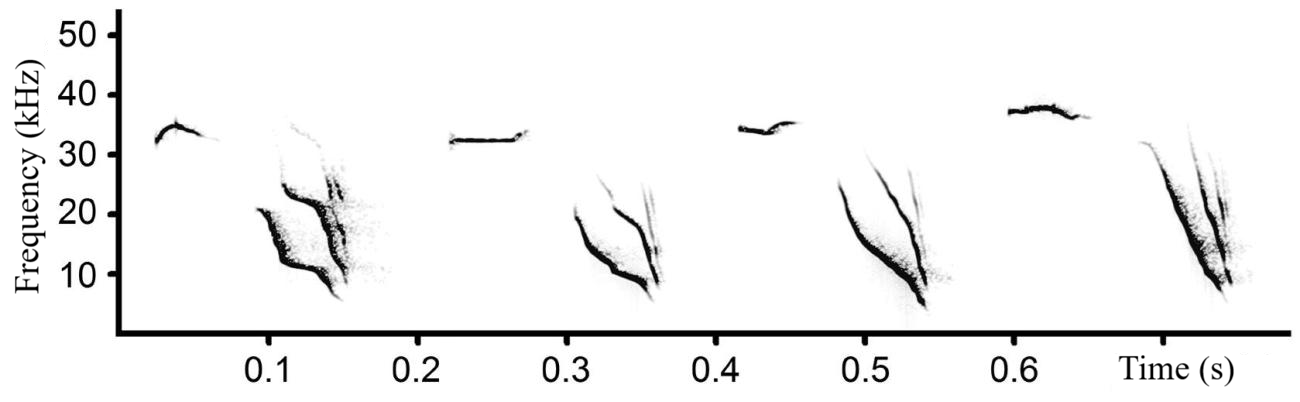
Fig.2: Ultrasonic and audible alarm calls of four Daurian pikas. Note that the audible calls begin in the ultrasonic range, above 20 kHz.
“Studying ultrasonic vocalizations in wild mammals is complicated by the difficulty of identifying the species of the animal making the call. To address this, researchers use simultaneous video recording alongside ultrasonic recordings obtained from captive animals. A lack of reference ultrasonic recordings may explain why ultrasonic communication among small mammals in the wild - including other pika species - remains poorly understood,” said Elena Volodina, Candidate of Biological Sciences and Senior Researcher at IEE RAS).
Related articles:
Hi-Tech Mail Zen: "The secret language of pikas: scientists record ultrasonic calls in lagomorphs for the first time"
IXBT: "Russian scientists detect ultrasonic signals in Daurian pikas"
Hi-Tech Mail: "The secret language of pikas: scientists record ultrasonic calls in lagomorphs for the first time"