

Scientists have confirmed the need to protect the sea otters of the Lesser Kuril Ridge
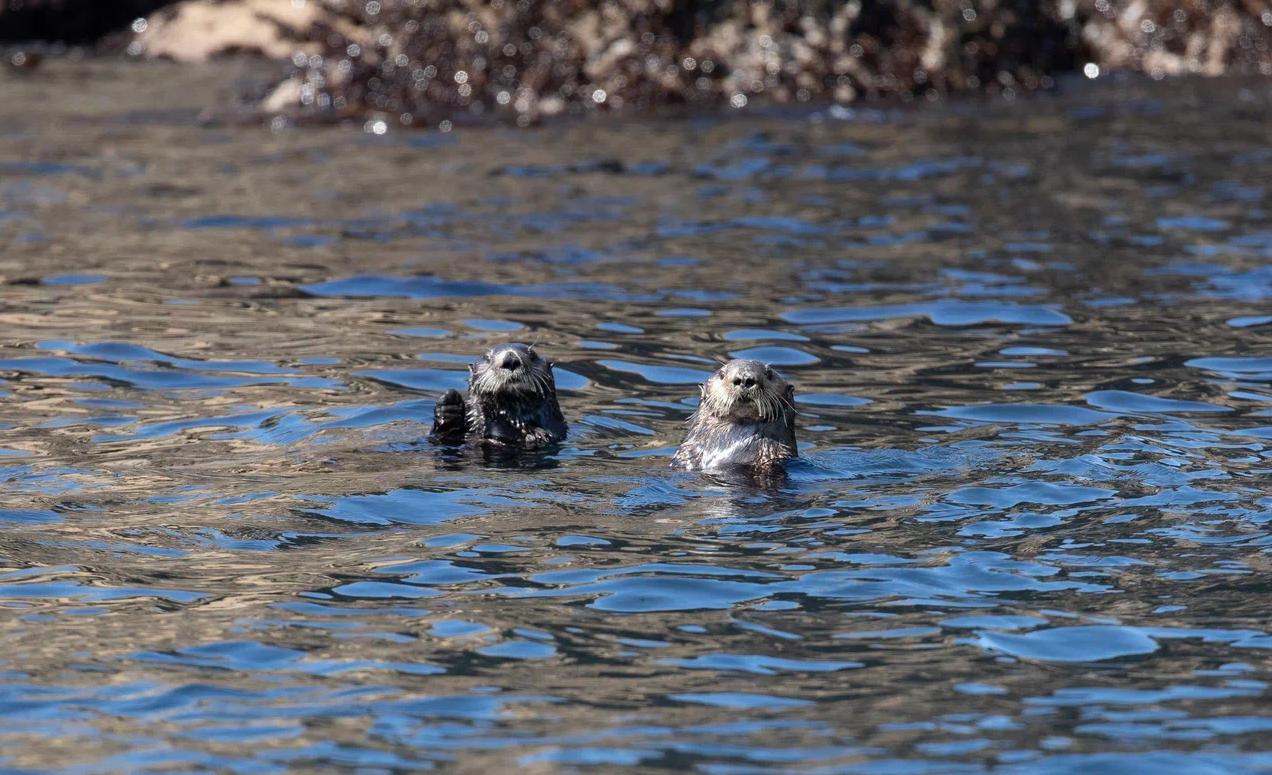
Photo by: Svetlana Artemyeva
A unique population of sea otters - a species listed in the Red Book of Russia - in the Southern Kuril Islands is breeding actively but requires special protection. Scientists reached this preliminary conclusion following their second expedition of the year, during which they counted over 500 of these marine mammals near the islands of the Lesser Kuril Ridge. This information comes from the "Nature and People" Foundation, which is conducting the sea otter study project in partnership with the Kurilsky Nature Reserve and the A.N. Severtsov Institute of Ecology and Evolution of the Russian Academy of Sciences (IEE RAS), with support from RWB and Kaspersky.
The sea otter (also known as the sea beaver) is listed in the Red Book of Russia and is classified as a rare species with a declining population, the statement notes. In Russia, these animals inhabit the Commander Islands, the Kuril Islands, and Kamchatka. Over the past five years, sea otter numbers have been falling across most of their range, whereas the Southern Kurils remain - perhaps - the only region where the population is growing.
As reported by the journal “Vedomosti. Sustainable Development”, the first expedition of the year took place in late April off the coasts of the Commander Islands, Kamchatka, and the Northern Kurils. The area covered by the recent research was more extensive; over the course of the 10-day expedition, scientists surveyed the coastlines of the islands within the Malye Kurily Nature Sanctuary and the Kurilsky Nature Reserve.
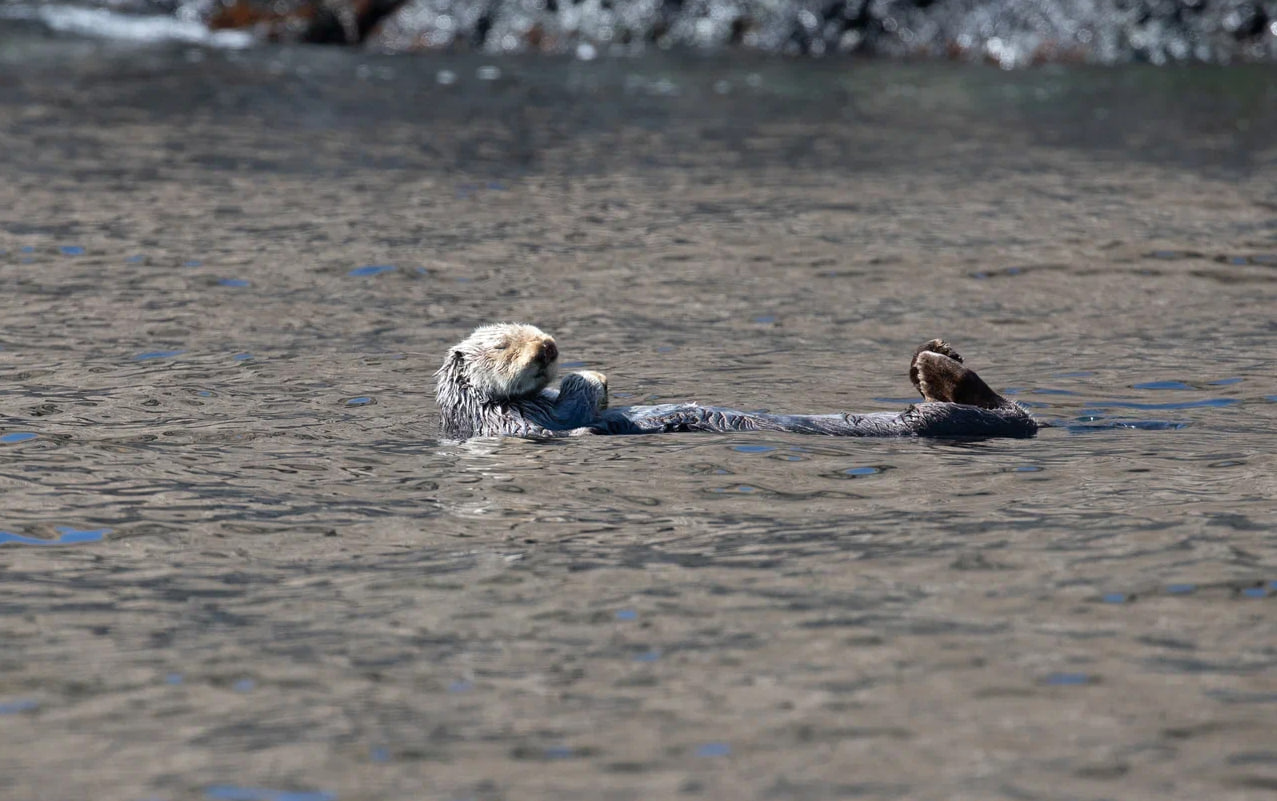
Notably, no animals were found in the waters surrounding the islands of Kunashir, Iturup, and Shikotan; instead, they were recorded only near the smaller islands of the Lesser Kuril Chain. The highest concentration was observed near Yuri Island; for instance, one evening in Shirokaya Bay, scientists spotted a group of 130 animals. During the spring expedition, the distribution of sea otters had been more uniform, and no such large aggregations were encountered. Another difference compared to the spring observations was the number of pups. Scientists counted 150 pups - up from 60 during the previous expedition - with the majority staying close to their mothers.
According to the expedition leader, Svetlana Artemyeva, a researcher at the A.N. Severtsov Institute of Ecology and Evolution (RAS), the large number of nursing females and pups of various ages indicates active reproduction among the animals. "This ‘floating nursery’ clearly demonstrates that the local ecosystem is healthy and that the sea otter - a species listed in the Red Book - has a viable future here," she said.
Researchers also did not find extensive beds or thickets of Alaria - large brown algae that serve as both a resting place and a food source for sea otters - in the study area. Specialists had observed such beds near Urup Island during surveys conducted in 2024. It is hypothesized that in the Lesser Kuril Ridge area, the animals may be foraging in the straits between the islands rather than along the coast.
As the foundation explained, the data collected still need to be analyzed, mapped, and compared with results from previous years. This will make it possible to assess population trends and distribution patterns. However, preliminary results already indicate the particular importance of the Lesser Kuril Ridge for sea otter conservation.
Irina Onufrenya, head of the wildlife conservation program at the Nature and People Foundation, noted that alongside positive data on animal numbers, the area is facing increasing human impact due to the development of tourism and seafood harvesting. "Our shared goal is to ensure robust protection for these waters and to foster a situation where sea otters and humans can coexist successfully," she emphasized. “To achieve this, Onufrenya stated, regular monitoring must continue.” Scientists are already discussing a comprehensive, large-scale population survey for June or July of next year, as well as a separate study of the sea otters' food supply. Experts also believe it is essential to foster cooperation between the business sector and the government to develop measures for the protection and sustainable use of marine ecosystems.