

Sprat, round goby and other invaders have successfully established themselves in the Volga fish communities
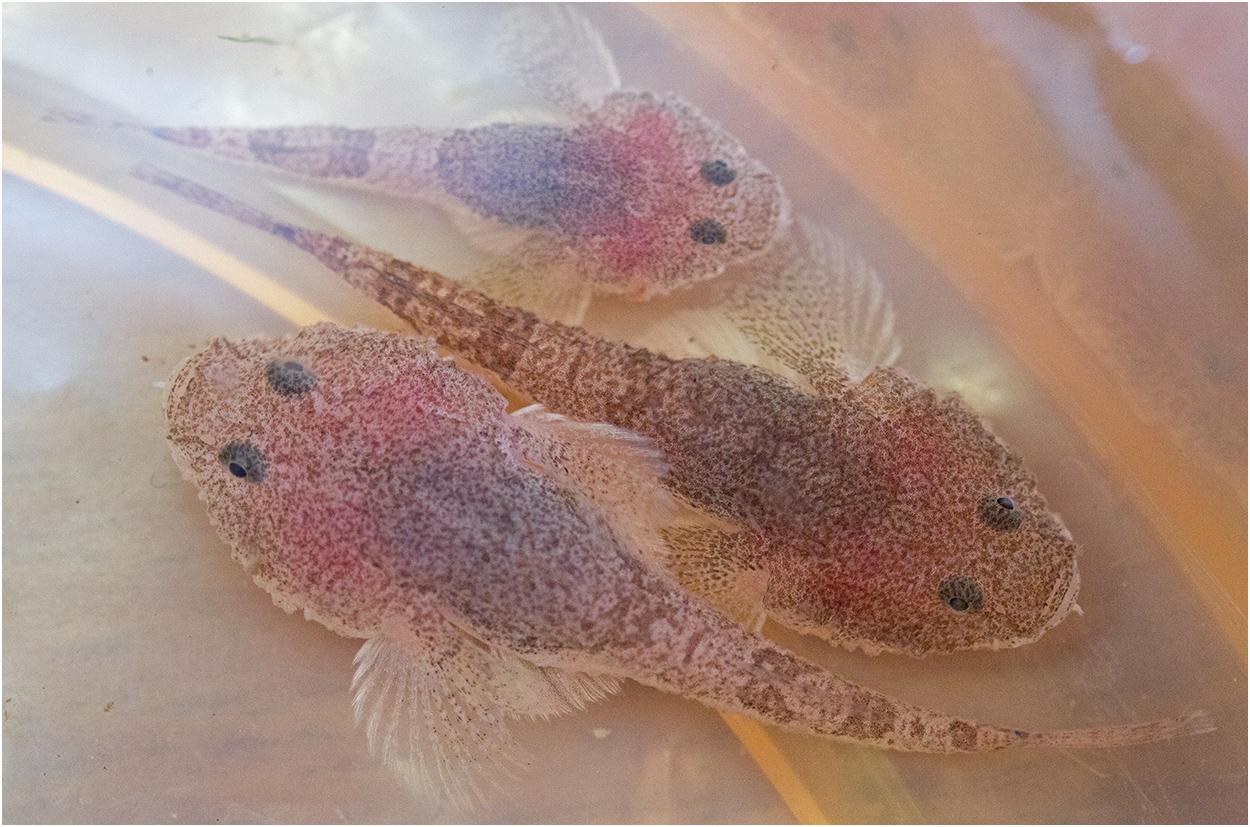
Figure 1. The tadpole goby is one of the Volga's least-known fishes. Source: Alexey Kotov / from personal archive
Scientists have determined that in some parts of the Volga River, almost half of the fish species are represented by invaders from the Azov-Black Sea basin, more northern regions, and even the Amur River. These invaders have integrated into local communities and pose a less significant threat to native species than expected. For example, the newcomer species include the Black Sea sprat and the round goby, already a common component of the ichthyofauna throughout the Volga. Data obtained over 23 years of observations make it possible to predict the further spread of these alien fish and develop measures to prevent their negative impact on local ecosystems. The results of the study, supported by a grant from the Russian Science Foundation (RSF), were published in the journal "Biology of Inland Waters."
As early as the mid-20th century, scientists noted that the introduction of alien (invasive) species into new territories can lead to large-scale environmental restructuring, especially when combined with climate change and human activity. This is because these alien species sometimes completely displace native inhabitants, thereby altering food chains and ecosystem structure. Furthermore, this can cause significant economic damage to aquaculture and fisheries. For example, in 1947, the predatory rapana was accidentally introduced into the Black Sea from the Far East on the bottoms of ships. Lacking natural predators such as starfish and large crabs in Black Sea waters, this predator "took over" the area and significantly reduced the populations of local commercial mollusks such as mussels and oysters.
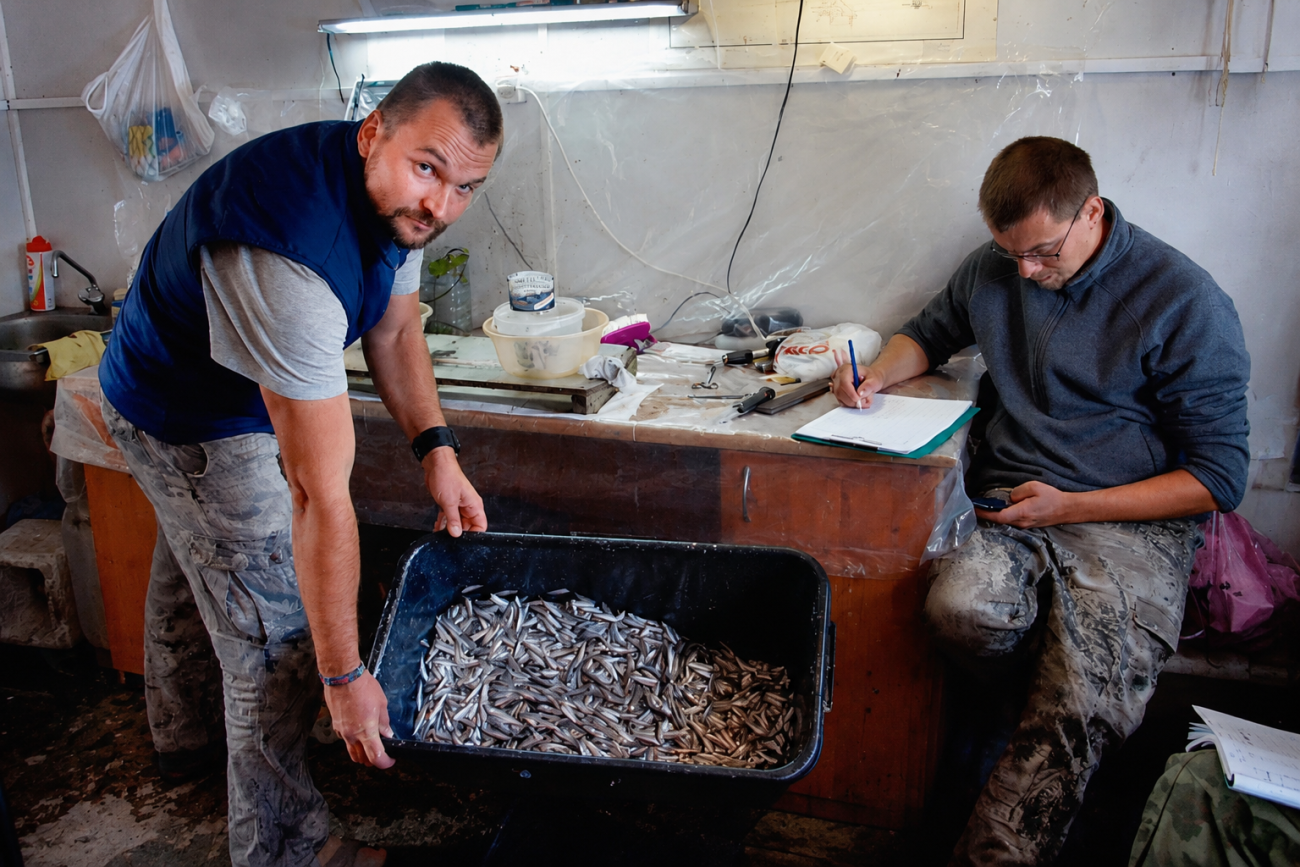
Figure 2. Fieldwork authors Dmitry Karabanov and Dmitry Pavlov demonstrate their catch of select Black Sea sprat, Rybinsk Reservoir. Source: Alexey Kotov / from personal archive.
To prevent similar catastrophes in other bodies of water, it is important to monitor the presence and abundance of invasive species. This is particularly relevant for the Volga and Kama (the Volga's largest tributary), as reservoir systems have been created on these rivers, altering the original ecosystems and creating favorable conditions for species not previously present there.
Researchers from the A.N. Severtsov Institute of Ecology and Evolution of the Russian Academy of Sciences (Moscow) and the I.D. Papanin Institute of Biology of Inland Waters of the Russian Academy of Sciences (Borok) characterized the distribution of fish species alien to the Volga and Kama rivers based on the results of expeditions conducted over 23 years, from 2001 to 2024.
Over the course of the study, the authors caught more than 48,000 fish specimens at 143 stations. To accurately determine the species of each individual, the scientists not only traditionally assessed the fish's external characteristics but also analyzed their DNA.
The authors identified 17 alien species established in the Volga and Kama rivers, including the Black Sea sprat and the round goby, native to the Azov and Black Seas and their tributaries. The proportion of alien species varied greatly across the Volga and Kama basins: from 8-10% in some tributaries to 36-47% in the Saratov and Kuibyshev reservoirs.
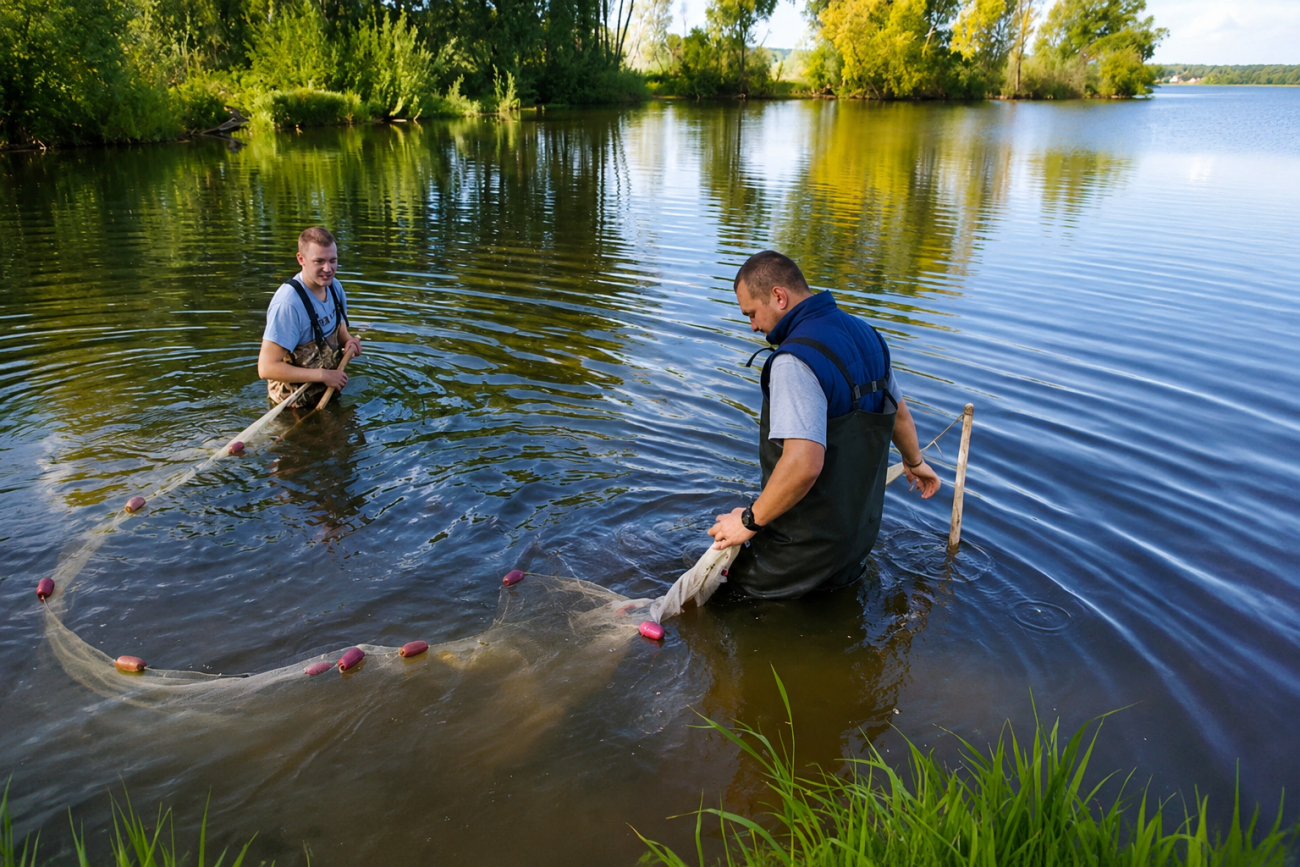
Figure 3. Dmitry Karabanov and Dmitry Pavlov collecting samples in the coastal area. Fishing with a fry seine in the Kuibyshev Reservoir. Source: Alexey Kotov / from personal archive.
Interestingly, although invasive species account for almost half of the fish species in reservoirs, most of them do not displace native species but rather integrate into food chains, serving, for example, as food for local predators. The authors note that the success of the "newcomers'" dispersal was likely historically determined by the construction of reservoirs, which created favorable conditions for new species not previously found in the Volga and Kama rivers.
The research team's analysis also revealed that the main natural barrier to the dispersal of "aliens" is the native fish themselves, which prevent new species from establishing themselves due to competition for food and habitat.
"Therefore, we propose a new strategy for combating invasive species. Instead of costly and often ineffective attempts to eradicate invaders, it's better to focus on preserving native species, which will serve as a natural 'living shield' against new 'aliens.' This approach will not only save money but also help maintain the sustainability of the fishery, as many alien fish, such as the Black Sea sprat, have already become an important food source for valuable commercial fish species and can even be considered a new resource themselves," explains Alexey Kotov, Doctor of Biological Sciences, Corresponding Member of the Russian Academy of Sciences, and Chief Researcher at the Laboratory of Aquatic Community Ecology and Invasions at the A.N. Severtsov Institute of Ecology and Evolution, Russian Academy of Sciences, who leads the project supported by a grant from the Russian Science Foundation.
According to the authors, maintaining a high diversity of native species in the Rybinsk and Kuibyshev reservoirs, as well as in the Volga-Don Canal zone, is particularly important, as these areas can be considered "hot spots" where, due to favorable conditions, the likelihood of new invaders is particularly high.
For many years, scientists have been conducting detailed studies of the Ponto-Caspian basin - the Black, Azov, and Caspian Seas, as well as the rivers flowing into them—to understand how continental water bodies are developing and how their biodiversity is changing. For example, scientists previously discovered that the cladoceran crustacean Pleuroxus truncatus found in Russian waters can be divided into two genetic lineages: "western" and "eastern." Representatives of the former are predominantly found in the European part of the country, including the Ponto-Caspian region, while the latter is found in Siberia, the Far East, and Mongolia. These studies will be continued as part of the work on the new stage of the current RSF project.
Source: Russian Science Foundation
Related materials:
EcoPortal: "Alien fish have colonized almost half of the Volga's species composition"
Pravda: "Twenty-three years of catching aliens: Volga fish have shown who's really holding the line"
Rambler: "Sprat and other alien species are penetrating Volga fish communities"
Innovation World News: "17 alien fish species have been discovered in the Volga basin, but they pose no threat to the ecosystem"
VFocuse.Mail: "Sprat and other alien species are penetrating Volga fish communities"