

From the taiga to the tropics: A Russian-German team explored the patterns of soil food web organization
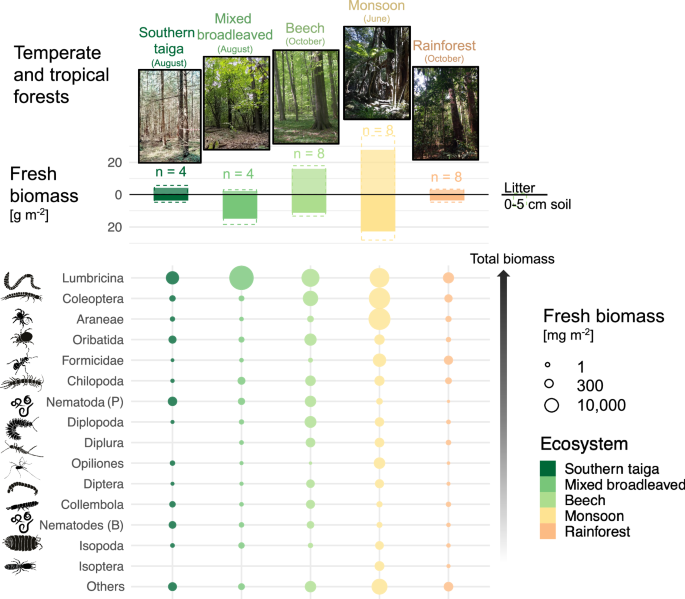
Figure: Distribution of biomass of taxonomic and trophic groups of invertebrates in the forest litter and topsoil in southern taiga, mixed broadleaf forests, beech forests, monsoon forests and tropical rainforests.
Two articles by an international research team, including scientists from the A.N. Severtsov Institute of Ecology and Evolution of the Russian Academy of Sciences, have been published in leading international scientific journals - Nature Communications and Nature Ecology & Evolution. The work is the result of a long-term collaboration between the Severtsov Institute of Ecology and Evolution of the Russian Academy of Sciences and the Institute of Zoology at the University of Göttingen, supported by the Alexander von Humboldt Foundation. The papers also involved specialists from other research centers, including researchers from Syktyvkar, Nizhny Novgorod, and Novosibirsk.
Soil is one of the most complex and least studied components of terrestrial ecosystems. It harbors a vast portion of the planet's biodiversity; billions of microorganisms and invertebrates decompose organic matter, maintaining fertility and the ecosystem's carbon balance. However, many fundamental principles governing the organization of soil communities remain unknown.
In their first study, published in Nature Communications, scientists compared for the first time the distribution of biomass and energy flows in soil food webs along a vast climatic gradient - from the taiga to tropical rainforests. The study showed that in temperate forests, the primary energy flows through typical saprophages that consume dead organic matter, but in the tropics, the contribution of living plant roots and the role of predators increases significantly. In other words, "brown" soil food webs are becoming "greener." Earthworms play a special role in maintaining energy flows, capable of restructuring soil food webs and mitigating climatic differences between ecosystems.
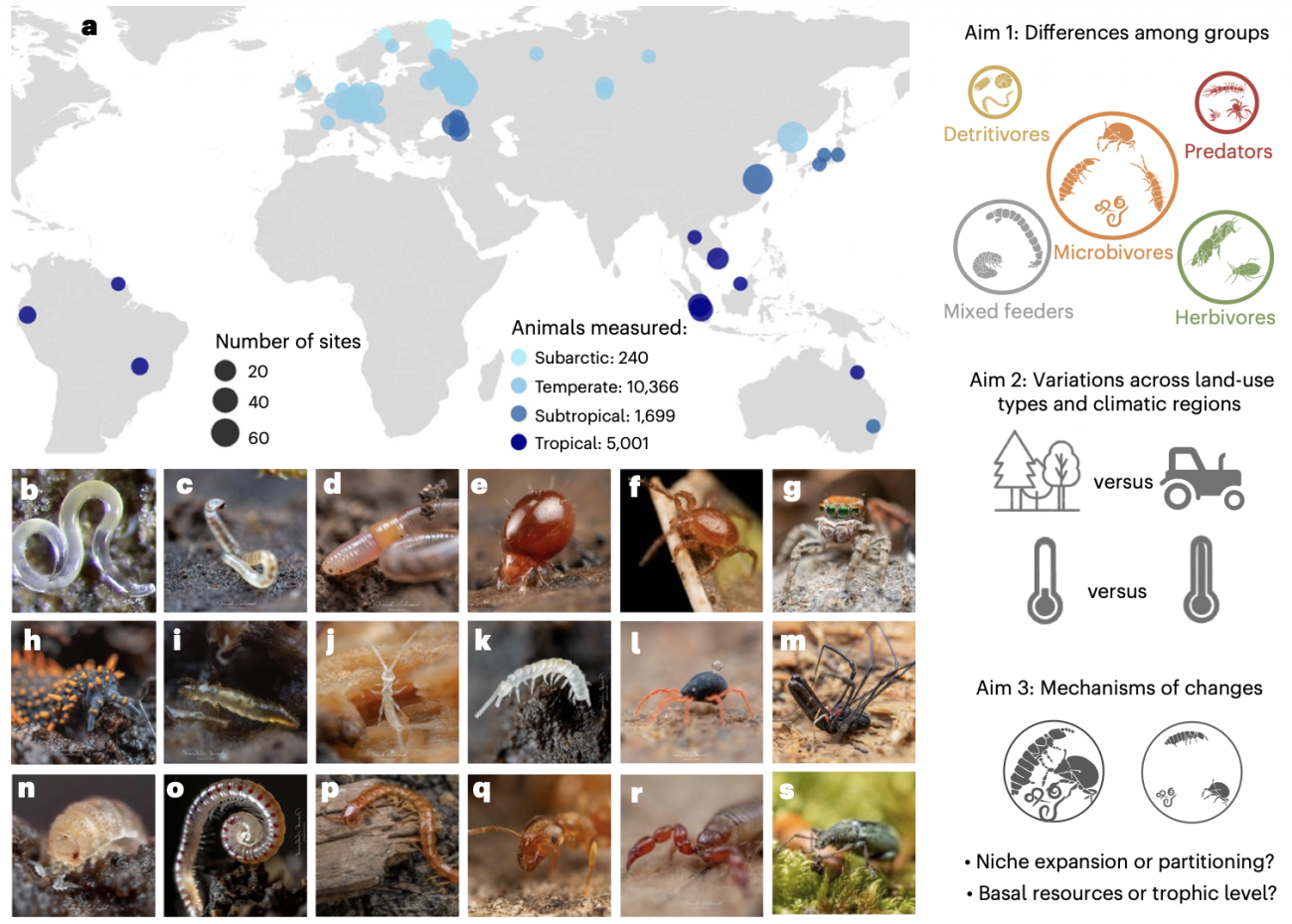
Figure: The areas studied, the main scientific objectives and the representatives of soil animals considered in the study: nematodes (b), enchytraeids (c), earthworms (d), oribatid mites (e), gamasid mites (f), spiders (g), springtails (h), proturans (i), curtain web spiders (j), symphylans (k), prostigmata (l), harvestmen (m), woodlice (n), millipedes (o), centipedes (p), ants (q), pseudoscorpions (r) and beetles (s).
The second study, published in Nature Ecology & Evolution, is based on an unprecedented analysis of over 17,000 soil animal samples collected from 456 biotopes in 19 countries. Using isotopic data, the researchers assessed the diversity of invertebrate feeding strategies across different climates and land-use types. Surprisingly, the trophic diversity of soil animals was, on average, higher in agroecosystems than in forests, and significantly higher in the tropics than in temperate latitudes. This demonstrates the flexibility of the feeding behavior of soil invertebrates, which are capable of expanding their ecological niches in the face of limited resources and a changing environment.
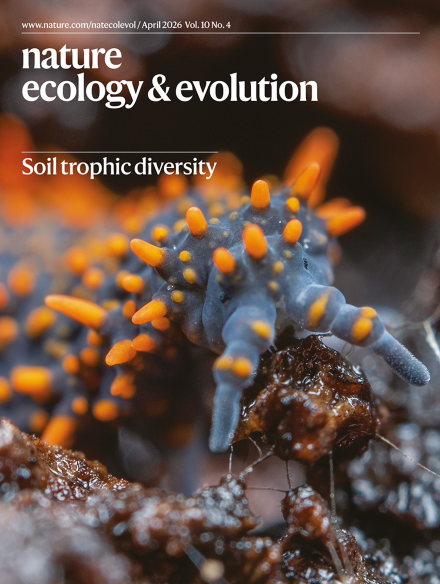
Image courtesy of Frank Ashwood
Both studies significantly expand our understanding of how soil communities are structured in different regions of the world and how they may respond to climate change and landscape transformation. The results are important for predicting ecosystem resilience, preserving biodiversity, and developing ecologically sound approaches to managing natural and agricultural areas.