

A global study has shown that the complexity of food webs determines how biodiversity influences ecosystem functioning
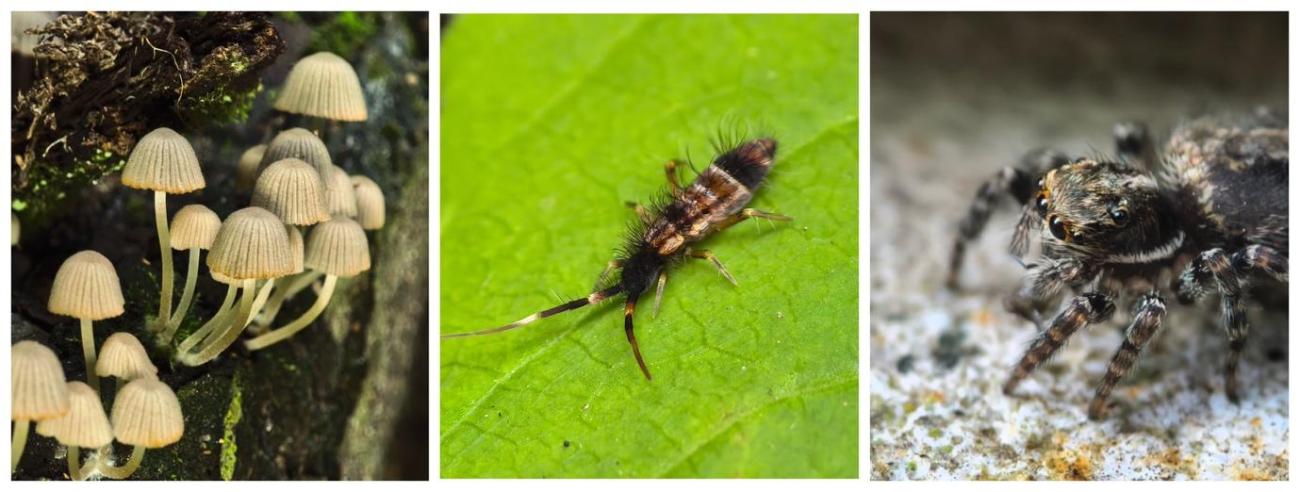
Photo 1 by Margarita Danilova, IEE RAS
A new study published in Nature has shown that ecosystem functioning depends not only on the number of species within them but also on how plants, herbivores, predators, and other organisms are interconnected in food webs. The study was conducted by an international team led by Dr. Andrew Barnes of the University of Waikato (New Zealand), with contributions from scientists at the German Center for Integrative Biodiversity Research (iDiv) and specialists from more than 20 scientific organizations, including the A.N. Severtsov Institute of Ecology and Evolution of the Russian Academy of Sciences (IEE RAS).
The authors analyzed more than 300 food webs in aquatic and terrestrial ecosystems worldwide. The results showed that the more diverse a community is, the more active its energy flows: organisms at lower trophic levels consume plants and dead organic matter (such as fallen leaves), predators regulate their numbers, and the nutrients are returned to the cycle. These processes underlie many vital functions for humans—from food production and pest control to climate regulation and the overall resilience of ecosystems to various changes.
The role of predators has proven particularly significant. In species-rich food webs, predation rates can increase tens of times, and in some cases, more than 70 times. This means that complex and diverse communities are capable of supporting more active and resilient ecological processes.
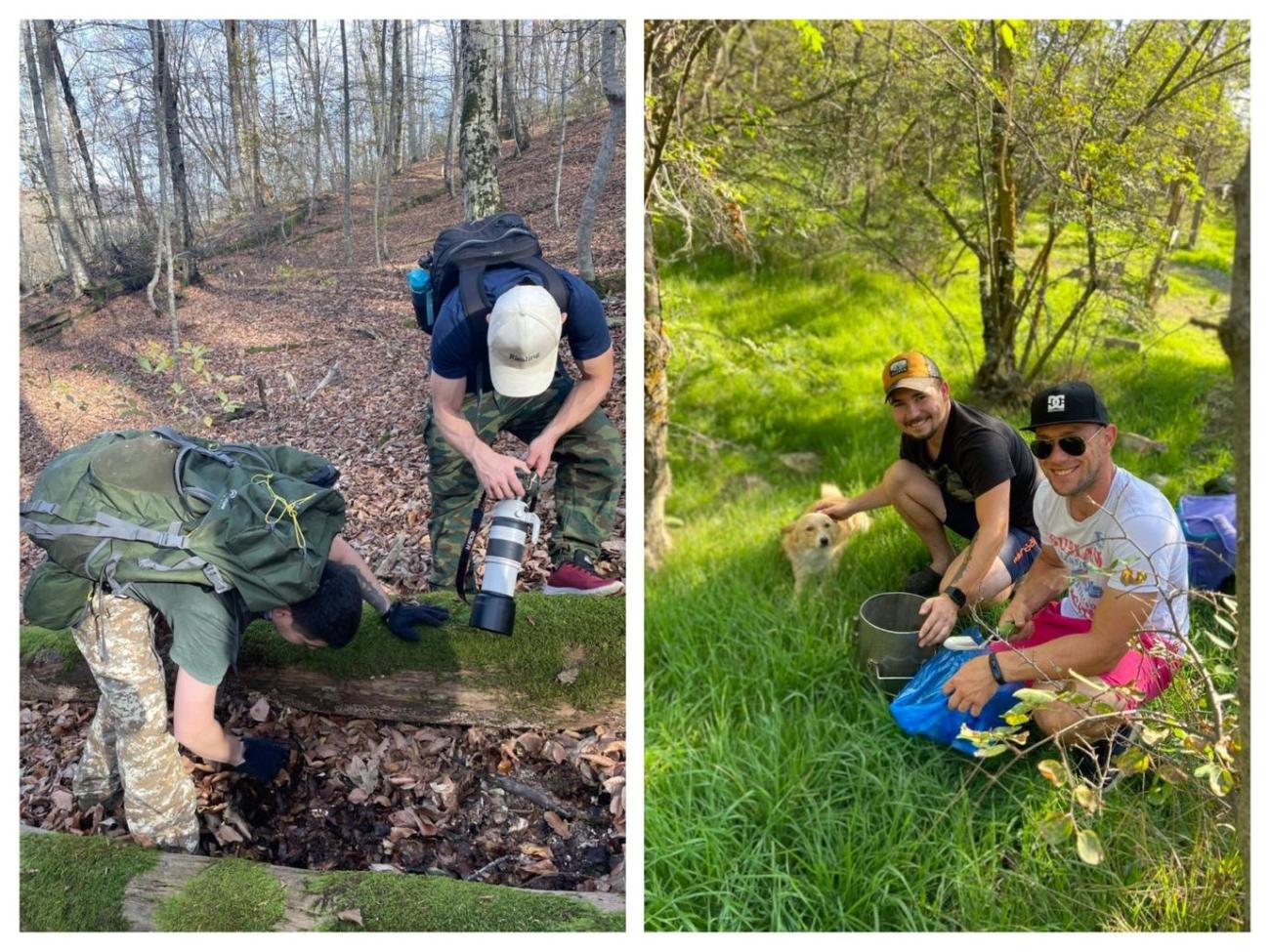
Collection of material for the study of food webs, authors of photographs: Evgeny Karlik, Alisa Neplyukhina, IEE RAS.
"This study shows that biodiversity is more than just a list of species. To understand how an ecosystem functions, it's important to consider the connections between organisms: who eats whom, how energy flows through the food web, and which groups ensure its stability," comments Ruslan Saifutdinov, a co-author of the publication and a senior researcher at IEE RAS.
The article identifies two mechanisms that explain this effect. First, more diverse ecosystems typically have more trophic levels - from plants and dead organic matter to herbivores and predators. Second, when a community is rich in species, they utilize available resources more actively and diversify them, including different types of prey. This reduces competition and allows the ecosystem to more efficiently distribute energy among participants in the food web.
The key conclusion of the study is that conservation cannot be limited to preserving individual rare species. For ecosystems to function reliably, it is necessary to maintain the integrity of food webs - the system of connections through which energy flows through communities, regulates the abundance of organisms, and maintains the turnover of substances.
Daniil Korobushkin, a senior researcher at IEE RAS and a PhD in Biology, comments: "The loss of top-level predators and the simplification of the trophic structure will lead to a weakening of natural pest control, which will quickly impact the plant community and the litter entering the soil, reducing its ability to fully perform its functions, and ultimately altering the ecosystem."
Barnes, A. D., Brose, U., Eisenhauer, N., Berti, E., Brauns, M., Eggert, S. L., Garcia-Callejas, D., Giling, D. P., Hall, R. O. Jr., Hines, J., Jochum, M., Korobushkin, D. I., Kortsch, S., Kratina, P., Manca, M., Mor, J.-R., Nordström, M. C., O'Gorman, E. J., Ott, D., Perkins, D. M., Rosenbaum, B., Saifutdinov, R. A., Saito, V. S., Tanentzap, A. J., Vinagre, C., Gauzens, B. Food web complexity underlies biodiversity effects on ecosystem functioning. Nature (2026).
Related materials:
Laboratory and Production: "The complexity of food webs determines how biodiversity influences ecosystem functioning" NIA Ecology: "Scientists have discovered how food webs determine the stability of ecosystems"