

For the common and the uncommon lowland and mountain hamsters - to the Caucasus!
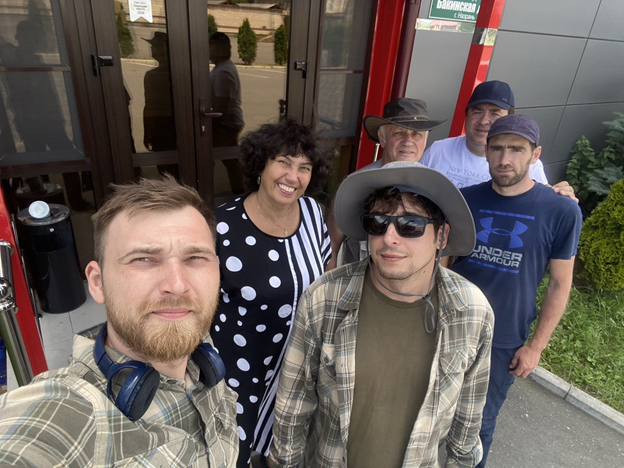
Visiting the Caucasus is always pleasant and interesting, especially when faced with unique and intriguing challenges. Our expedition to the Caucasus was short, lasting only 12 days, from June 21 to July 3, 2026. Five people participated: Corresponding Member of the Russian Academy of Sciences Aleksey Vasilyevich Surov, Scientific Secretary of the Institute Natalya Yuryevna Feoktistova, young researchers Vladimir Pavlovich Kupriyanov and Sergey Ilyich Meshchersky, our Dagestani colleague Magomed Chunkov, and our constant companion, friend, and comrade Evgeny Igorevich Karlik, the owner of the Ford Transit, which was our vehicle. In total, we traveled about 4,000 kilometers, visiting Ossetia, Ingushetia, Chechnya, and Dagestan, not to mention seeing many interesting sights along the way and collecting valuable samples for DNA analysis.
The Caucasus is known to be a refugium for many animal species, including three species of hamster: the common hamster (Cricetus cricetus), Ciscaucasian hamster (Mesocricetus raddei), and Brandt's hamster (M. brandti). All of these species are the subject of a variety of studies conducted by researchers at IEE RAS, including in collaboration with the Institute of Biological Research of the Dagestan Scientific Center of the Russian Academy of Sciences. The main goal of this expedition was to collect material on common hamsters from a previously known location in the Herzog Leuchtenberg Steppe Nature Reserve in the Tambov Region and to become acquainted with the common hamster capital of the Caucasus - Vladikavkaz. Of particular interest, however, was the lowland variant of the Ciscaucasian hamster (M. raddei nigriculus), whose taxonomic status remains controversial due to its rarity.
The first stop on our route was the "The Duke of Leuchtenberg Steppe" nature reserve. In the late 19th and early 20th centuries, the lands in the village of Ivanovka (now the Bondarsky District of the Tambov Region) belonged to Duke Nikolai Nikolaevich Leuchtenberg, a major Russian landowner and prominent member of the family. Today all that remains of it is a tiny patch of the former ducal estate, measuring just 5.4 hectares located three kilometers northwest of the village of Bakharyevo in the Tambov Region. Because these areas were uncultivated by plows and grazing, the Leuchtenberg Steppe boasts a striking diversity of vegetation. Many plant species listed in the Red Book of the Tambov Region grow here. We knew that this tiny plot was home to the common hamsters we were looking for. Several years ago, we captured several individuals here and obtained the necessary material for molecular genetic analysis. We then failed to catch any animals here twice, and now we're back here, so to speak, en route to the Caucasus. We arrived in the evening, and at sunset we were met by a large group of steppe owls, along with several diurnal raptors circling around a small patch of steppe. We set 20 live traps and headed to a hotel 1.5 km away to await the morning results. And we were delighted with the catch - three animals were waiting for us in the traps that morning. The hamsters were quite small, the male weighing only 400 grams, and the females around 300. But these were adults; the females had clearly recently nursed their young. We took tissue samples from all the animals for molecular genetic analysis and released them back to their native habitats.
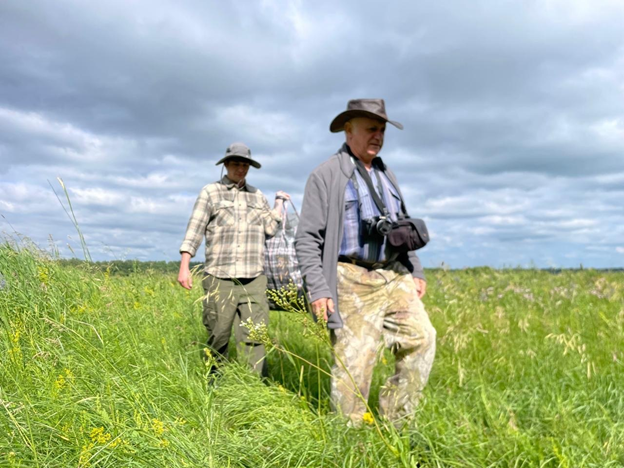
Fig.3. A.V. Surov and V.P. Kupriyanov catching common hamsters in the “The Duke of Leuchtenberg Steppe” nature reserve.
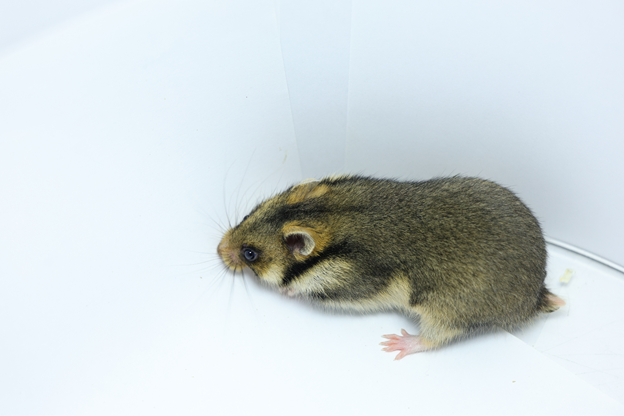
Our next stop was Elista, the capital of Buddhism in Russia. We spent one night there, stopped at the largest Buddhist temple in Russia in the morning, and then continued on toward Ingushetia. There, we needed to find the lowland form of the Ciscaucasian hamster (Mesocricetus raddei nigriculus) - either a subspecies or an independent species. A few words about this rare animal are worth mentioning. Three allopatric subspecies of Radde's hamster have been described, differing in size, coloration, and skull morphology. These are M. r. raddei (the largest of them, found in the Samur River basin); M. r. avaricus, found in the Khunzakh Plateau inland in Dagestan; and Mesocricetus raddei nigriculus, known as the blackish hamster in Russian, found in the lowland Ciscaucasia. It differs from other subspecies in its smaller size, skull morphology, and contrasting, darker coloration, particularly its darker abdomen. Throughout most of its range, M. r. nigriculus is sympatric with the common hamster (C. cricetus), which in some cases leads to a certain amount of confusion, as individuals with very dark coloration are found among the Caucasian phylogroup of the common hamster, and non-specialists can easily confuse these two species, although they do not even belong to the same genus. Very little is known about the biology of M. r. nigriculus, and it was last observed by researchers over 20 years ago. Then, in 2006, it was possible to sequence a small section of the mtDNA genome of one individual and estimate the time of separation of M. r. nigriculus from M. r. avaricus (approximately 400,000 years ago). At the end of the last century, this subspecies was quite widespread and considered an agricultural pest. But over the past 30 years, almost all of its habitat has been plowed, and despite extensive efforts, no one has been able to locate the animal.
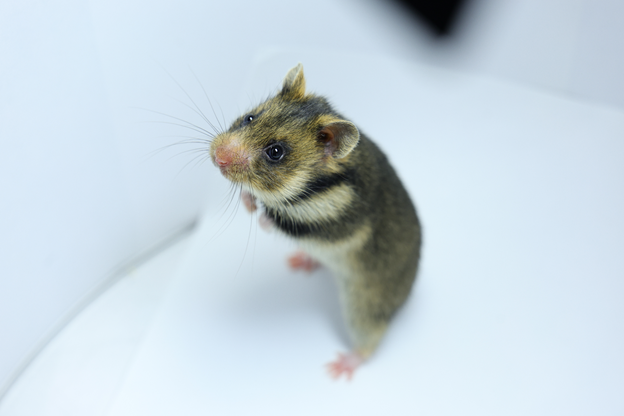
Fig.4. M.r. nigriculus through the lens of I.D. Davydov
In 2021, we had already undertaken an expedition to capture representatives of this subspecies of hamster, but it was unsuccessful. However, in 2025, one of the members of our previous expedition, Pavel Leonidovich Bogomolov, came across a video of a hamster of this subspecies caught in Ingushetia. Our Dagestani colleague, Magomed Chunkov, traveled to the area and indeed caught one specimen of M. r. nigriculus in the designated location. The animal overwintered successfully in an artificial burrow and even allowed us to record a thermogram of its hibernation for the entire winter. In June 2026, we mounted an expedition and traveled to the site. In the boundary between wheat fields with rich, tall grasses, the hamsters were able to successfully dig burrows and hide from their predators. Essentially, we had to carefully search the grass for burrows and paths the hamsters use to travel between the field and their burrowing sites. Several nights of active hunting yielded unprecedented success - we caught four animals. We now have every chance of breeding them and fully exploring the biology and genetics of this species, and ideally, establishing a laboratory colony to study hibernation mechanisms.
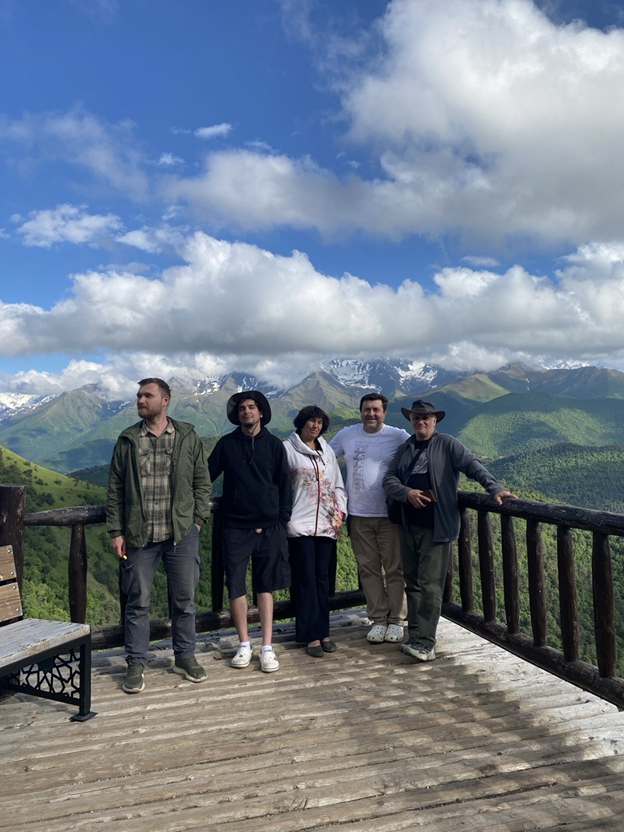
During the day (between burrow searches and trapping), we were able to explore the beauty of mountainous Ingushetia. This youngest republic of the Russian Federation, formed in 1992, amazed us with its unique beauty. Mountainous Ingushetia (the Dzheyrakh and Assinsky districts) is a unique historical and cultural reserve, the cradle of the Vainakh civilization. Hundreds of high-altitude military, semi-military, and residential towers, as well as ancient Christian churches, form the "Land of Towers," spreading between the green mountain slopes. The road to mountainous Ingushetia passes through the majestic Tsei-Loam Pass (a sacred site for the Ingush) and divides into several key historical locations: the Targim Basin: the historical heart of mountainous Ingushetia, home to the Egikal and Targim tower complexes, as well as the ancient Tkhaba-Yerdy temple. We managed to travel through the Assinsky Gorge, partially retracing the caravan routes of the Great Silk Road that connected Europe and Asia. We were utterly captivated by the mighty currents of the Assy River, as well as the magical Tsei-Loam Pass, now home to cozy cafes where you can sip aromatic coffee and tea with local herbs and admire the fantastic views of the snow-capped peaks surrounding us through panoramic windows. After a successful visit to Ingushetia, we traveled to Vladikavkaz and explored the city's central parks in search of common hamster burrows. The next day, we departed for Dagestan, where Ciscaucasian hamsters of the subspecies M. r. avaricus were already waiting for us, also planned for use in experiments studying winter biology. The journey from Vladikavkaz to Dagestan took almost the entire day; we arrived at our destination only at nightfall. Our new home was near the Sarykum sand dune, where guest houses for research staff have now been built within the reserve. In the morning, we were shown a wonderful raptor nursery, where several dozen local raptors are currently undergoing adaptation and treatment. That afternoon, we headed to Makhachkala to pick up the M. r. avaricus that had been living in the vivarium at Dagestan University.
Thus, ten animals were gathered for our return trip to Moscow, and despite the heat, they arrived in the capital safely. To keep them cool, we had to provide them with water and fresh grass. On the way back through Kalmykia, we were pursued by huge swarms of locusts, so numerous that we had to stop at times to clear the car windshield. However, the insects proved to be a very nutritious source of food for our animals, and they happily accepted our locust offerings, which we collected in batches from the car windshields.
We arrived safely in Moscow on July 3rd, having delivered our entire live collection safe and sound to the vivarium at 33 Leninsky Prospekt.