

Scientists have estimated the degradation period of cigarette filters
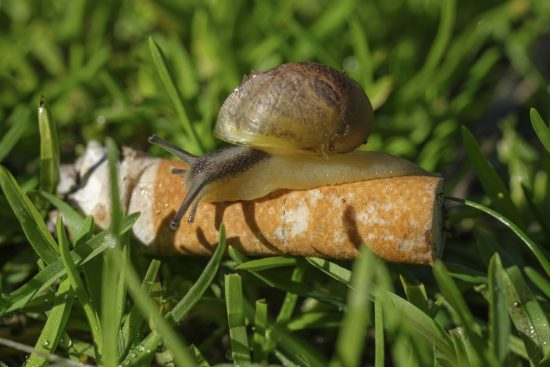
The rate at which cigarette filters degrade depends on climate, the activity of soil organisms, and the type of ecosystem. Even after three years, they retain approximately 80% of their original mass in the tundra and northern taiga, while they degrade significantly faster in mixed and broadleaf forests. This is the conclusion reached by scientists who studied the degradation of cigarette butts in various natural and climatic zones.
The International Laboratory of Landscape Ecology of the Faculty of Geography and Geoinformation Technologies at the National Research University Higher School of Economics (HSE University) held a seminar titled "Is tobacco waste biodegradable? Or why you should quit smoking." Daniil Korobushkin, Senior Researcher at the A.N. Severtsov Institute of Ecology and Evolution of the Russian Academy of Sciences and Director of the Center for Collective Use "Instrumental Methods in Ecology," delivered the presentation. According to him, nearly 2.5 billion tons of tobacco waste are discarded worldwide annually, or approximately five tons per second. This is the most common type of waste found outside of designated collection sites.
The speaker explained that modern cigarette filters are made of wrapping paper and cellulose acetate, which degrades extremely slowly. The rate of filter degradation varies significantly depending on the climate zone. Furthermore, after smoking, filters retain a significant amount of harmful substances. While these substances are known to kill daphnia and negatively affect mollusks in aquatic environments, their impact on soil organisms remains largely unstudied.
Daniil Korobushkin also discussed the role of soil organisms. Bacteria, fungi, and soil invertebrates (such as earthworms, woodlice, and springtails) recycle dead organic matter - leaf litter, animal remains, and other organic matter. Therefore, they should play a key role in the degradation of tobacco waste.
As part of a project supported by the Russian Science Foundation (grant no. 25-24-00639), scientists from the Institute of Ecology and Evolution of the Russian Academy of Sciences (IEE RAS) sought to study the role of various organisms - from microscopic fungi and bacteria to large soil invertebrates - in the degradation of cigarette filters. The researchers were also interested in the potential negative impact of tobacco waste on soil saprotrophic organisms that feed on dead organic matter. The main goal of the study was to identify differences in the rate of cigarette butt degradation in different climatic zones.
To this end, the scientists conducted an experiment with conventional and biofilters. Cigarettes from Winston, one of Russia's best-selling brands, were used as conventional filters, while 21st Century cigarettes with carbon inserts were used as a biofilter sample. The experiment was designed along a latitudinal gradient, from tundra to desert steppes and tropical ecosystems. However, in the tropical zone (based at the IEE RAS Tropical Center in Vietnam) the cigarette butts were quickly destroyed by termites, and the remaining samples were washed away by seasonal rains.
The study showed that in northern and southern latitudes, the filters degraded only slightly: even after three years, cigarette butts retained approximately 80% of their original mass. Meanwhile, in the southern taiga, mixed, and broadleaf forests, the mass of waste decreased significantly, reaching 70% of their original mass. These results were confirmed by infrared spectroscopy, which recorded the deacetylation of cellulose acetate, as well as the appearance of a chitosan spectrum, indicating microbial colonization of the filters.
Images obtained using a scanning electron microscope confirmed the intensive colonization of the filters by micromycetes. The fungal mycelium grew between the filter fibers and penetrated them, gradually degrading the material. Simultaneously, bacteria actively developed on the surface of the filters, also participating in the degradation process.
Biofilters generally lost mass faster than conventional filters. After the paper casing degraded, the carbon portion of the filter was colonized by fungi more actively than the cellulose acetate, often falling out and gradually mixing with the soil.
However, even biofilters in northern latitudes - in the tundra and northern taiga - were virtually undamaged and remained practically unchanged.
Daniil Korobushkin explained that the rate of filter mass loss directly depends on microbial activity and climatic conditions. In arid and northern ecosystems, particularly in the desert steppes of Kalmykia with an arid climate and low precipitation, as well as in the tundra of the Kola Peninsula with low average annual temperatures and generally low soil biological activity, degradation occurs significantly more slowly than in temperate climates.
Scientists hypothesized that microscopic fungi - micromycetes - are the first to begin recycling filters. To test this hypothesis, containers with cigarette butts were placed in various biotopes at the Deep Lake Biostation in the Ruzsky District of the Moscow Region: a mixed forest, a meadow, a swamp, a lake floodplain, and the bottom of a lake. Just two months after the experiment began, more than 30 species of micromycetes were detected in the filters and on their surfaces.
The five most common species - Cladosporium cladosporioides, Fusarium avenaceum, Mucor circinelloides, Penicillium brasilianum, and Cunninghamella sp. - were isolated and cultured. They were then colonized in sterile filters without substrate or nutrient medium to assess the fungi's ability to colonize waste without an additional nutrient source. Two species - M. circinelloides and F. avenaceum are able to colonize filters under such conditions, while C. cladosporioides developed only in the presence of an additional food source, which could be glucose or filter wrapping paper.
Another objective of the study was to investigate the role of earthworms in the recycling of cigarette filters. For this purpose, used and unsmoked filters were placed in microcosms containing soil and earthworms. After the experiment, the scientists assessed the change in filter mass and worm survival.
The study showed that the presence of filters - regardless of whether they had been used - did not affect earthworm survival. However, the presence of worms accelerated the degradation of cigarette butts: their mass decreased on average 15% faster than in the control group. The main contributor to this process was the worms' consumption of wrapping paper, which accounts for approximately 25–30% of the filter's mass. According to literature, without the participation of earthworms, a similar effect is achieved only after 360–720 days.
In conclusion, Daniil Korobushkin noted that the experiments revealed no negative toxicological impacts of cigarette filters on soil or soil organisms, including invertebrates. Moreover, under natural conditions, some soil invertebrates and their larvae even colonized the filters.
Nevertheless, the speaker emphasized, cigarette butts should not be thrown on the ground. Despite the gradual degradation of the wrapping paper, cellulose acetate degrades extremely slowly and can persist in the natural environment for many years. The rate of filter degradation is determined by the soil type, its biological activity, and physical and geographical conditions. For example, in the tundra, northern taiga, and semi-deserts, cigarette butts persist significantly longer than, for example, in mixed and broadleaf forests.
According to the scientist, final results on the rate of tobacco waste degradation in various climatic conditions will be available no sooner than six years after the experiment begins.
In cold and arid climates, large quantities of cigarette butts can indeed cause long-term contamination of the area, noted Daniil Korobushkin.
Robert Sandlersky, head of the International Laboratory of Landscape Ecology at HSE University, and Ivan Kotlov, research fellow at the Laboratory, participated in the discussion of the report.
The recording of the seminar can be viewed at the link.