

How many flies and mosquitoes emerge from the soil?
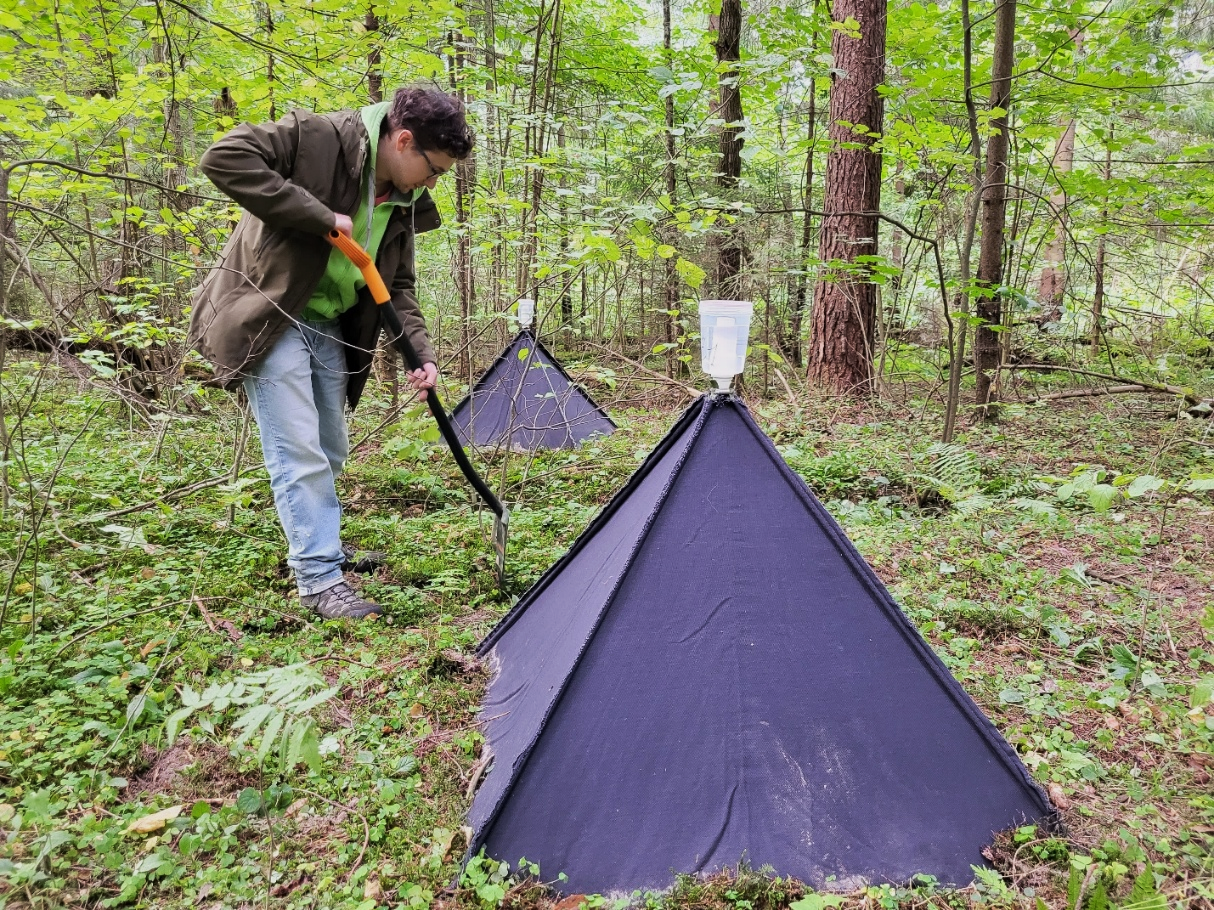
Specialists from the A.N. Severtsov Institute of Ecology and Evolution of the Russian Academy of Sciences (IEE RAS) assessed the flux of dipterous insects (flies and mosquitoes) emerging from the soil in forest ecosystems. These insects play a key role in the transfer of matter and energy between the soil and the terrestrial environment: their wingless larvae live and feed in the soil and forest litter, while winged adults, emerging from the soil, become prey for birds, spiders, and other predators of the terrestrial and aerial environments.
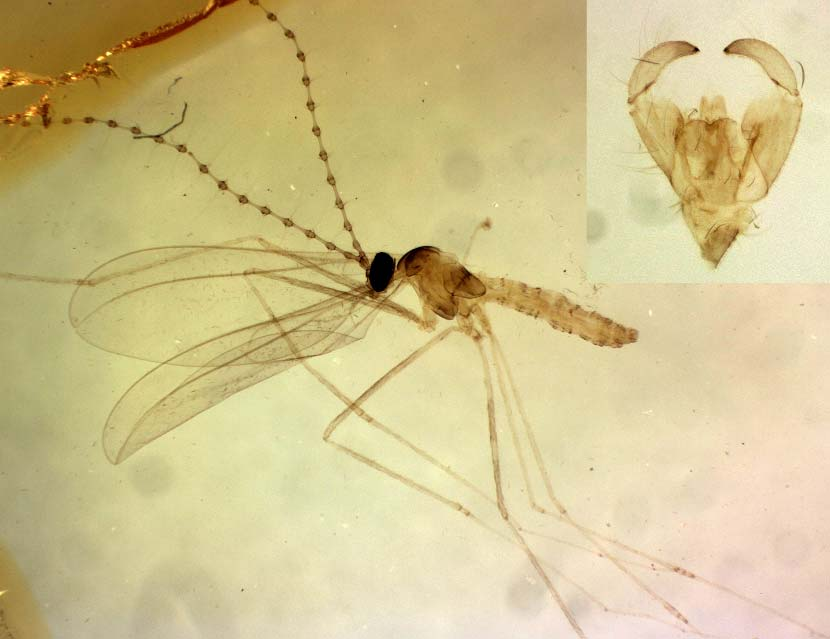
Photo: A representative of the most numerous dipteran families emerging from the soil in the forests studied: Cecidomyiidae (Camptomyia drymophila, a species first recorded in European Russia)
Insects hatching and rising out of the soil were collected using special emergent traps (pictured) in three forest types at the Malinki Biostation of the Institute of Ecology and Evolution of the Russian Academy of Sciences (IEE RAS) near Moscow. A total of 115 dipteran species from 29 families were identified. The traps proved to be significantly more effective in identifying the diversity of soil dipterans than eclectors, which are traditionally used in soil zoology. Despite the long history of research at the Malinki Biostation, three dipteran species new to the European part of Russia were discovered in the traps. Diptera emerged from the soil most intensively in July (from 8 to 44 individuals and 1 to 5 mg of dry weight per 1 m² per day), while in spring and autumn, emergence rates dropped to 1-5 individuals and 0.1-1 mg of dry weight per 1 m² per day.
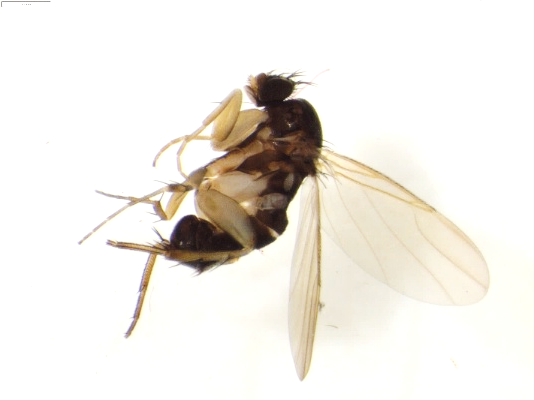
Isotope analysis was used to assess the trophic relationships of dipteran larvae. The results were unexpected. It was found that a significant proportion of dipterans emerging from the soil were enriched in heavy nitrogen (15N). The average 15N content in dipteran tissues was even higher than that of typical soil predators: spiders, millipedes, and mites. Particularly notable were the families Phoridae (hump-backed flies), Sphaeroceridae (lesser corpse flies), Mycetophilidae (fungus gnats), and Chloropidae (frit flies), whose larvae exploit a wide variety of food sources.
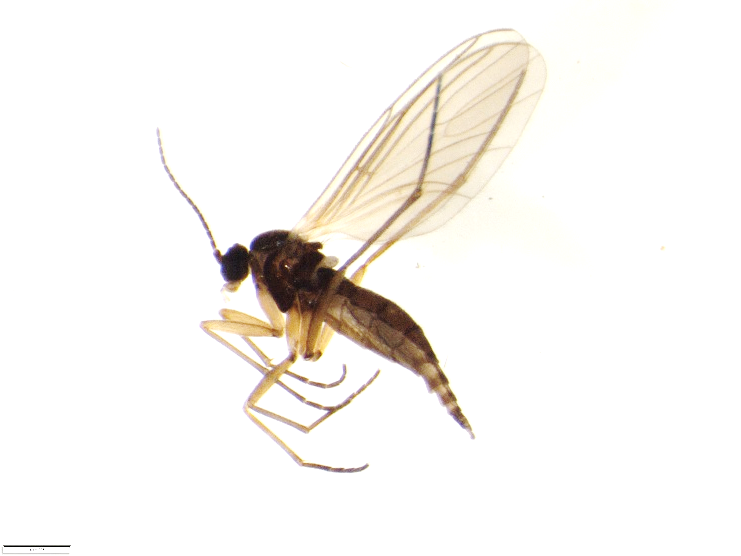
Thus, the flow of biomass from the soil to the aboveground forest layers carries a specific isotopic signal not characteristic of typical saprophages - consumers of dead organic matter. This discovery is important for the correct reconstruction of trophic relationships and understanding the functioning of forest ecosystems as a whole.
This work was carried out as part of Russian Science Foundation project No. 22-14-00363.
The article was published in the journal Pedobiologia: Vinogradov D. D., Krivosheina M. G., Sotnikov I. V., Tsurikov S. M., Zuev A. G., Rozanova O. L., Tiunov A. V. (2026). Pedobiologia, 114: 151123.