

Заголовок
Kostroma Taiga Research and Experimental Station
About the laboratory
Scientific Director – Dr. Sci. (Biol.) L.M. Baskin
Head – N.N. Lvov
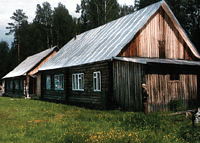
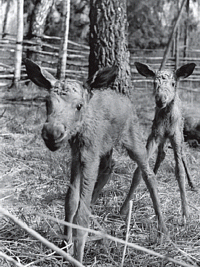
The Kostroma Taiga Research and Experimental Station was established in 1977 as a field and experimental base of the Institute for studying the ecology of forest animals and the dynamics of plant communities. The station is located in Kostroma Region on the right bank of the Unzha River, a major tributary of the Volga (58° N, 44° E). The station's territory is characterized by a diversity of forest types, owing to its proximity to the boundary between the southern taiga and mixed-forest zones. There is also a mixing of faunas of northeastern European, eastern (Siberian), and southern (broadleaf-forest zone) origin here. The area where the station is located is free of heavy-metal and radioactive contamination, and no human settlements are found within a radius of tens of kilometers. Forests cover 70–90% of the territory, and game animal numbers are high in the more remote parts of the taiga.
A complex of enclosures (the largest covering 150 ha) has been built at the station for keeping ungulates, allowing research to be conducted under conditions close to natural. Over the station's history, the ecology and behavior of European bison, cattle, elk, and wild boar have been studied in the enclosures. Using aerial and satellite photographs of the territory taken from 1963 to the present, it has been possible to trace the dynamics of forest fragmentation, changes in river valleys caused by beaver activity, the regrowth of burned areas after the major fires of 1972, and the regrowth of fields and meadows after cultivation ceased.
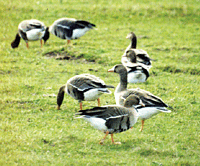
A number of studies on the ecology and behavior of mammals, birds, and insects have been carried out at the station. For 27 years, comprehensive studies of biocenoses have been conducted in the area around the station, involving geographers, soil scientists, botanists, and zoologists. Constant attention is paid to the impact of human activity aimed at both nature conservation and its alteration (land reclamation, chemical forest management methods) or destruction (poaching).
From the station's earliest years, the Institute has campaigned for the establishment of a nature reserve in the vicinity of the station. The first success was the preservation of a tract of old-growth forest, which was granted the status of a Nature Monument — the «Kologriv Forest.»
The station's entire history has been linked to hosting student field practicals and welcoming numerous groups of schoolchildren. Students and schoolchildren come from all over Russia, both in summer and in the snowy season. Classes with them are conducted by Institute staff. The principle of «science as inquiry» is applied: the participants independently study particular aspects of the ecology of mammals, birds, amphibians, and reptiles, collect plant herbaria, and take part in research projects.