

The South Valdai Ecological Observatory "Okovsky Forest" was established in 2017 as a field and experimental station of the Institute for studying the structural and functional organization of southern-taiga biogeocenoses, on the territory of the Central Forest State Natural Biosphere Reserve (Tver Oblast, Nelidovsky District; a description of the Reserve's natural conditions is available at: http://clgz.ru). The establishment of the Observatory as one of the Institute's field stations was preceded by many years of research into the energy and mass exchange of forest and bog biogeocenoses with the atmosphere, based on ecological-climatic stations (ECS) using the eddy-covariance method. The first observations in European Russia using an ECS were begun by staff of the V.N. Sukachev Laboratory of Biogeocenology, on the initiative of Prof. N.N. Vygodskaya, as part of the international EuroSiberian Carbonflux project (led by E.-D. Schulze, Max Planck Institute for Biogeochemistry, Germany) in summer 1998, in a sphagnum-bilberry spruce forest and on the raised bog "Staroselsky Mokh." In 1999, the research program was expanded to include observations in a nemoral spruce forest. In 2000, following the completion of the international project, the measurement complex on the raised bog was dismantled. In 2015, with support from grants of Russian science foundations, eddy-covariance observations at the Staroselsky Mokh bog were resumed, and the instrumentation at the forest ECS sites was updated. In April 2016, eddy-covariance observations were organized at a clear-cut site. Currently, year-round stationary observations based on ECS are maintained in three undisturbed ecosystems of the Reserve: on the raised bog massif and in the sphagnum-bilberry and nemoral spruce forests. The eddy-covariance observations are supplemented by periodic chamber-based measurements of soil respiration.
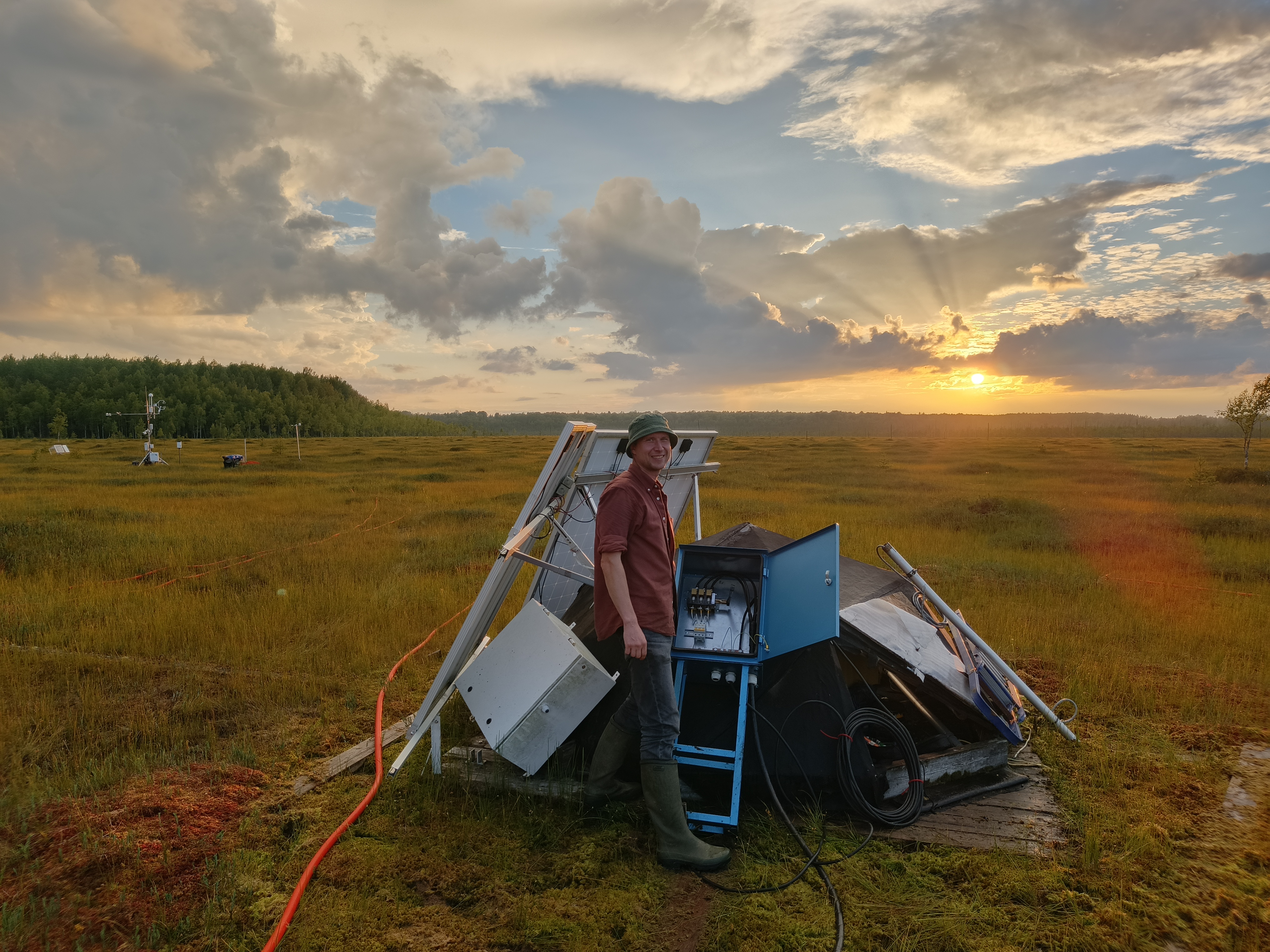
Photo by: Vadim Mamkin
The results of observations at the ECS in the Central Forest Reserve are summarized and presented in a number of publications (Kurbatova et al., 2002; Arneth et al, 2002; Kurbatova, Lavrov 2005; Kurbatova et al., 2008; Santruchkova et al., 2010; Kurbatova et al., 2013, and others).
Long-term experimental observations have provided cumulative estimates (for periods ranging from 0.5 hours to a year) of CO2, heat and moisture fluxes, as well as the temperature and moisture regime of soil and atmosphere, solar radiation fluxes, longwave radiation fluxes, atmospheric pressure, wind direction and speed, and other meteorological characteristics for typical southern-taiga ecosystems of European Russia. Estimates of net ecosystem production (NEP) revealed a high sensitivity of NEP in oligotrophic bog ecosystems to seasonal and interannual variability in the temperature and moisture regime.
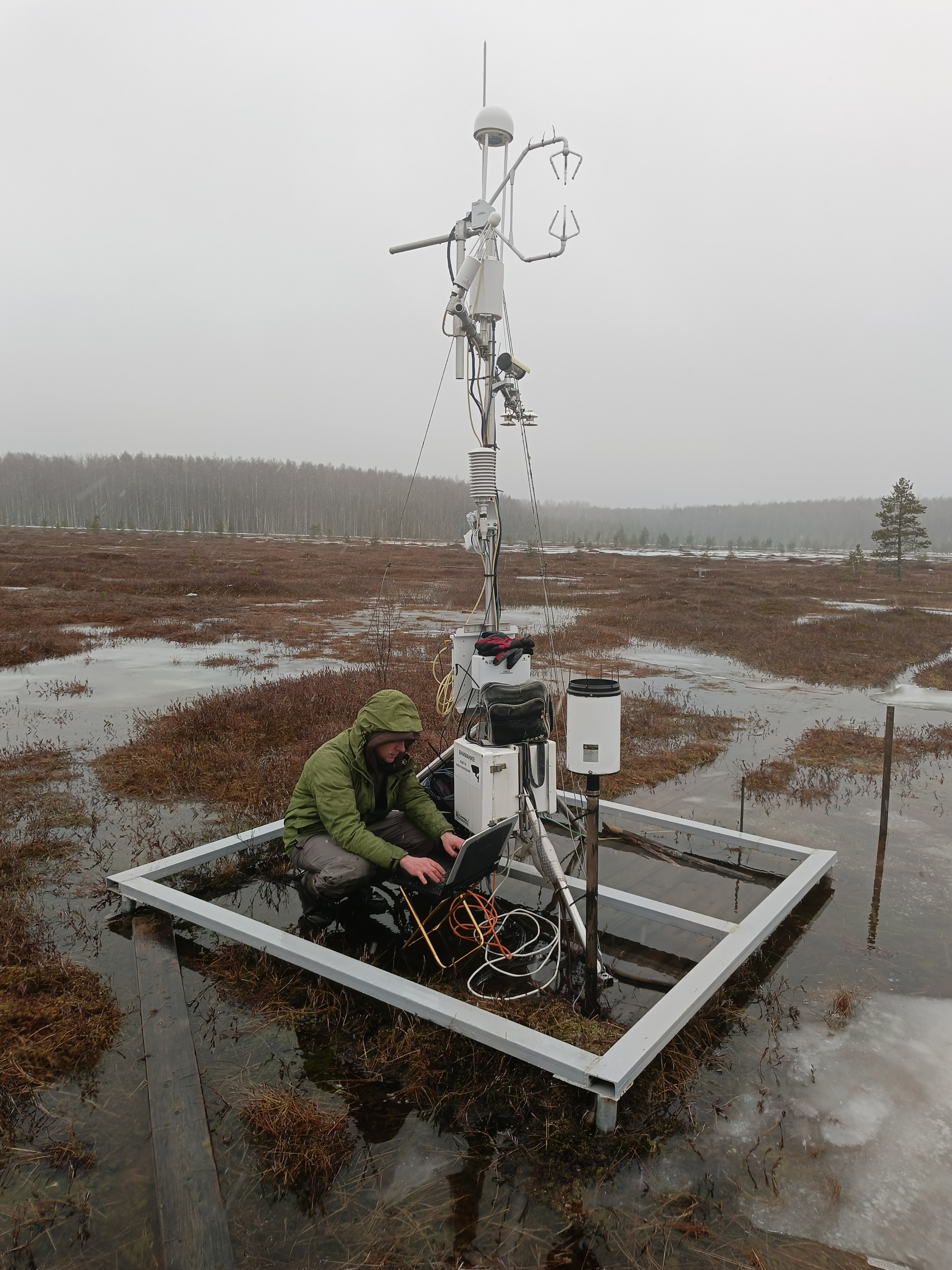
Photo by: Vadim Mamkin
Stationary observations of energy and greenhouse-gas fluxes at the Central Forest Reserve can serve as a basis for the further development of integrated ecological research in the boreal-forest zone of European Russia.