
The monograph "Biological diversity and ecological status of the Mekong Delta (Vietnam)" has been published
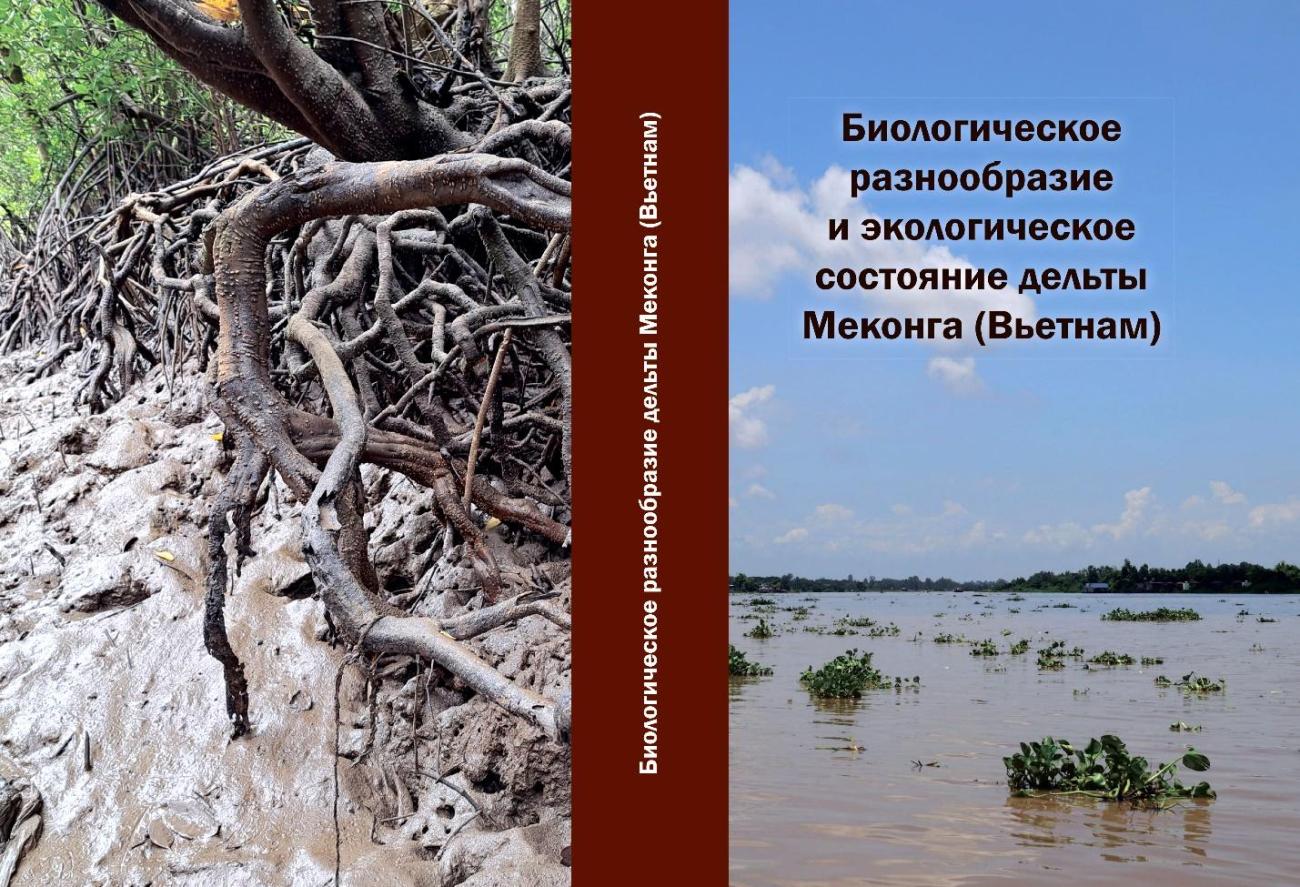
Based on the results of research conducted by scientists from the A.N. Severtsov Institute of Ecology and Evolution of the Russian Academy of Sciences (Moscow), the I.D. Papanin Institute of Biology of Inland Waters of the Russian Academy of Sciences (Borok), the A.O. Kovalevsky Institute of Biology of the Southern Seas of the Russian Academy of Sciences (Sevastopol), and the Southern Branch of the Joint Russian-Vietnamese Tropical Research and Technology Center (Ho Chi Minh City, Vietnam), a collective monograph, “Biological Diversity and Ecological Status of the Mekong Delta (Vietnam)” (edited by I.N. Marin and A.V. Tiunov), was prepared. Moscow: KMK Scientific Publications Partnership. 2025. 541 p.
The Mekong River is the largest in Indochina and one of the most voluminous rivers in the world. In its lower reaches, the river forms a vast delta located in the Socialist Republic of Vietnam. The delta covers approximately 40,000 square kilometers. Over 2.6 million hectares (approximately 65% of the delta's area) are used for agriculture, accounting for approximately a quarter of the country's total cultivated land. Up to 90% of the country's rice exports are grown in these areas. The river's natural branches and a vast network of artificial canals form the largest transportation system in the south of the country. The delta is home to approximately 20 million people; it adjoins the combined deltas of the Dong Nai and Saigon rivers and the vast metropolis of Ho Chi Minh City.
Due to its vast size and diverse ecological conditions, the Mekong Delta supports a wide variety of animals, including a number of endemic species, making it a center of biological diversity. However, high anthropogenic load inevitably has a negative impact on the delta's complex and dynamic ecosystems. The natural hydrological regime of the Mekong has been altered by the construction of dams, dikes, and irrigation canals, significantly affecting water flow, the direction of bottom currents, the dynamics of river sediments, and siltation. This disrupts habitats at the confluence of river and sea waters and the migration routes of aquatic animals. Pesticides and fertilizers from fields, antibiotics from coastal fish and shrimp farms, urban runoff, petroleum products, and other toxic substances enter the water; the riverbed and bottom sediments are polluted with solid waste, particularly plastic. Pollution and overfishing reduce the diversity and abundance of aquatic organisms. Human impact is exacerbated by global climate change, which leads to rising sea levels and, consequently, the infiltration of saltwater through channels deep into the delta and soil salinization. Clearly, the delta's biodiversity and ecological well-being are under threat and require close attention.
This collective monograph presents the results of comprehensive research conducted primarily between 2020 and 2024 under the Ecolan E-3.4 theme "Mekong River Ecosystem under Global Climate Change and Anthropogenic Impact" of the Joint Russian-Vietnamese Tropical Research and Technology Center. The author's chapters cover a wide range of key characteristics of the delta ecosystem. The first section examines the delta's hydrological conditions and its zoning. The second section describes the current state of the biota, including data on biodiversity and quantitative characteristics of phytoplankton, major zooplankton groups, benthic crustaceans, and fish. The third section examines various aspects of anthropogenic impact, from trawling and plastic pollution of the delta to detailed data on the concentrations of heavy metals, radionuclides, and hydrocarbons in water and bottom sediments.
The main text of the chapters is presented in Russian, with abstracts in English.
The monograph in PDF format is available for reading and downloading at the link.