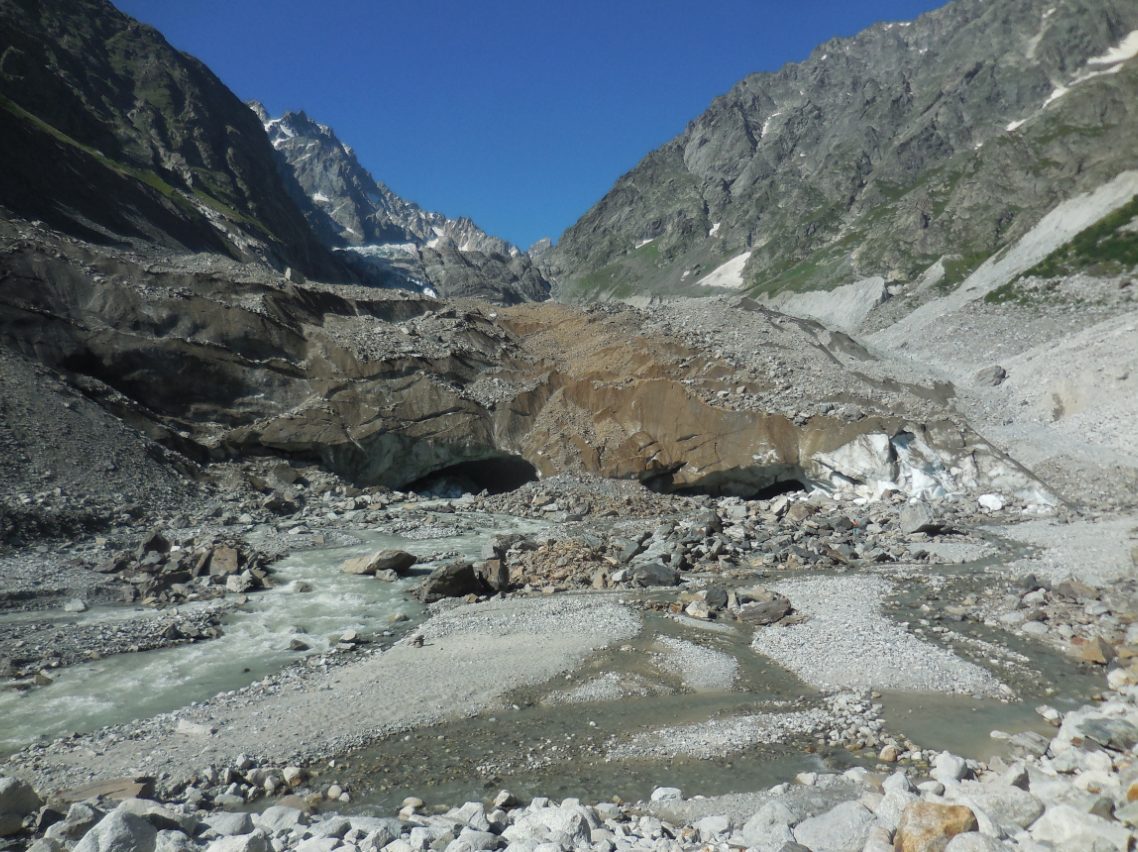
Since the end of the Little Ice Age, mountain glaciers around the world have been losing ice mass. In the Caucasus, this is happening not so much because of climate warming, but because of dust brought from African deserts, which reduces the albedo of the ice surface. The area of Caucasian glaciers has decreased by a quarter over the past twenty years (Tielidze et al., 2022). Cold-loving animal species are forced to become extinct or move beyond their rising edge. For some species, different authors have already recorded an altitudinal shift of 300–900 m. And in the Caucasus, as it turned out, many pioneer nival species of arthropods have not yet been described at all, and most are endemic to the Caucasus. Within 7–10 years, rich meadow communities form on the site of glaciers, and after 60 years, full-fledged forests.
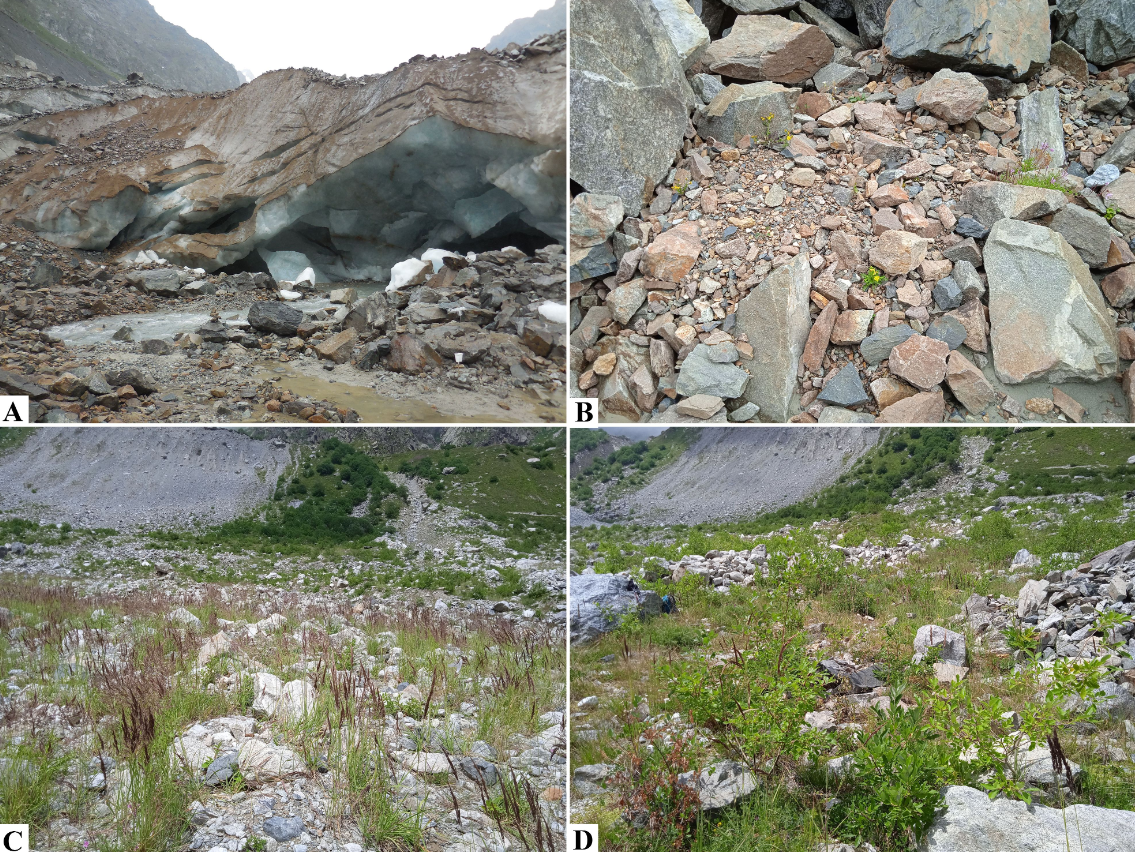
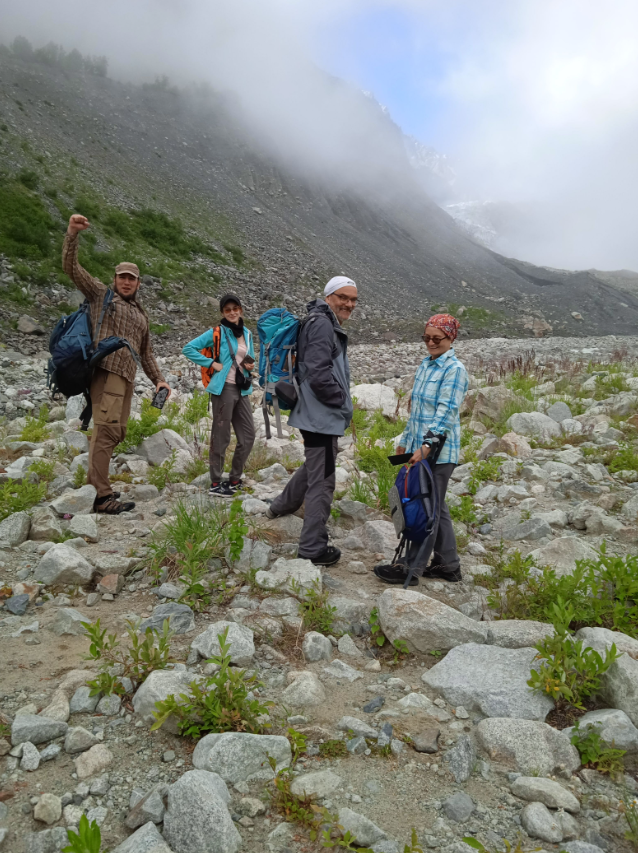
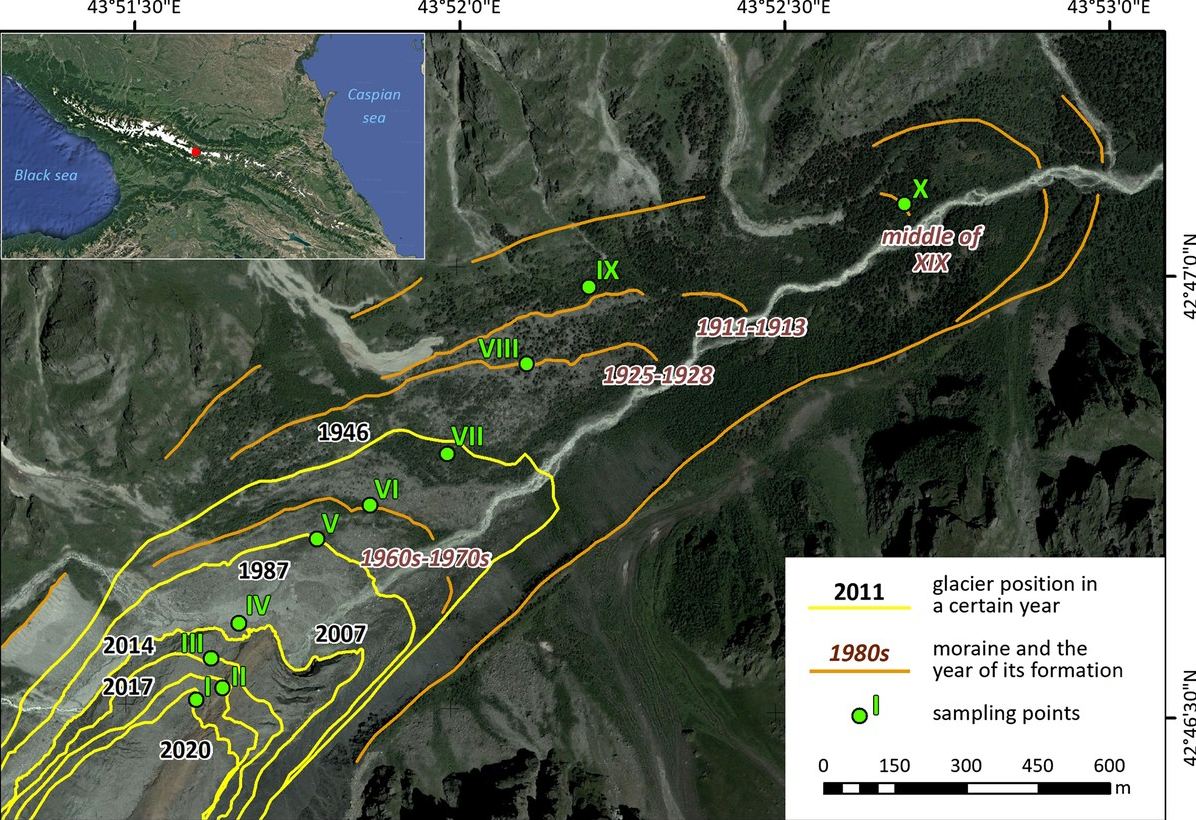
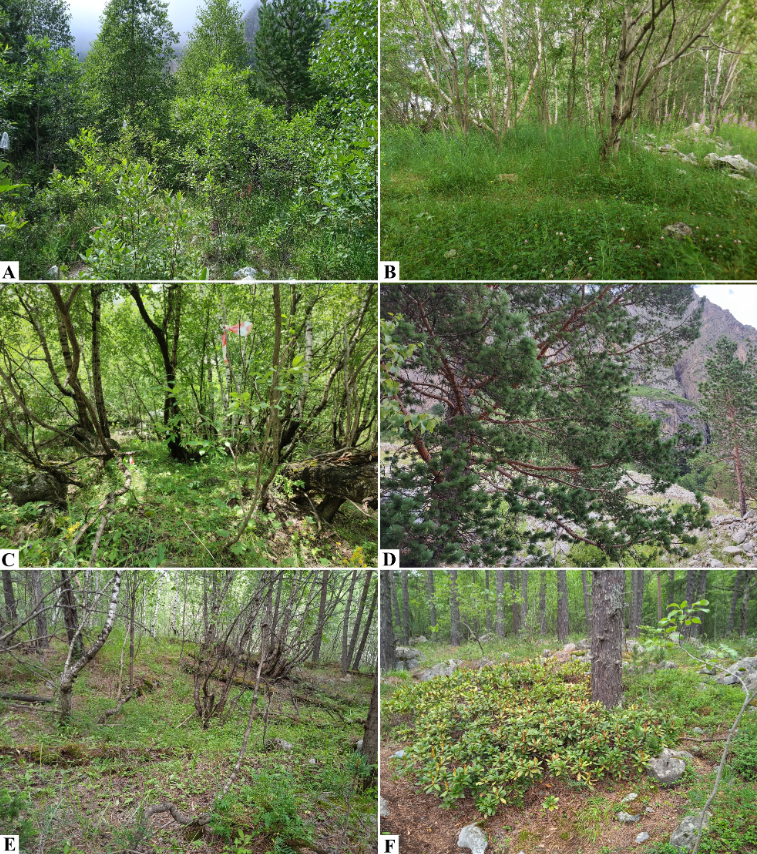
In 2021–2024, the Laboratory of Synecology of the A.N. Severtsov Institute of Ecology and Evolution of RAS have organized and carried out work on three glaciers of the Central Caucasus (Tseysky, Bezengi, Kashkatash), where zoological material was collected by all available methods on sites accurately dated 1–170 years old. The goal of the work was to determine the type of autogenous succession (“complementary” or “replacement”) and to assess the association of endemic species with its stages. It has been established that (1) the taxonomic diversity of most groups is consistently increasing, (2) changes in dominants occur in all groups of soil animals, (3) the most dramatic changes correspond to the stages of plant succession, and (4) the rate of succession slows down during the forest phase. Moreover, (5) the pioneer complex of species is in many ways similar to the supraglacial community existing on the surface of the glacier itself. (6) Endemics of the Caucasus are numerous at all stages of succession. The first mammal to settle on ice-free surfaces, already 14 years later, was the Volnukhin shrew (a tiny, 2.5-5.2 g pioneer species). This is the first such study in Russia. It became possible in close collaboration with glaciologists (Institute of Geography RAS), botanists (V.L. Komarov Botanical Institute of RAS, North Ossetian Nature Reserve) and systematic zoologists from different cities and countries. For the first time in the world, in such a study, all material was determined at the species level. This is what made it possible to refute two important principles of the modern theory of succession (successive changes in natural communities). Replacing the classic “predator first paradox principle” (Hodkinson et al. 2001, 2002) with the recently proposed “Collembola first principle” (Hågvar et al. 2020; Hågvar and Gobbi 2022) was considered inappropriate as a number of large taxa and trophic groups are emerging on young surfaces freed from ice almost simultaneously and very quickly.
The results of the study were published in the journal Caucasiana.