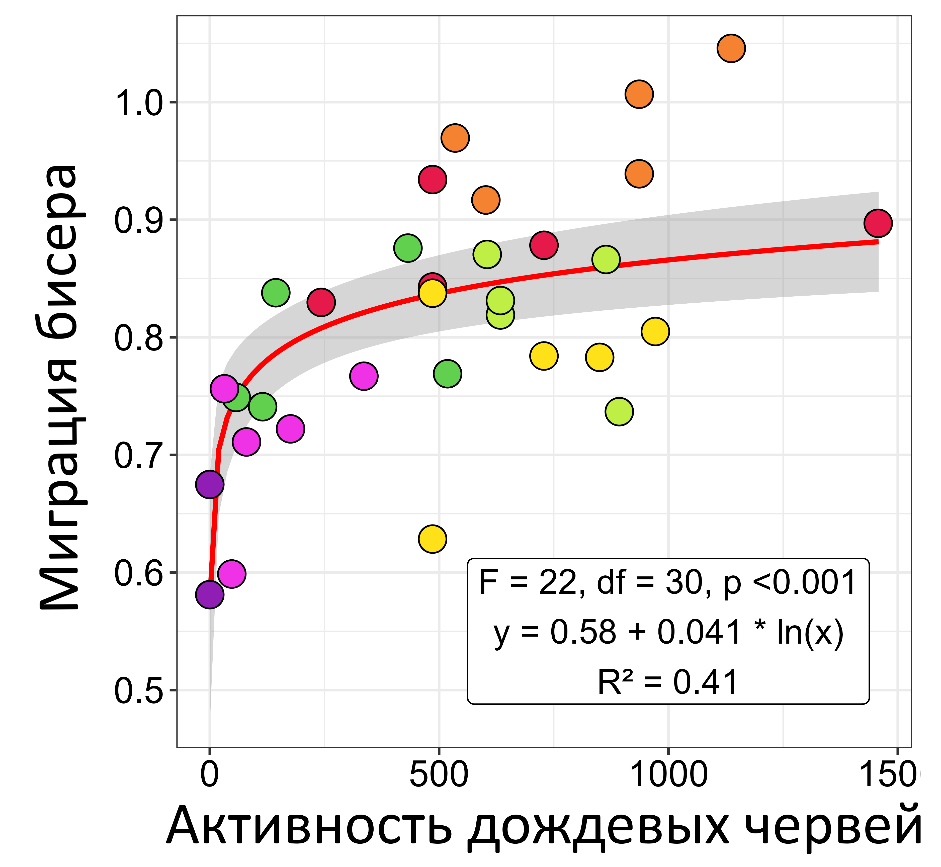
A link has been found between earthworm activity and soil bioturbation
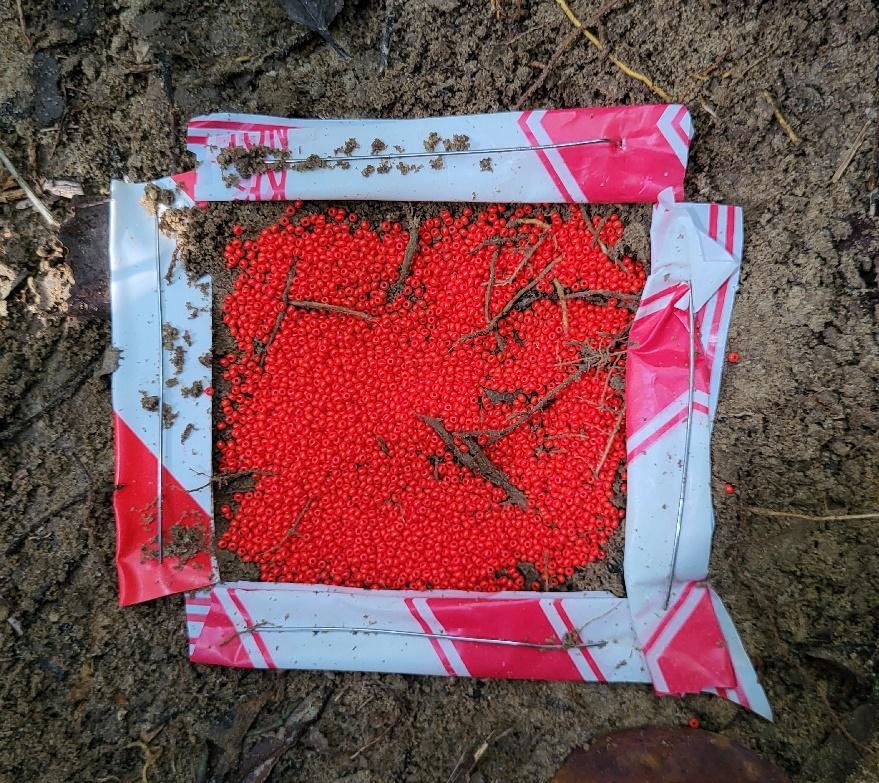
Researchers from the A.N. Severtsov Institute of Ecology and Evolution of the Russian Academy of Sciences (IEE RAS), together with colleagues from the Russian-Vietnamese Tropical Research and Technology Center, conducted a study to quantify the contribution of earthworms to soil bioturbation processes.
Earthworms are among the most important soil animals, determining the structure and functioning of soil ecosystems. By transporting soil particles and organic matter through feeding and burrowing, they significantly influence soil formation processes. Despite the fundamental role of this process, scientists have so far lacked simple field methods to quantify the contribution of soil animals to bioturbation processes.
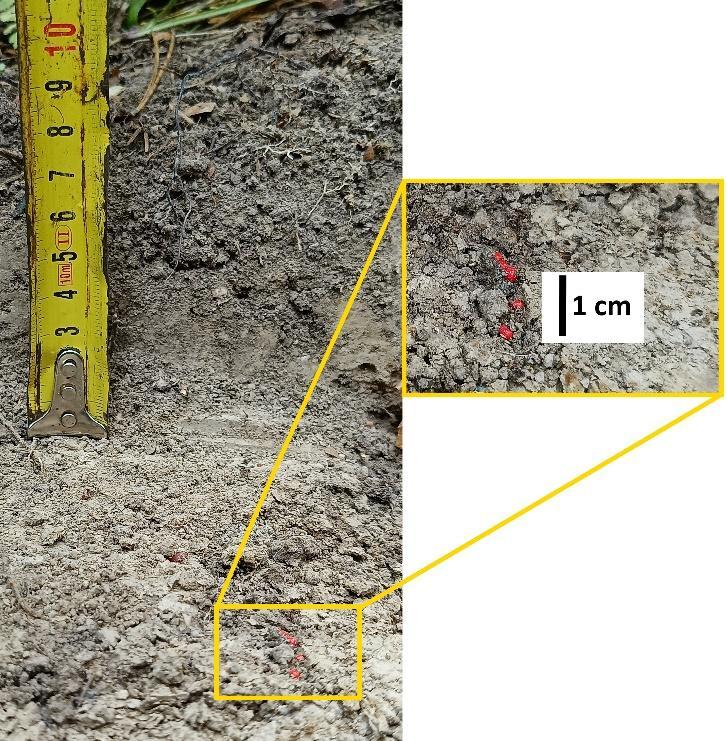
Fig. 2. A chain of bead particles at a depth of 9 cm. Spruce forest in the vicinity of the IEE RAS Biogeocenological Station "Malinki".
To address this issue, researchers conducted an experiment in ecosystems across various climate zones - from the northern taiga and temperate zones to mountain and lowland tropical forests. Bright red glass beads, 2 millimeters in diameter, were sprinkled onto the soil surface. A year later, the scientists determined how deeply these beads penetrated the soil. In the same areas, the researchers assessed the abundance of earthworms.
The analysis revealed a consistent positive correlation between earthworm activity and the rate of particle movement within the soil profile. In ecosystems with higher worm activity, bead particles penetrated to greater depths, while soil texture and precipitation had little effect on bead movement.
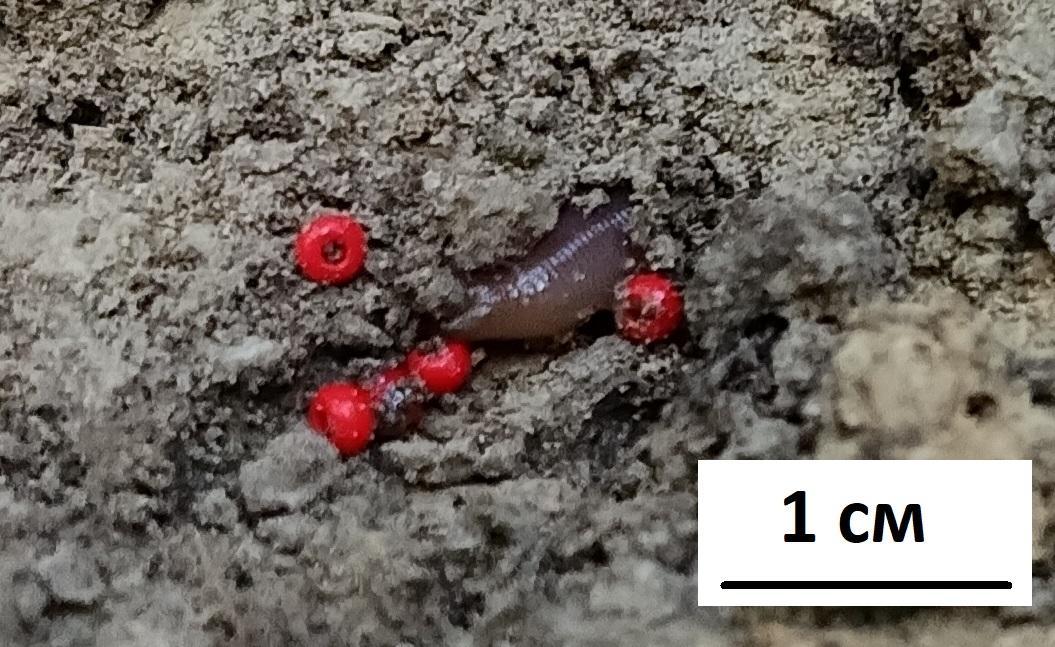
Fig. 3. Beads in an earthworm hole at a depth of 5-6 cm. Mixed forest, vicinity of the Malinki biogeocenological station.
The obtained results demonstrated for the first time the dependence of bioturbation on earthworm activity across a wide range of natural conditions and allowed for the testing of a new field method for assessing the habitat-forming activity of soil animals.
The work was published in the journal Soil Biology and Biochemistry.
Sotnikov I.V., Vinogradov D.D., Trung Duc Nguyen, Tiunov A.V. (2026) An interregional assessment reveals a link between earthworm activity and soil bioturbation. Soil Biology and Biochemistry, 221: 110-231.