

Morphological and genetic variability of blood-sucking fly populations in northeastern Eurasia
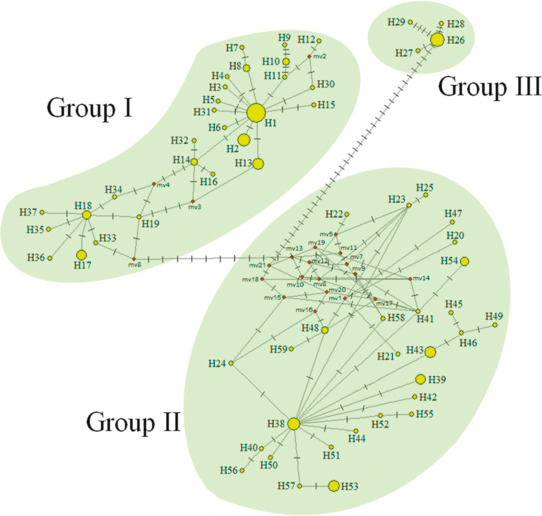
Parasites are useful model objects for studying how broad ecological niches influence evolutionary patterns. The bird louse fly Ornithomya avicularia (Diptera: Hippoboscidae) is a widespread ectoparasite of birds, infecting a wide range of hosts across Eurasia, Australia, and Africa. However, the relationship between the geographic location of populations and morphological and genetic diversity within this species remains poorly understood.
Morphological and molecular variation in Ornithomya avicularia was researched using specimens from seven populations spanning Europe, Western Siberia, and the Russian Far East.
Morphological variation was found to be largely continuous across most of the studied range, but populations from Siberia and the Russian Far East exhibited consistent differences in the pattern of microtrichia on the wings and the length ratios of some wing veins.
Genetic analysis revealed three main haplotype groups, including a widespread European-West Siberian cluster (Fig. 1, Group 1) and two deeply divergent lineages (Fig. 1, Groups 2 and 3) restricted to the Russian Far East. One of the Far Eastern lineages demonstrated genetic distances approaching interspecific levels (Group 3) and was highly distinct, consistent with its recognition as a distinct species described elsewhere.
A significant correlation was found between geographic distance and morphological differences, while genetic differences showed weaker geographic structure.
Molecular clock analysis was used to analyze the estimated formation time of Groups 1 and 2. The groups diverged approximately 2.2 million years ago. From a paleoecological perspective, this corresponds to the late Miocene and Pliocene.