

Is Kazakhstan a "bridge" connecting the isolated snow leopard population of Russia and Mongolia with the main part of the range?
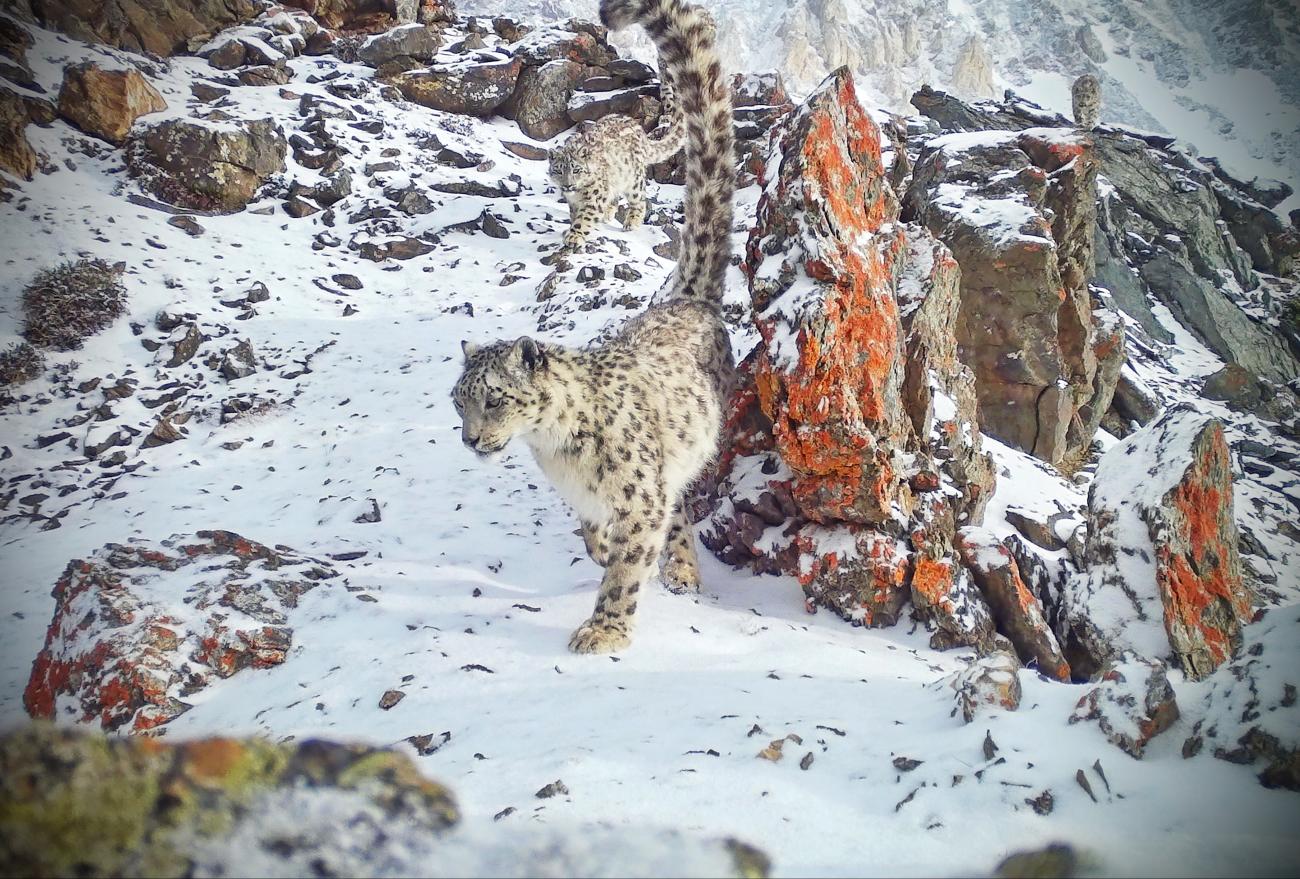
The snow leopard (Panthera uncia) is included in the IUCN Red List and the Red Data Books of all countries in its range, and has the highest conservation status in the Russian Red Data Book. Endemic and an umbrella species to the high-mountain ecosystems of Central Asia, this predator has faced risks for many decades from poaching and declining prey. Recently, this large and graceful cat has been increasingly threatened by habitat loss due to human activity and climate change.
The snow leopard population in Russia is located at the northern edge of its range, forming a single transboundary population along with Mongolian leopards. Due to landscape and biogeographical peculiarities, the northern population is isolated from the main part of its range, communicating only marginally with populations of the Tibetan Plateau and Tien Shan through scattered island habitats in the Gobi and Dzungarian Basins. Isolation, unfavorable environmental conditions, and poaching pressure are reducing the viability of northern populations. Scientists predict that the snow leopard's range will shrink by more than 20% by 2070 due to global warming, with northern habitats being hit the hardest. Furthermore, according to modeling results, the extremely low level of genomic diversity found in snow leopards in Russia and Mongolia puts the northern population at the greatest risk of extinction.
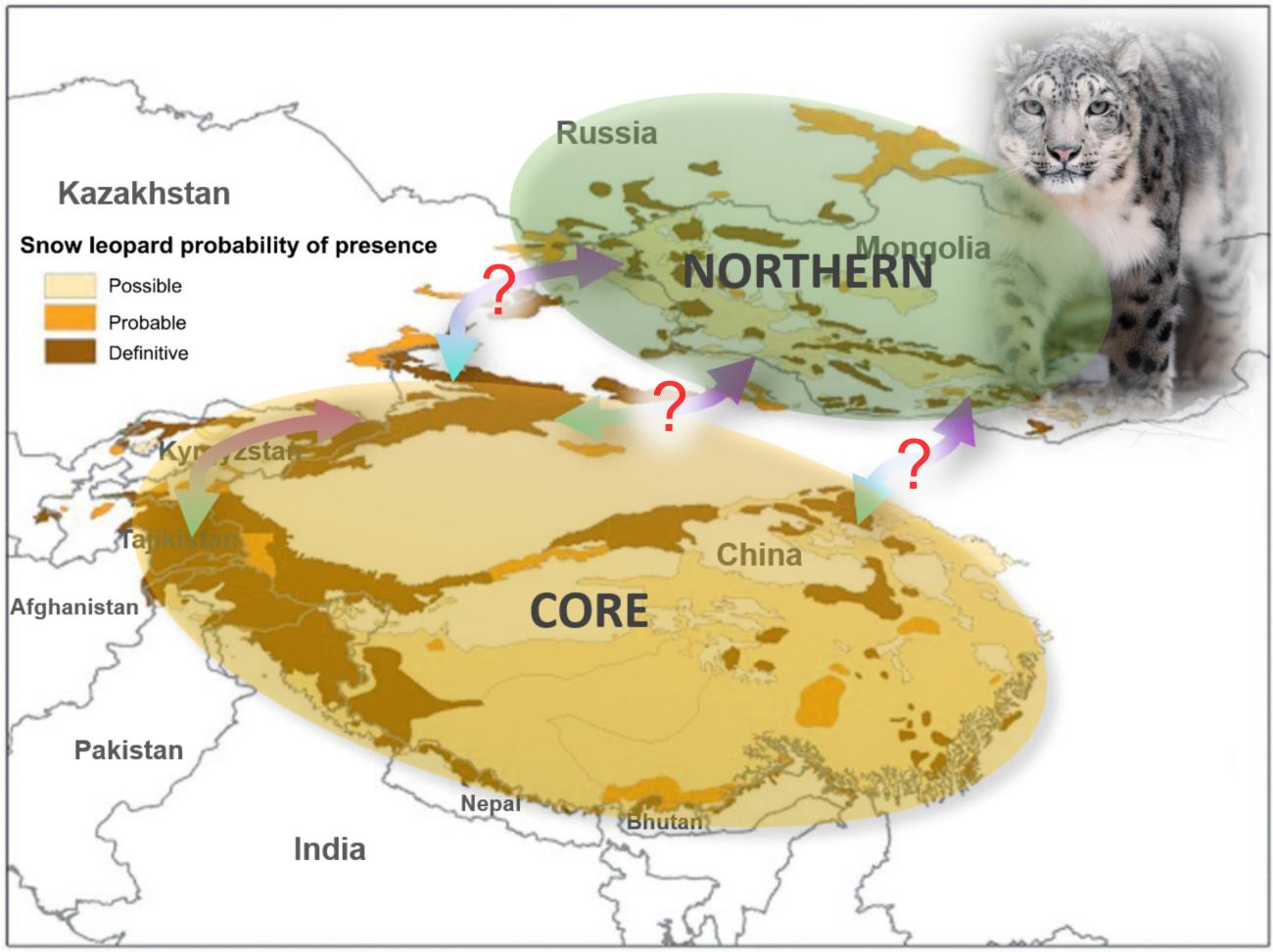
Figure: Range structure and possible corridors linking disparate snow leopard populations
In light of potential negative scenarios, maintaining functional connectivity and gene flow between isolated parts of the range becomes especially important. For this reason, ecological modeling and empirical genetic data are critical for identifying migration corridors and determining the degree of population connectivity.
Russian researchers from the A.N. Severtsov Institute of Ecology and Evolution of the Russian Academy of Sciences, together with colleagues from Kazakhstan, Mongolia, and China, decided to determine whether habitats in Kazakhstan serve as a "bridge" connecting snow leopards from the northern population with representatives of this species in other parts of the range. After all, the mountain ranges of Kazakhstan, located between the Tien Shan and Altai, have always been considered the main natural migration corridor for snow leopards.
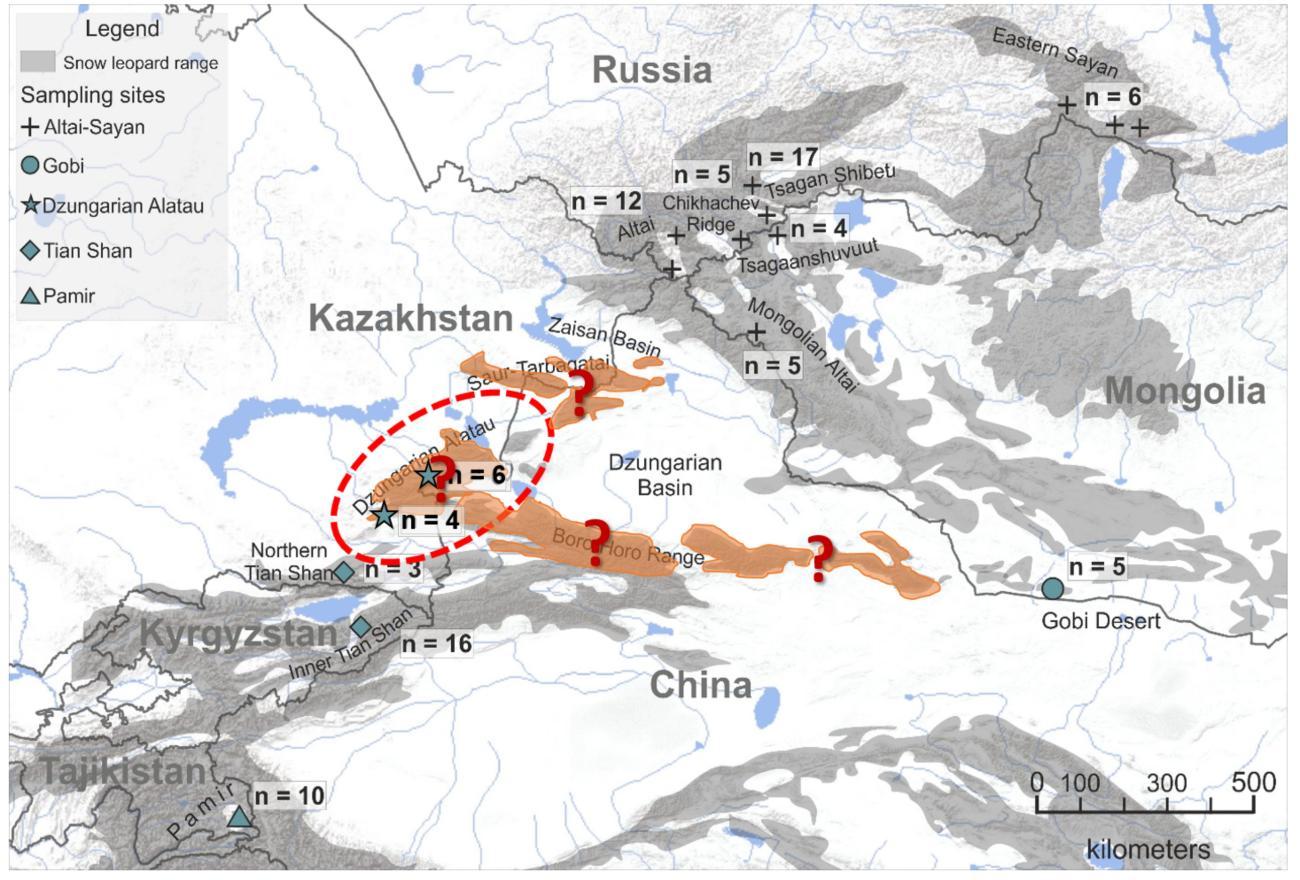
Figure. Study region and previously unexplored habitats. The focal area of the present study is highlighted by a dotted line.
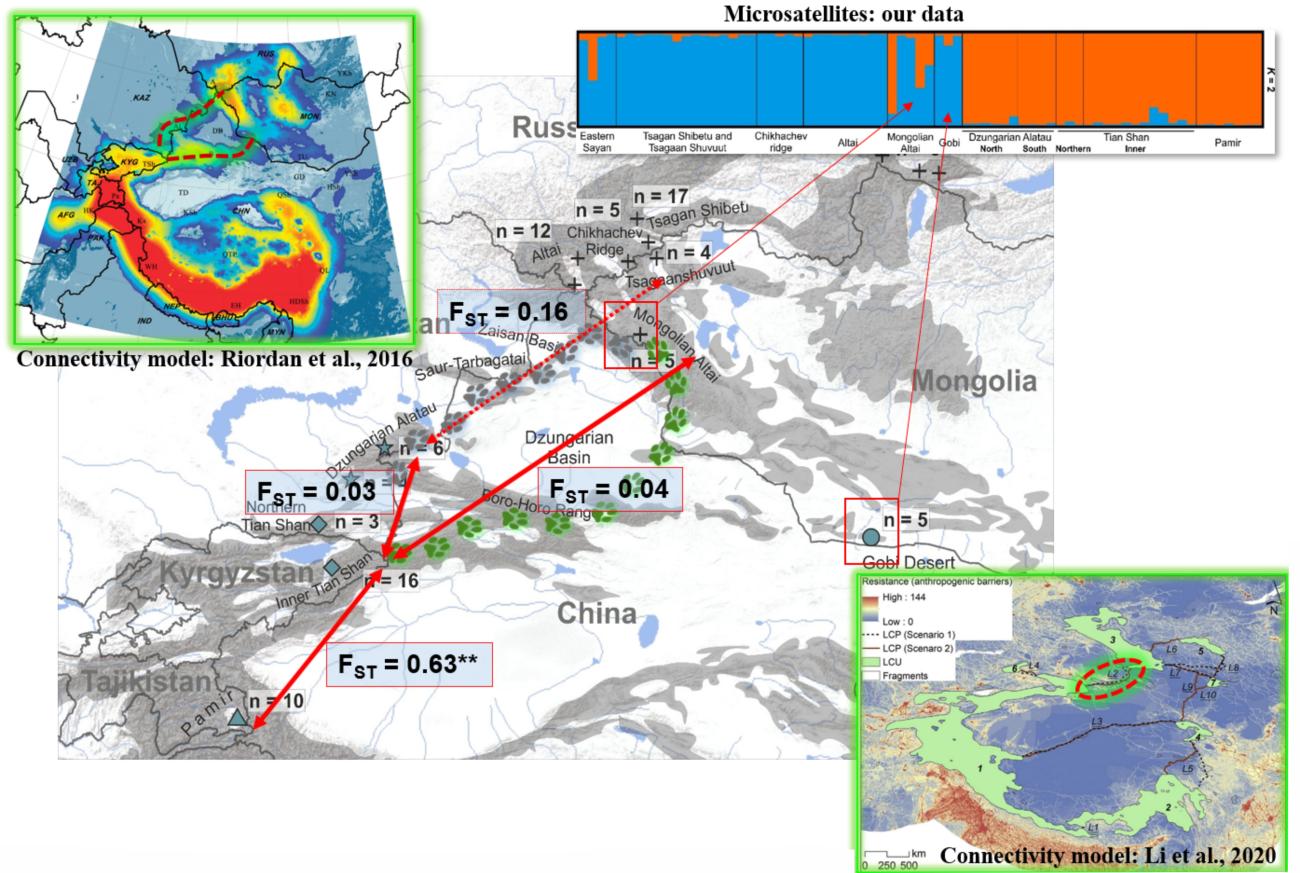
To answer this question, genetic variability of mitochondrial and nuclear microsatellite markers was analyzed in snow leopard populations from the Altai-Sayan, Gobi, Dzungarian Alatau, Tien Shan, and Pamir mountains. The results confirmed the importance of the Dzungarian region in maintaining functional connectivity between isolated parts of the range: signs of genetic exchange were identified in the Mongolian Altai and Gobi mountains - possible contact zones between the major mountain ranges of the Altai and Tien Shan. However, the hypothesis that Kazakhstan serves as a primary migration route for snow leopards was refuted. The study data indicate that gene flow is most intense through the eastern spurs of the Tien Shan in Xinjiang and further on to the Gobi and Gobi-Altai.
"Considering the results obtained previously for other contact zones, we concluded that the northern population's connection to the main part of its range relies on several narrow corridors, migrations through which are supported by the snow leopard's ability to cover large distances even through unsuitable landscapes. Given the importance of the Dzungarian region for range-wide genetic exchange, we recommend paying close attention to the protection of snow leopard island habitats in both Kazakhstan and Xinjiang, China. Preserving such 'transit' zones will support genetic exchange between dispersed areas of the range and will be an important contribution to the stability of not only the snow leopard but also its prey populations," said Miroslav Korablyov, PhD, Senior Researcher at the Institute of Ecology and Evolution, Russian Academy of Sciences.
The study was published in the journal Mammalian Biology: Miroslav P. Korablev, Alexey A. Grachev, Andrey D. Poyarkov, Saltore K. Saparbayev, Jose A. Hernandez-Blanco, Sergey V. Bespalov, Maxim V. Bespalov, Yerlik R. Baidavletov, Dmitry Yu. Alexandrov, Alexander S. Karnaukhov, Sergey V. Malykh, Bariushaa Munkhtsog, Munkhtsog Bayaraa, and Viatcheslav V. Rozhnov. Evaluating snow leopard population connectivity: is Kazakhstan a bridge for gene flow between the northern and southwestern range?. Mamm Biol 106, 75–88 (2026). https://doi.org/10.1007/s42991-025-00531-w