
For the first time, a representative of the genus of tropical burrowing anemones has been described for Russian waters
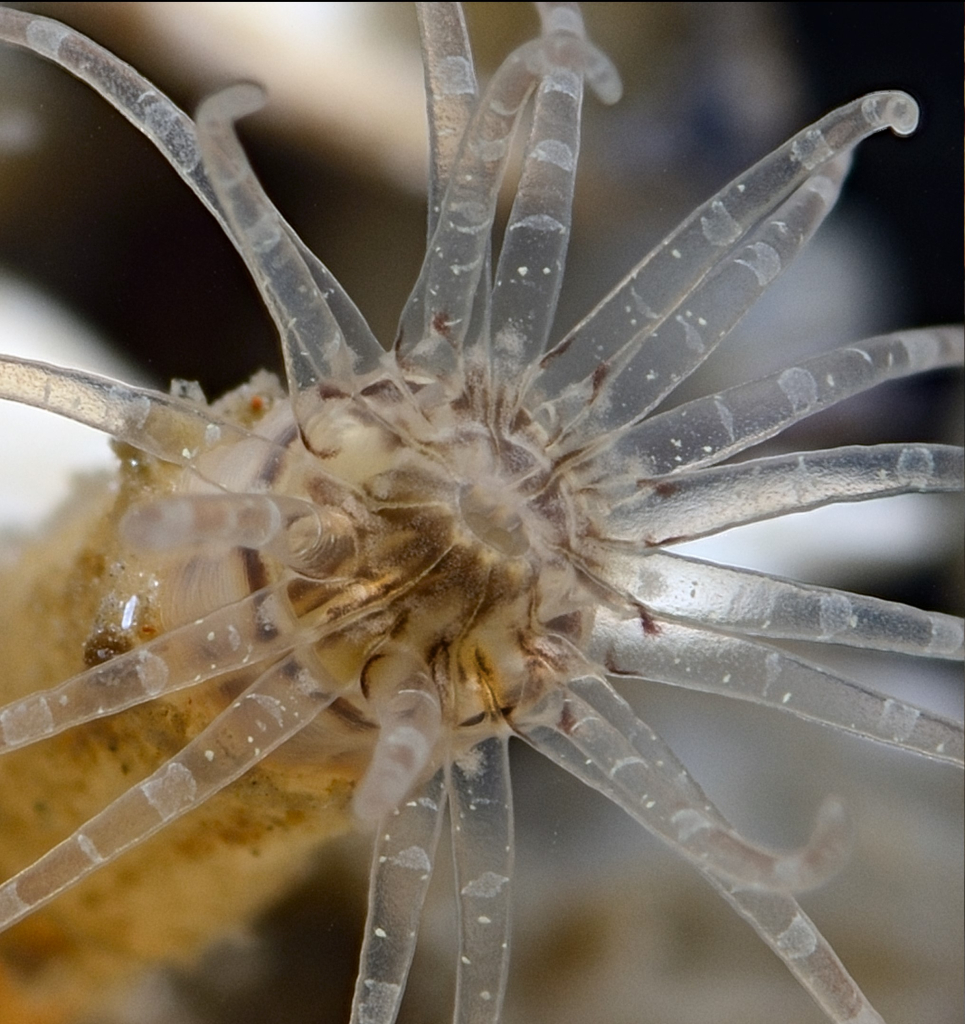
A new species of small burrowing anemone, named Edwardsianthus vostok, has been described from the shallow waters of Vostok Bay, Peter the Great Gulf, Sea of Japan, home to the marine biological station of the National Scientific Center of Marine Biology (NSCMB), Far Eastern Branch of the Russian Academy of Sciences (FEB RAS). This is the first discovery of a representative of the genus Edwardsianthus in Russian waters.
The article, by researchers from the Kamchatka Branch of the Pacific Institute of Geography (FEB RAS), together with specialists from the A.V. Zhirmunsky National Scientific Center of Marine Biology (FEB RAS), and the A.N. Severtsov Institute of Ecology and Evolution (RAS), was published in the journal Invertebrate Zoology.
Scientists have discovered a new species of sea anemone—solitary, skeletal animals closely related to corals. The species has been assigned to the genus Edwardsianthus - the first discovery of this genus in Russian waters. Previously, its representatives were known only from the tropical and subtropical waters of the Pacific and Indian Oceans. The Russian Far Eastern seas are home to a wide variety of these invertebrate species. Their greatest diversity is observed in tropical latitudes, but these vibrant animals, with their striking diversity of colors and shapes, can also be quite numerous in temperate waters and in polar regions. A significant portion of the Far Eastern sea anemones - 19 species, 3 genera, and 2 families - were described by Nadezhda and Karen Sanamyan, specialists in this group, and staff members of the Kamchatka Branch of the Pacific Institute of Geography, FEB RAS.
In 2024, researchers from the A.V. Zhirmunsky National Scientific Center of Marine Biology, Far Eastern Branch of the Russian Academy of Sciences (NSCMB FEB RAS) collected several samples of small burrowing anemones near the Vostok Marine Biological Station. These anemones superficially resembled members of the genus Edwardsia, which is quite common in these waters. Scientific contacts, the exchange of research results, and shared scientific interests with specialists from the Kola Branch of the Pacific Geographical Institute (FEB RAS) allowed them to submit the obtained samples for identification. At that time, only three species of the Edwardsiidae family were known in the Far Eastern seas of Russia: Edwardsia sojabio Sanamyan et Sanamyan, 2013, a sea anemone common in the abyssal zone at depths greater than 2500 m in the Sea of Japan; Edwardsia japonica Carlgren, 1931, considered a common species in Amur Bay of Peter the Great Gulf in the Sea of Japan; and a shallow-water species also described by specialists from the Kamchatka Branch of the Pacific Geographical Institute of the Far Eastern Branch of the Russian Academy of Sciences in the area of the Kuril Islands and Eastern Kamchatka: Paraedwardsia malakhovi Sanamyan et Sanamyan, 2021.
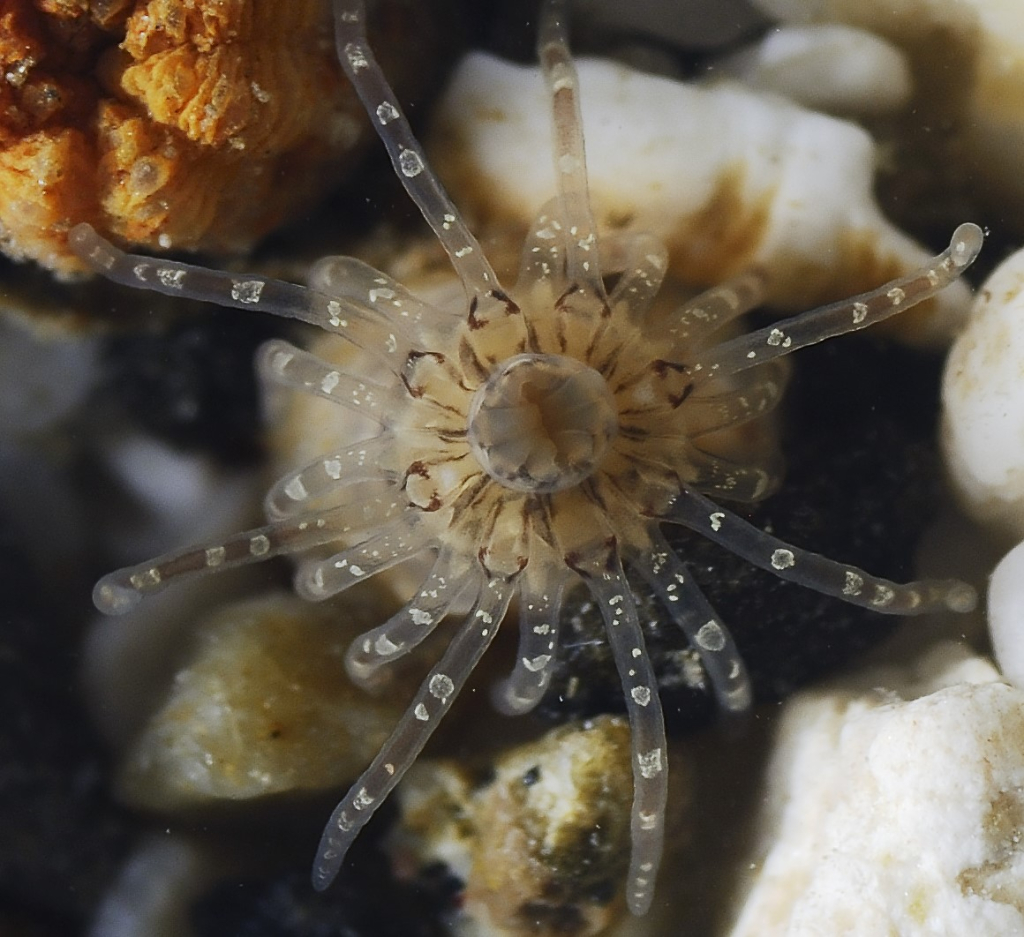
Morphological examination of the specimens obtained on histological slides revealed that they belonged to the genus Edwardsianthus, which until now included only a few tropical species, relatively large, visually striking, and distinguished by brightly fluorescent tentacles. Molecular data analysis performed at the National Scientific Center of Marine Biology and Biochemistry (NSCMB) also confirmed the specimens' affinity with the genus Edwardsianthus. The discovery itself was unexpected, as the site of this discovery is more than 1,100 km north of the northernmost point of distribution of this genus in Japan. During the study of the material, specialists were able to identify an unusual order of septation in the internal cavity. These results, including a discussion of the variants of tentacle anlage and internal septa in the family Edwardsiidae, will allow specialists to further revise the group.
The sea anemone received its specific name from the geographic location of the type specimen - Vostok Bay and the Vostok Marine Biological Station of the NSCMB. Currently, the species is known only from its type locality. Interestingly, these sea anemones inhabit shallow waters (4–8 m), where they are found in large numbers in so-called "phoronid fields" (dense aggregations of worm-like marine animals that live in tubes and reach significant numbers, including in the Far Eastern seas of Russia). In this context, the authors discussed the taxonomic history and summarized all available information on the nominal and taxonomic species belonging to the genus Edwardsianthus, accompanied by striking photographs of other representatives of the genus.