

Aquatic microorganisms change the species structure of zooplankton communities
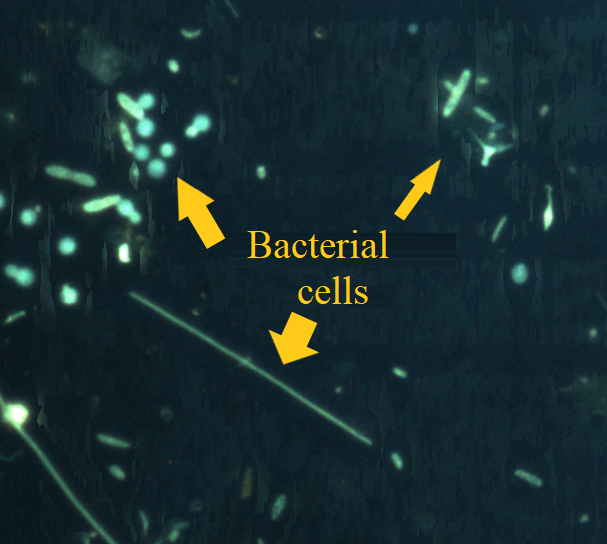
Aquatic bacteria are microorganisms that can only be seen under an electron microscope at a magnification of over 100,000x. Despite their microscopic size, they play a vital role in the functioning of aquatic ecosystems. Bacteria produce large quantities of organic matter, much of which is consumed by zooplankton and enters the primary grazing food web, which then delivers organic matter to fish and then to higher trophic levels. Bacterial organic matter often exceeds the concentration of organic matter in phytoplankton, the preferred food source for crustaceans. Another portion of bacterial organic matter (approximately 20%) is lysed by viral infection (viral shunt) and dissolved. Some bacteria settle to the bottom, creating a nutrient medium for benthos development. However, it has not yet been known whether bacteria influence the species structure of zooplankton communities.
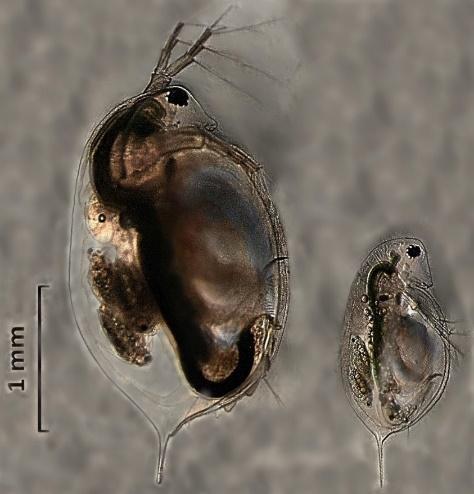
Scientists from the A.N. Severtsov Institute of Ecology and Evolution of the Russian Academy of Sciences (IEE RAS), together with their Polish and American colleagues, studied competitive interactions between Daphnia longispina and Daphnia magna, competing for algae of varying quality in experiments with low and high bacterial concentrations. The scientists hypothesized that the outcome of the competition may depend on both the bacterial concentration and the algae quality. In the experiments, the daphnia were fed three types of food: (1) high-quality green alga Chlamydomonas klinobasis, (2) phosphorus-poor C. klinobasis, and (3) the cyanobacterium Synechococcus elongatus, which lacks vital lipids.
"The experiments showed that we found significantly higher numbers of both Daphnia species in monocultures with increased bacterial content compared to monocultures in the experiment with low bacterial content, indicating that bacteria contribute to the increase in Daphnia numbers," said Irina Feneva, Doctor of Biological Sciences, a leading researcher at the Institute of Ecology and Evolution of the Russian Academy of Sciences.
In the experiment with low bacterial concentrations, the dominance of both Daphnia species depended on the quality of the algae. However, although D. magna lost out to competition in the high-quality algae conditions, when the bacterial concentration increased, the competitive advantage shifted to this species. D. magna emerged as the superior competitor in all experimental conditions, regardless of food quality, in the experiment with increased bacterial concentrations. The scientists concluded that increased bacterial concentrations are a significant factor determining competitive interactions in cladoceran communities, and, therefore, bacteria can alter the species structure of zooplankton communities.
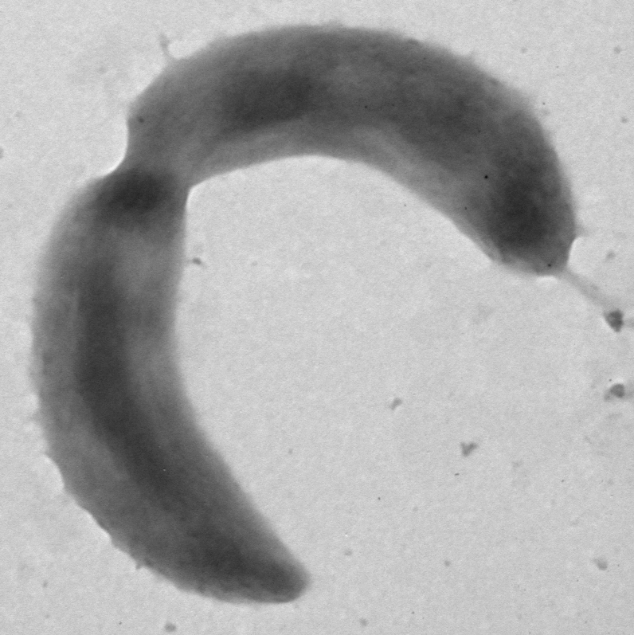
Fig.3: Binary division of bacteria under an electron microscope with 100,000x magnification.
Thus, bacteria not only serve as an important supplier of organic carbon in aquatic ecosystems, allowing Daphnia to significantly increase their numbers, but also contribute to improved food quality. Literature data confirms that bacteria can supplement the cladocerans' phosphorus needs, and some bacterial species have also been shown to produce polyunsaturated fatty acids. This mechanism for replenishing food resources through rapidly reproducing bacteria allows zooplankton communities to maintain biomass while reducing the concentration of algae - their primary food source - and to balance the flow of nutrients through the food web in aquatic ecosystems.
Irina Feniova, Tomasz Brzeziński, Andrew R Dzialowski, Anna Bednarska, Bartosz Kiersztyn, Varos G Petrosyan, Natalia Zilitinkevich, Piotr Dawidowicz, The role of alternative microbial resources in competition between Daphnia species, Journal of Plankton Research, Volume 48, Issue 3, May-June 2026, fbag020
Related materials:
RAS: "Aquatic microorganisms change the species structure of zooplankton communities"