

Russian Academy of Sciences scientists have discovered how climate change affects food competition in northern lakes
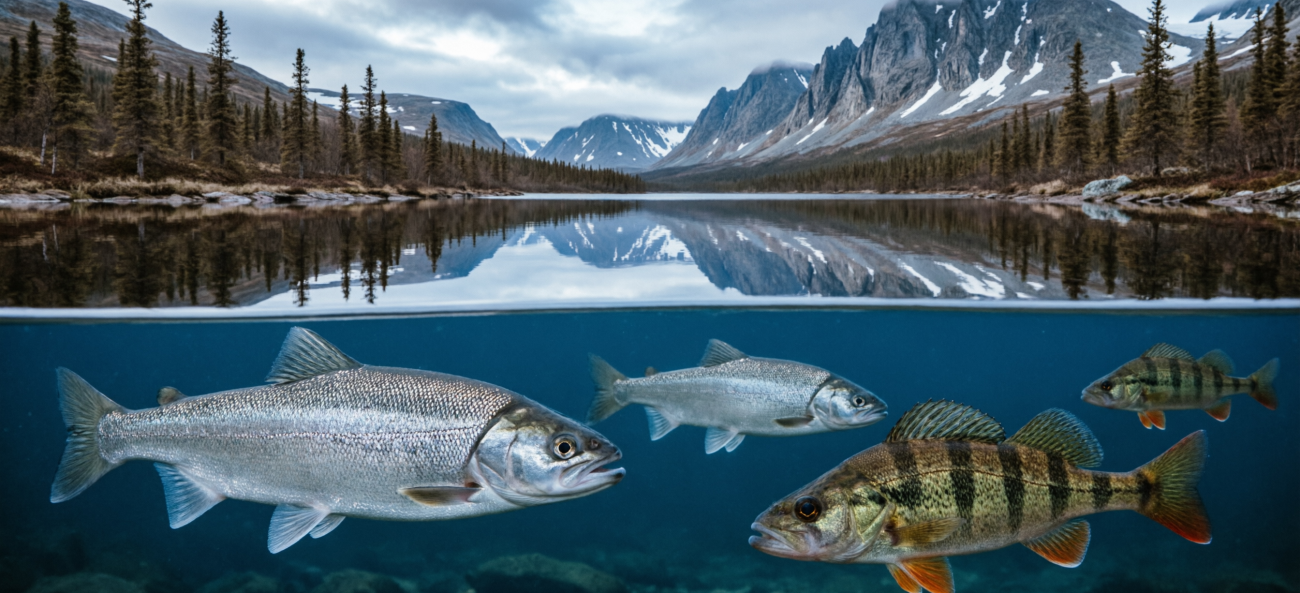
Specialists from the A.N. Severtsov Institute of Ecology and Evolution of the Russian Academy of Sciences, the Institute of Industrial Ecology of the North of the Kola Science Center of the Russian Academy of Sciences, and colleagues from the Zoological Institute of the Russian Academy of Sciences conducted an ichthyological study in Lake Imandra - the largest body of water in the Murmansk Region - and discovered how climate change is altering fish food competition in northern lakes.
Global climate change is altering ecosystem structure, especially at high latitudes. Rising water temperatures, shorter ice periods, and changes in water productivity are creating new conditions for freshwater species. Cold-water species, such as whitefish and vendace, are under threat, while more tolerant and warm-water-loving species, such as perch, are expanding their range northward. Scientists hypothesized that this expansion could lead to the direct displacement of native species through food competition. However, until recently, the mechanisms of this interaction in subarctic conditions remained poorly understood.
Lake Imandra is an important water supply and a fishery for whitefish, vendace, and smelt. To obtain primary data, the scientists used two complementary methods: analysis of fish stomach contents and analysis of stable carbon and nitrogen isotopes in muscle tissue.
Isotope analysis reflects feeding patterns not over the past hours, but over weeks and months, as the isotopic composition of muscle tissue is renewed gradually. This compensates for the limitations of stomach content analysis, which only records short-term dietary patterns. The combination of both methods provides a comprehensive picture: taxonomic detail and an integrated assessment of trophic relationships.
Furthermore, the δ¹³C isotope ratio serves as an indicator of energy source: for example, pelagic (water-bound) and benthic (bottom-dwelling) food chains have distinct carbon signatures. The δ¹⁵N indicator allows one to assess an organism's position in the food chain: the higher the δ¹⁵N value, the higher its level in the food chain.
The study's results confirmed the existence of significant food competition between whitefish, traditionally found in northern latitudes, and perch, which is expanding its range northward due to global warming. Analysis of stomach contents revealed that the diets of whitefish and perch overlap by 48%. Both species occupy similar trophic positions, corresponding to the status of first-order predators. The obtained data help explain the decline in whitefish populations in subarctic lakes. The perch's food flexibility, combined with global warming, creates conditions favorable for population growth and increases competitive pressure on cold-water species such as whitefish.
Other fish species have occupied different niches. For example, vendace, smelt, and burbot rely more on pelagic food sources, while the ruffe is a specialist feeder on chironomid larvae.
The authors of the study note that their research primarily involved adult fish. They believe that further research should focus on studying trophic interactions during the early stages of fish development. Competition for planktonic resources can be particularly intense during the juvenile period, which critically impacts the survival of generations.