

Satellite tracking of rare great snipes has revealed their low connectivity during migrations from Africa to the tundra.
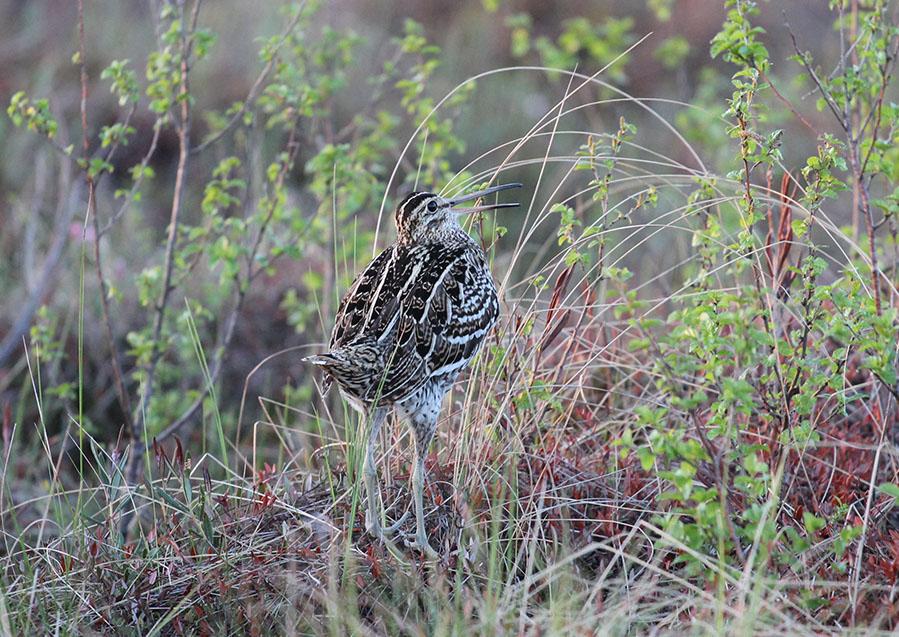
The great snipe (Gallinago media) is a secretive bird with predominantly nocturnal activity. This small wader (Fig. 1) migrates in the spring from its African wintering grounds to the moist meadows and marshes of the forest and tundra zones of Eurasia to perform a nocturnal mating ritual, select a mate, after which the female raises the chicks alone. In the 19th and 20th centuries, great snipe numbers declined dramatically throughout Europe. They ceased nesting in the lowlands of Western Europe, leading to the formation of an isolated breeding population in the mountains of Scandinavia. Over 80% of the current global population of this species breeds in Russia, but knowledge of many aspects of nesting biology and migrations of great snipes from their main breeding range is extremely incomplete.
The extent to which great snipes from different breeding areas are closely related remains unknown; migration routes to wintering grounds of Russian birds and the geographic boundaries of the species' populations in Africa remain only speculative. The nesting population of great snipes in the Moscow region is listed in the Red Book, but until now it was unclear how long local birds remain in the Moscow region, when they migrate to their wintering grounds, and where these wintering grounds are located.
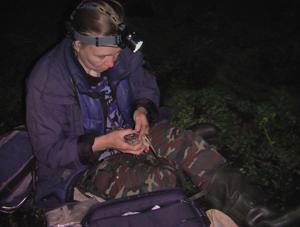
To answer these questions, researchers from the A.N. Severtsov Institute of Ecology and Evolution of the Russian Academy of Sciences (IEE RAS) captured and fitted GPS trackers to 10 great snipes in the Zhuravlinaya Rodina Nature Reserve near Moscow (Figs. 2, 3). Satellite tracking technologies allowed us to gain new insights into the migration strategy and winter distribution of great snipes from their breeding range in European Russia and compare our data with those of studies conducted in other countries. It was discovered that both local birds and great snipes are present at leks forming in Central Russia in the spring, which then migrate to breed in the tundra regions of northern European Russia. The longest migration route from the Moscow region to the wintering grounds was undertaken by a female, who flew approximately 11,000 km with 16 stops in three European and five African countries, reaching Zambia.
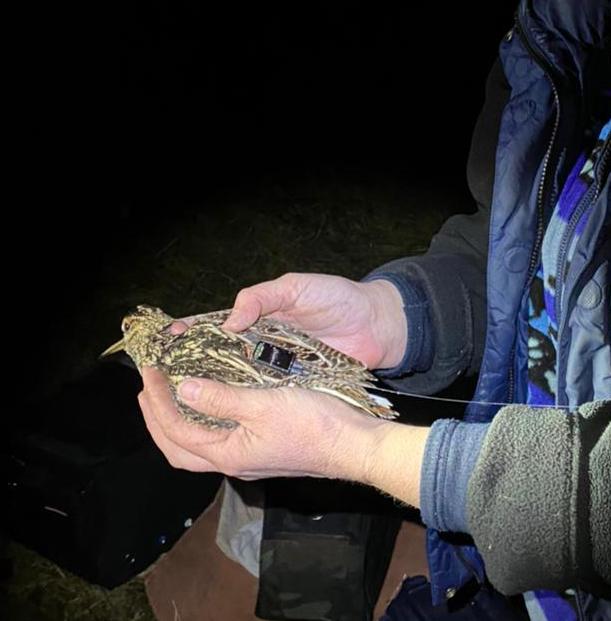
Fig. 3. A snipe equipped with an ICARUS satellite transmitter.
It turned out that the stopover and wintering sites of great snipes from an isolated mountain nesting population in Scandinavia and from the lowland regions of Eastern Europe overlap significantly in Africa (Fig. 4). These results highlight the need for further research, including molecular genetics, into the species' population structure.
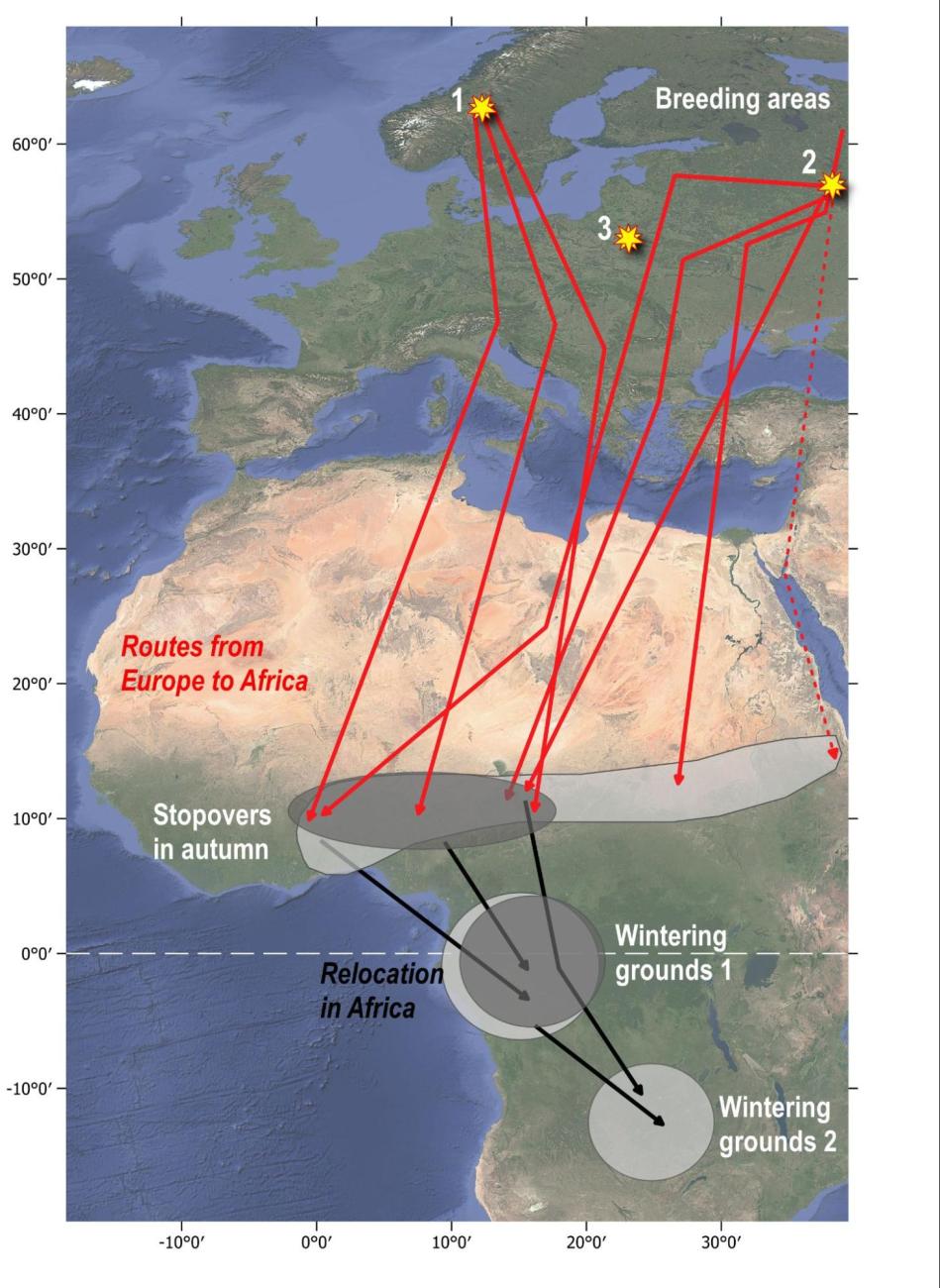
Fig. 4. Migration pattern and wintering ranges of great snipes from different breeding populations in Europe (from Sviridova et al., 2026). 1 – location of great snipe tagging with satellite trackers in the Moscow region; 2 – location of great snipe tagging with trackers-geologists in Scandinavia; 3 – location of great snipe tagging by geologists and satellite trackers in Poland. Red lines – migration routes of birds from Europe to Africa, black lines – long-distance flights of birds within Africa (for Scandinavian birds according to Lindström et al., 2016, 2021). Dark grey shading – stopover and wintering grounds of great snipes from Scandinavia (according to Lindström et al., 2016, 2021) and Poland (according to Korniluk et al., 2015); light grey – stops and wintering areas of snipes from the European part of Russia.
New technologies, such as GPS tracking, allow scientists to closely monitor bird movements, helping them understand how the birds use their habitat and which areas are most important for their conservation.
"Unfortunately, we have to acknowledge the high mortality rate of great snipes during migration, especially when crossing the Sahara Desert. In many countries where great snipes are found, they are hunted," said Tatyana Sviridova, PhD in Biology and a senior researcher at the Institute of Ecology and Evolution of the Russian Academy of Sciences.
Only a small proportion of migratory stopovers (18%) and wintering grounds (13%) used by great snipes in the Moscow region were within protected areas. These findings highlight the need for coordinated conservation measures for this wader, which is currently declining in numbers. These measures can only be developed through the joint efforts of specialists from countries where great snipes nest, stop during migration, and winter.
The study was conducted as part of the global ICARUS (International Cooperation for Animal Research Using Space) project and the Uragan space experiment on the Russian segment of the ISS (Belyaev et al., 2022) in collaboration between the IEE RAS, the Max Planck Institute of Animal Behavior (Germany), and the Institute of Geography of the Russian Academy of Sciences. The work was also supported by the International Union for Conservation of Nature and Biodiversity (NABU), the Manfred-Hermsen Foundation for Nature and Environment (Manfred-Hermsen-Stiftung), and the Russian Society for the Conservation and Study of Birds. The research results were published in March 2026 in the international journal Avian Research (Sviridova et al., 2026).