

Breeding the desman in captivity: mission possible?
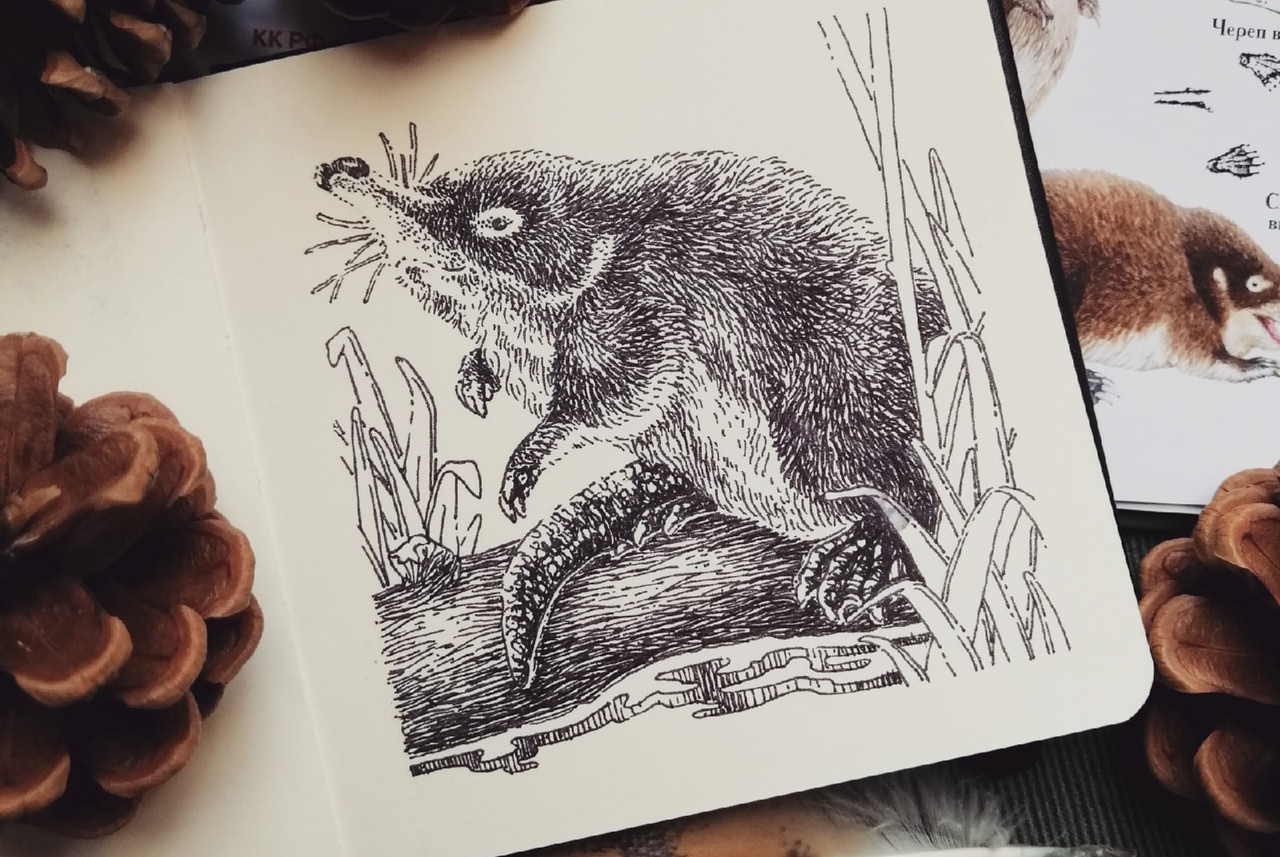
Journalists from the publication "Ecology of Russia" spoke with Marina Rutovskaya, Doctor of Biological Sciences, a senior researcher at the A.N. Severtsov Institute of Ecology and Evolution of the Russian Academy of Sciences, about how the desman was listed in the Red Book, why it is important to promote this animal on social media, at exhibitions and seminars, and the main challenges of restoring the population.
– Your social media project is called Desmana. Why? It's a very beautiful and unusual name.
– It's quite simple: Desmana is the Latin name for the desman. We also have another name, without involving Latin - "The Russian Desman Friends Club."
– Russia boasts exceptional biodiversity. Why were you drawn to the desman? What makes this animal so special?
– I initially became involved with studying the desman by chance; I picked up the topic from another researcher at our institute back in 1993. But this species simply captivated me.
The desman is truly special. This animal is currently endemic to our country. Endemic means "lives only here and nowhere else." It was previously believed that the desman was endemic to the USSR, as there were small pockets of its habitat in Kazakhstan and Ukraine. But now no one knows whether they remain there.
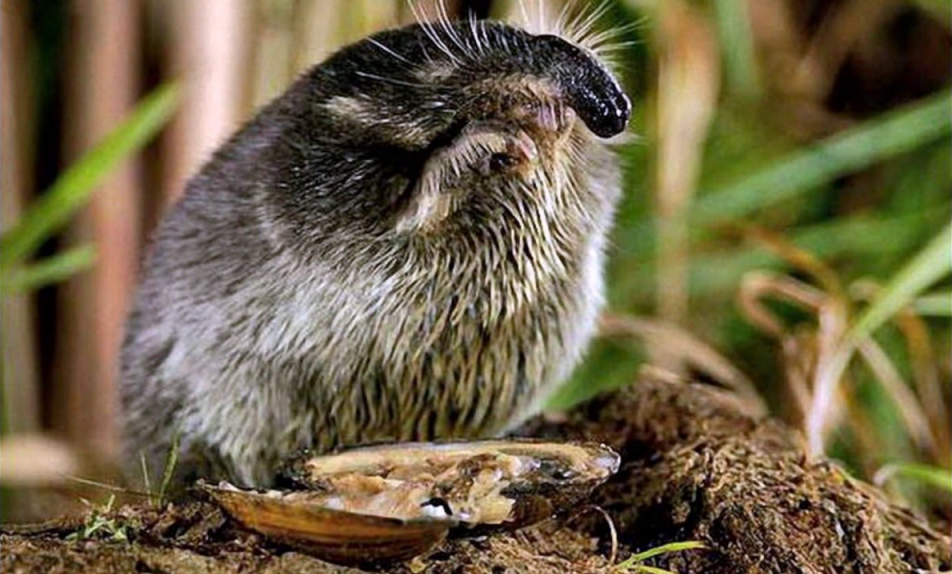
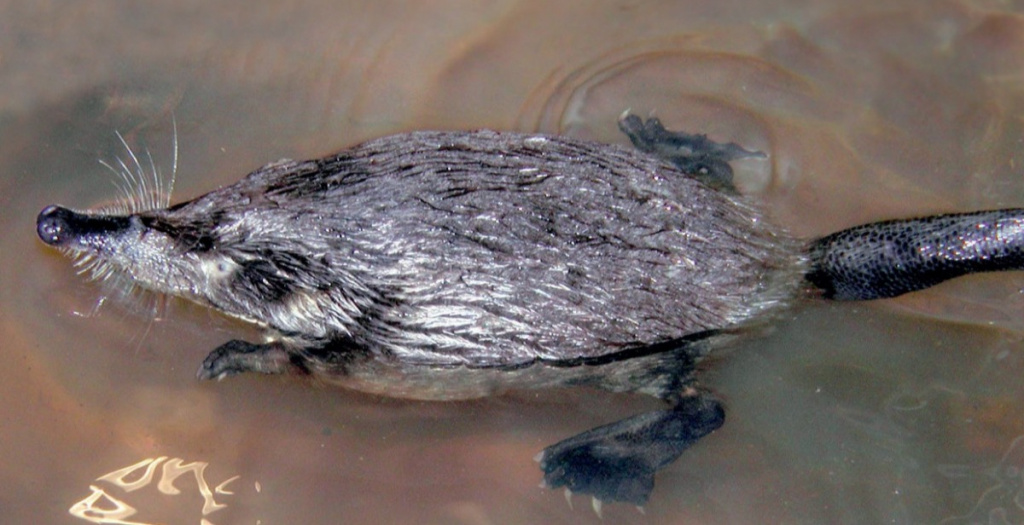
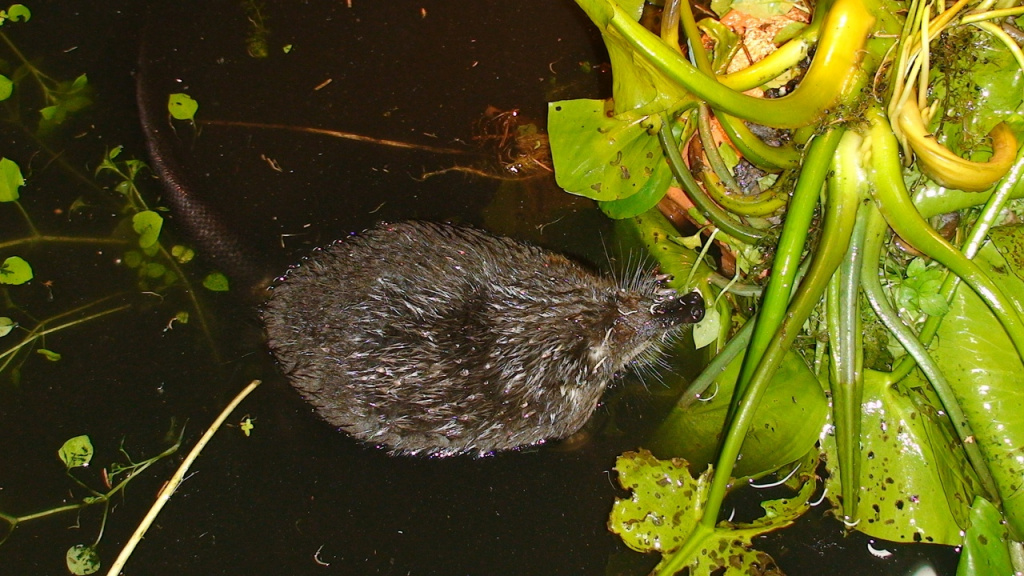
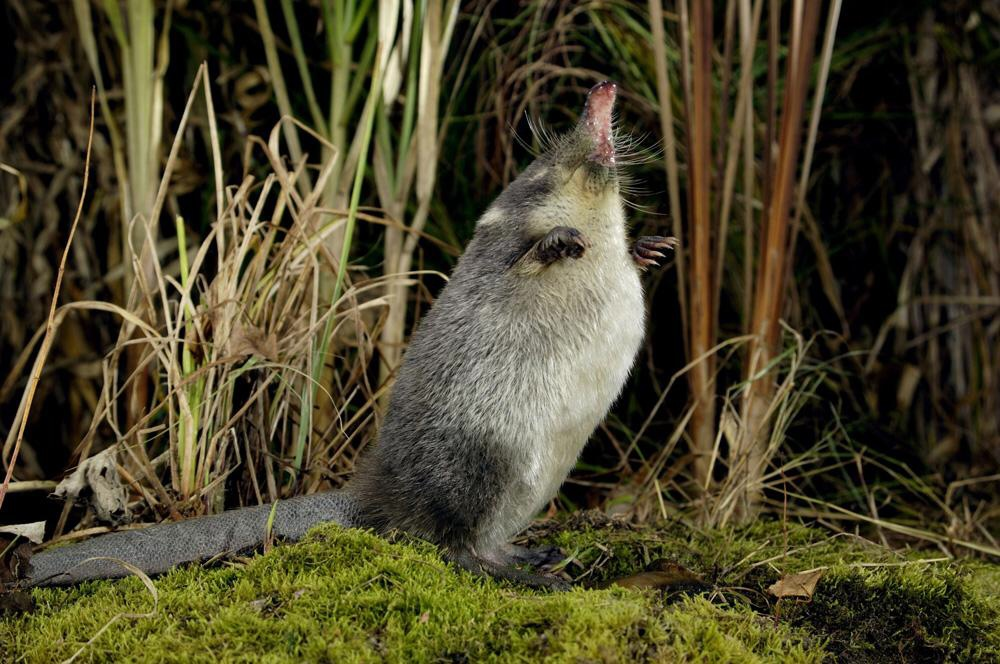
This animal is unique and very interesting in its biology, habits, and impact on the environment. It's an insectivorous species that lives partly in water and partly on shore. The desman is very secretive, making it difficult to observe in the wild. But as a researcher, I observed them extensively when several individuals lived for a time at my experimental station. The peculiarities of their adaptation to an aquatic lifestyle are of particular interest, for example. And, although this species is seemingly familiar to us, there's still much that remains to be explored.
– Today, this species is listed as endangered. What are the reasons for its decline, and how did it get there?
– Unfortunately, humans "helped" it get there. In the late 19th and early 20th centuries, these animals were actively hunted for their skins. Desmans were very numerous at the time. But by the 1930s, their numbers began to decline sharply. In 1935, three reserves were established specifically for the conservation of desmans: Khopersky, Oksky, and Klyazmensky. The first two still exist and retain their status as reserves, while Klyazmensky was closed, and a wildlife sanctuary was subsequently established in these areas.
At first, a temporary ban was imposed on desman hunting, but this didn't help much. In the 1950s, hunting for this species was banned completely. In 1975, the animal was listed in the Red Book – a necessary step, as desman populations were not recovering.
And it wasn't just a matter of capture; the desman had simply experienced significant anthropogenic impact on its habitat. After all, it lives only in the floodplains of certain rivers. The desman's lifestyle is tied to floodplain water bodies and spring floods, and these animals do not reproduce outside of floodplain lakes far from rivers. And the 1930s–1970s coincided with the period of active construction of hydroelectric power plants on the Volga, which resulted in severe damage to the floodplains of the Volga and its tributaries. Vast areas suitable for the animal's habitat simply disappeared under water as a result of the construction of reservoirs.
The next stage was melioration. This resulted in the desman's habitat becoming significantly shallower in many places. The species also cannot survive in small lakes, as they freeze completely in winter.
The next shock to the desman came in the 1990s, when social instability led to a decline in the protection of small bodies of water. Poachers began fishing with cheap fishing nets, almost without restraint. The desman became entangled in the nets and died. Thus, the population was completely destroyed.
All of this led to habitat fragmentation. The desman now lives only in small, widely spaced areas of its range. And, of course, its population has declined significantly. In recent years, it has stabilized, but remains at a very low level. Currently, there are approximately 10,000 desmans in the country, according to rough estimates.
In early April 2020, the Russian Ministry of Natural Resources and Environment approved new lists of species included in the Red Data Book, and the desman is now classified as a Category 1 species: endangered.
Unfortunately, few people are currently working on this species, except for a couple of nature reserves where it lives and my team.
– Do you collaborate with these nature reserves? We know you built a breeding center in 2020 - do you plan to breed desmans there and release them in the reserves?
– Of course, we collaborate with the reserves. But what you've said poses a major problem. So far, desmans haven't reproduced in captivity. We did build a breeding center for this purpose, and this isn't the first attempt to breed the animal in captivity. It's a desperate attempt, you might say, because their numbers in the wild continue to decline.
Currently, desmans survive in captivity, of course; their lifespan is about five years. But they stubbornly refuse to leave offspring. No zoos keep desmans, and in fact, a reserve population in captivity doesn't exist.
We don't even yet know what special conditions a desman needs to decide to "continue their lineage" in captivity. Most likely, it's a certain temperature range, plus a simulated flood, plus something else. Plus, the desman is a very delicate animal, not very resilient to stress. Therefore, we still need to figure out how to protect it from stress and preserve the brood if we do manage to breed offspring in captivity.
We've established a special breeding facility at the Kropotovo Biological Station of the N.K. Koltsov Institute of Developmental Biology of the Russian Academy of Sciences, and we're currently awaiting permission to capture several individuals. We'll capture them and try to arrange for their reproduction. Incidentally, capturing this animal isn't easy either, as they're very rare in the wild and very secretive. We won't be searching for desmans in nature reserves, as that's prohibited, but in the protected areas around them, or in other unprotected areas where their presence has been confirmed.
Again, timing is crucial. We simply won't find desmans during flood season. The animals will now enter their breeding season, and they must not be disturbed under any circumstances. Therefore, the capture will likely be scheduled for the fall of 2021.
We'll then bring the animals to the breeding center and experiment with different conditions to see which they prefer. Once again, we have some ideas on how to make life comfortable for the desman in captivity. But these are just ideas; they don't guarantee anything. Everything needs to be tested.
– But this won't be a completely new experiment. Do you already have some groundwork? How long has your project been in existence?
– Of course, it won't be completely new. I learned a little about the desman from the animals I kept from 2004 to 2015 at the Chernogolovka Experimental Base of the Institute of Ecology and Evolution of the Russian Academy of Sciences. But on the other hand, when I observed them, I realized that without understanding how desmans live in the wild, we would make a lot of mistakes. That's how expeditions to monitor desmans in the wild came about. Speaking of this monitoring program, my students and I have been running it for 10 years now. The breeding project, however, is a relatively new one; we're building it with funds from a Presidential grant received by the Wildlife Conservation Center charitable foundation in 2020.
Now, all our work is focused on finally starting to breed these animals in captivity. If we manage that, then we will set ourselves the task of starting to return the desman to the places from which it disappeared.
– You've made several films about monitoring the Russian desman. What are they about, and where can I watch them?
– All of our materials, including videos, can be viewed on the website. These are video reports from our trips and expeditions to the places where we search for desmans and keep a census. However, these aren't scientific reports, but rather live images. Many volunteers participate in our desman monitoring projects, mostly students. Our films, as well as seminars and other events, are a way to popularize knowledge about the desman.
Right now, for example, the "Primordial Russia" wildlife photography exhibition and festival is taking place in Moscow, and my students gave a talk about the desman there. As I understand it, the talk was a great success. So we try to take every opportunity to talk about this animal.
- And how successful is it? Are ordinary people interested in this animal?
- I think so. For example, our monitoring expeditions used to involve almost exclusively students. But now, with the widespread awareness of the desman and our project, firstly, there are more volunteers overall, and secondly, we're getting requests from wildlife enthusiasts, even students who aren't majoring in the field, asking to join our expeditions. They learn about us on websites, social media, and at seminars. Now, we don't even always take everyone who wants to go because there's not enough space in the expedition vehicles.
- How do you monitor desmans? Is it true that you search for them using bubbles? Tell us about this method.
- Bubble detection is only possible in isolated cases. This year, for example, we had the opportunity to use this method. This is possible when the lake surface freezes over and the ice remains transparent (which doesn't happen every year).
Unfortunately, when we went out to catch the animals this fall, we were a day late: snow had fallen before our arrival, and then it froze to the surface of the ice. That's it, you can't see anything anymore.
When the ice is transparent, all animals that spend time underwater (not just desmans, but also beavers and muskrats) exhale air, and it rises to the surface in a chain of bubbles. Bubbles also rise from the fur, as a lot of air gets trapped there. These chains are clearly visible.
Incidentally, desmans "befriend" beavers because beavers raise the water level in lakes, and desmans enjoy this. If beavers are spotted in a body of water, the likelihood of a desman living there increases. They often make burrows right in beaver burrows. It's the same with muskrats: if a body of water lacks suitable burrowing sites, a desman and a muskrat may even share a single dwelling.
So, getting back to the bubbles: when you see a chain of bubbles under the ice, you can very clearly determine which of the three species they belong to. Beavers have the largest bubbles. Muskrats and desmans have smaller ones, roughly the same size. But you have to look at the location: muskrat bubbles always follow the shoreline, where they gather vegetation. Desmans, on the other hand, typically leave distinct trails of bubbles extending into the lake's depths. That's where they dive for mollusks and other small prey. As you can see, it's all very simple!
Nevertheless, we usually go on expeditions before winter, when the waters are not covered with ice. It's quite physically demanding: we don special waterproof suits, walk along the shore in the water, and search for desman dens by the characteristic grooves leading away from them. But what a joy it is when we find our "hokhulya"!
Related materials:
Дзен: "Питомник в Подмосковье пытается спасти популяцию русской выхухоли"
Регионы: "Как подмосковные ученые спасают русских выхухолей"
Вечерняя Казань: "Вымирающая русская выхухоль стала источником вдохновения для поэтов и писателей"